Author: Linoxyr

  • Master team executes using volumetric smoke control and rotation timing

    Master team executes using volumetric smoke control and rotation timing

    Teams can lose an execute when smoke arrives before the move is ready, arrives after the opening has closed, or fails to create the intended path. “Volumetric smoke control and rotation timing” is a useful planning lens for competitive play, but it is not an established esports term: real volumetric smoke control belongs to building fire-safety engineering, while in-game smoke is tactical utility.

    The practical connection is about disciplined sequencing, not interchangeable systems. A team can plan where smoke should shape visibility and movement, when teammates should rotate, and how to verify that the sequence is working. Real smoke-control engineering offers a useful parallel in its emphasis on timing, flow paths, equipment response, and testing,but its life-safety requirements must never be treated as game tactics or vice versa.

    What volumetric smoke control and rotation timing mean for a team

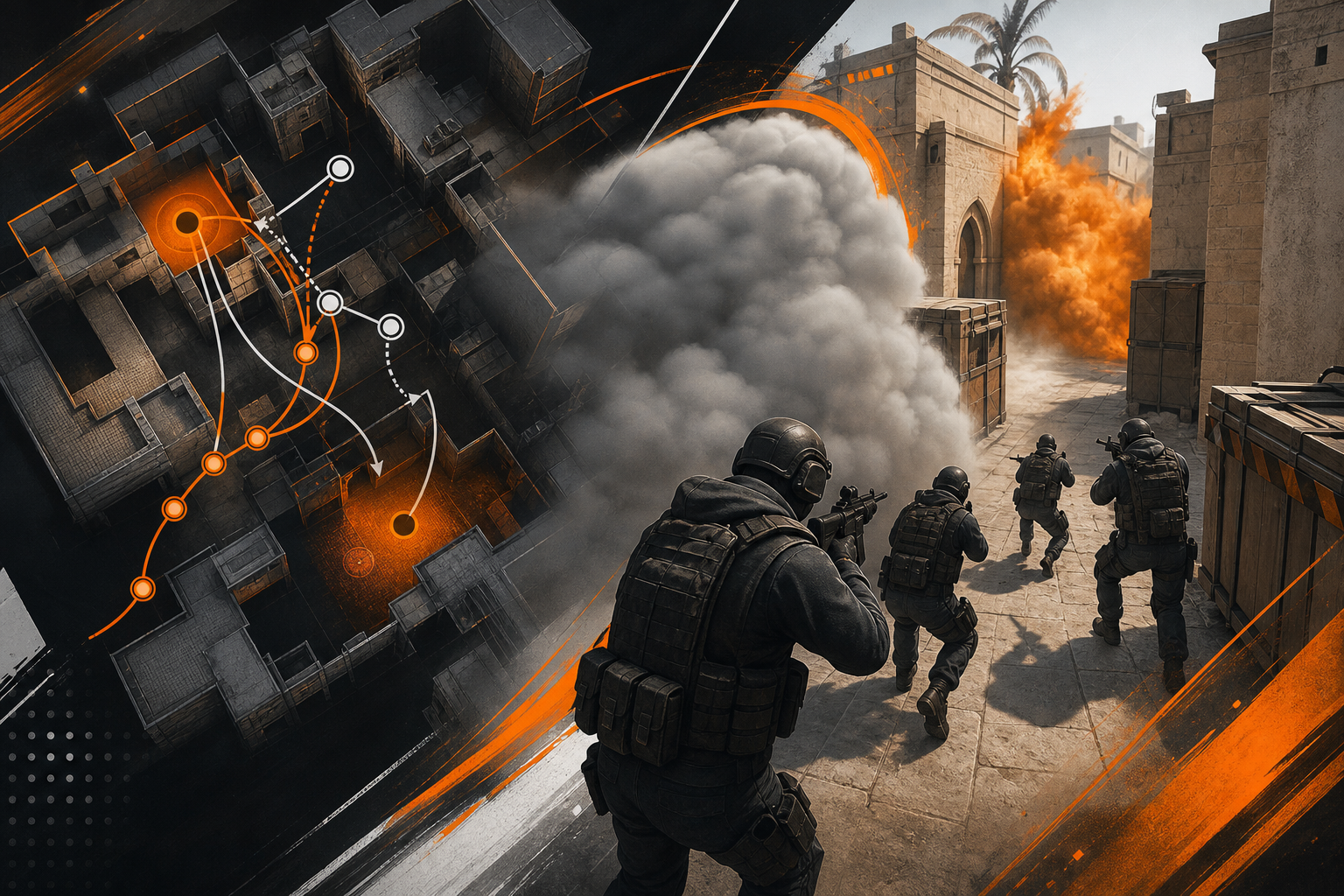
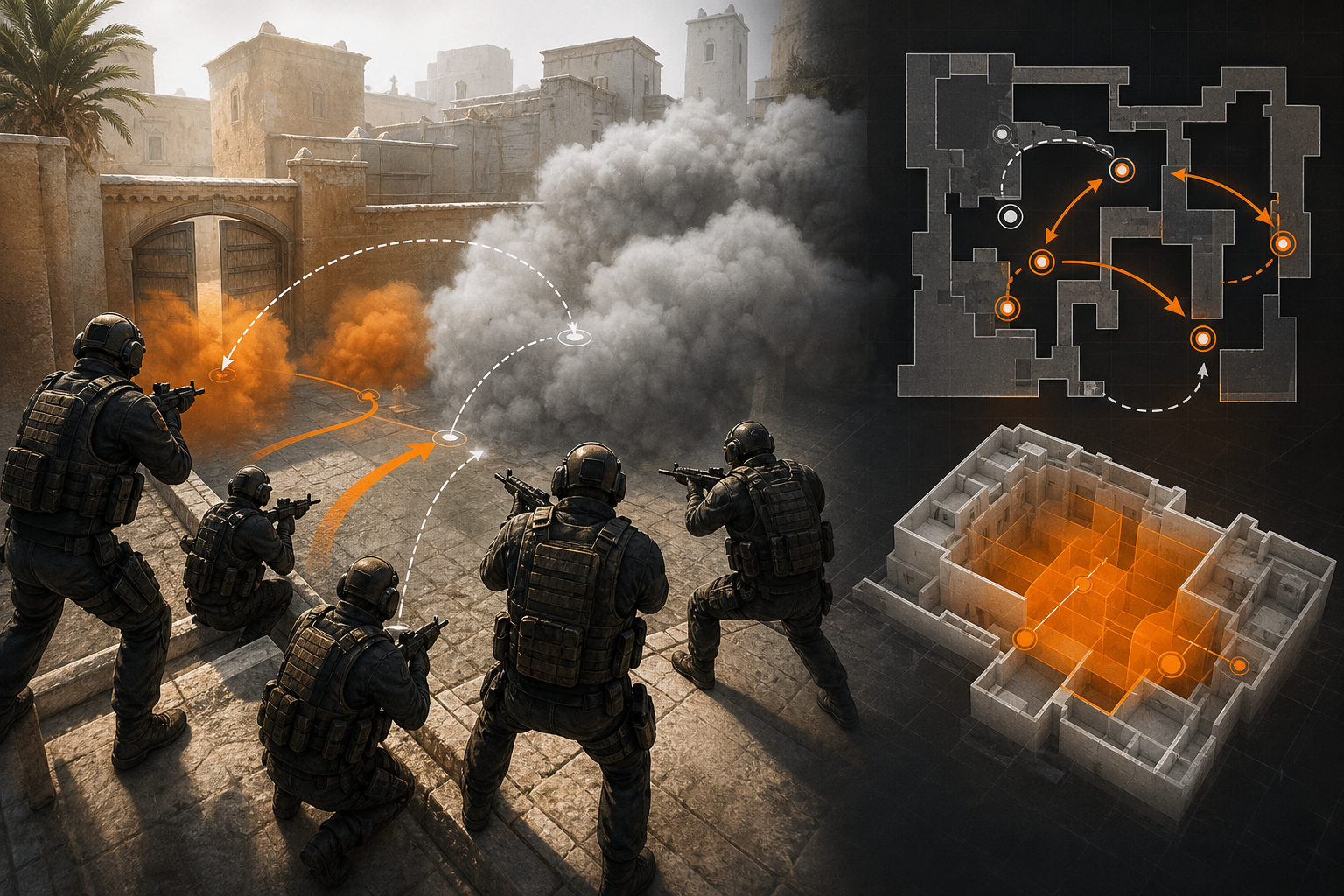
    For a competitive team, the phrase is best read as two linked decisions. “Volumetric” asks what space a smoke effect is meant to influence: which sightlines it blocks, which routes it covers, and which areas it leaves open. “Rotation timing” asks when players move from their current positions to the next ones, and whether that movement arrives in step with the smoke and the rest of the execute.

    That distinction matters because a smoke is not a complete plan by itself. A team may place utility to obscure an angle, pressure a defender into repositioning, or make a route more difficult to read. The timing commentary closest to this topic makes a straightforward point: smoke thrown too early or too late can desynchronize an execute, while a team may use smoke to encourage opponents to rotate. Those are tactical possibilities, not guaranteed outcomes. A defender may stay, reposition differently, or respond to another cue.

    Direct answer: Coordinate smoke with the intended movement, not with a fixed habit. Define the space the smoke should affect, choose the cue for the rotation, and check whether the team is ready to exploit the temporary change in visibility.

    Thinking in terms of a volume also discourages a common planning shortcut: treating smoke as a single point on a map. A placement has boundaries, duration, and consequences for multiple routes. Players need to understand which views are denied and which remain available, including views that teammates themselves may lose. A useful call therefore describes the purpose and the next action, not simply the utility used.

    For example, a call can establish that smoke is intended to obscure a particular approach while a teammate begins a rotation on a defined cue. It should also make clear what happens if the cue does not arrive. This keeps the team from assuming that the smoke itself proves a defender has moved or that the route is safe. The smoke changes information and opportunity; it does not confirm the opponent’s position.

    “Master team executes” should therefore describe repeatable coordination rather than a supposedly universal trick. Teams differ in game, map, available utility, opponent tendencies, and communication systems. A reliable method is to make the intended space, timing window, responsibility, and fallback legible to everyone involved, then review whether the actual sequence matched the plan.

    Plan the smoke volume before choosing a rotation cue

    Start by naming the space the smoke should influence. That may be a sightline, a route, a boundary between two areas, or a view that would otherwise interrupt a teammate’s movement. Avoid vague calls such as “smoke the site” when the team needs to know which exposure is being addressed and what action follows.

    Then consider the whole intended path rather than the placement alone. A smoke can obscure one approach while leaving another visible; it can also affect teammates trying to gather information or cover a different route. Teams should agree on what the smoke is supposed to hide, what it is not meant to hide, and which player owns the next action.

    Describe the effect in operational language

    Calls work best when they connect utility to a task. A concise structure is: area or sightline, purpose, trigger, and next action. The exact words are team-specific. What matters is that the person placing the smoke and the players rotating interpret the call in the same way.

    • Area: Identify the view or route the utility is intended to affect.
    • Purpose: Say whether the goal is to reduce exposure, support movement, or create pressure that may prompt a response.
    • Trigger: Name the agreed cue for starting the rotation, rather than relying on an ambiguous sense that “now feels right.”
    • Next action: State what the moving player or group should do once the cue occurs, including what to do if the expected opening is absent.

    This is not a claim that every game offers the same utility behavior or timing. It is a way to make a team’s plan testable. If players disagree about which area was covered, whether a cue happened, or who should move, the problem is visible in the communication and can be corrected.

    Track what the smoke cannot tell you

    Smoke changes visibility; it does not disclose what an opponent has decided. Treating it as proof of a rotation can lead the team to overcommit. The plan should distinguish observed information from inference: a smoke has been deployed is an observation; a defender has left a position may only be a hypothesis unless the team has another cue.

    That distinction is valuable for both the execute and the fallback. If the intended opponent response does not occur, the team can choose whether to continue, pause, or change the route according to its plan. Without a defined alternative, players may mistake the absence of a response for a failed call and improvise in different directions.

    Set rotation timing around cues, not assumptions

    Rotation timing is a coordination problem: players need to arrive when their position contributes to the next action, rather than merely move as soon as smoke appears. A rotation that begins too early may reveal intent or leave the current position unsupported. One that begins too late may miss the opportunity the utility was meant to create. The exact consequence depends on the game and situation, so teams should test their own sequences instead of importing a universal timer.

    The closest esports-style commentary on this wording emphasizes the same tension: early or late smoke can desynchronize an execute, and smoke can be used to try to induce rotations. This supports treating timing as part of the plan. It does not establish a fixed delay, a guaranteed opponent reaction, or a particular game’s optimal timing.

    Build a sequence with observable states

    A useful plan can be described as a set of states rather than a string of vague commands. Each state should have a visible or audible cue that the team can recognize. The sequence can be rehearsed in this order:

    1. Ready: Confirm that the players responsible for the smoke, coverage, and movement are in position to begin the planned action.
    2. Deploy: The assigned player uses the utility for the agreed purpose. Teammates avoid assuming that deployment alone means the next step has succeeded.
    3. Read: The team reports relevant information and separates what it has observed from what it expects the opponent to do.
    4. Trigger: The designated cue starts the rotation or execute. If it does not occur, players follow the stated fallback rather than independently guessing.
    5. Reassess: Once players reach the next positions, the caller checks whether the original plan still fits the current information.

    These states help a team diagnose timing errors. If players were ready but the utility was late, that is different from a rotation cue that was never communicated. If the cue was clear but the team arrived after the opportunity passed, the movement sequence deserves review. Recording the cause is more useful than simply labeling the round “slow.”

    Timing should also account for communication. The smoke user may know that the utility has been deployed, but the rotating players may not know whether it landed as intended or whether the caller wants them to move. Teams can agree on a short confirmation call and a separate movement cue. Keeping these distinct reduces the chance that players treat an action report as an instruction.

    Use rotation pressure without assuming the opponent will move

    A smoke may create pressure because it changes what a defender can see or because it appears to threaten a route. A team can use that pressure to try to draw a response and then make a decision based on what it observes. The important qualifier is try: the provided tactical commentary describes smoke as a way to force rotations, but no utility guarantees a specific opponent reaction.

    That uncertainty changes how the execute should be called. Instead of “they rotated,” the caller can report what the team actually knows and keep a decision point open. A team may use the smoke to test a response, but it should not abandon other information sources or assume the target area is clear simply because visibility has changed.

    Separate the intended response from the fallback

    Before the round or sequence begins, agree on the desired response and the condition that would justify acting on it. Also agree on what the team does if the response is not observed. A fallback might mean holding the current positions, changing the intended route, or ending the pressure; which option is appropriate depends on the game plan and available information.

    This preparation limits two opposing errors. The first is over-reading the smoke and moving as though an opponent’s position is confirmed. The second is waiting indefinitely for an expected response that may never come. A defined decision point gives the caller a reason to move on, pause, or reset rather than letting uncertainty produce several conflicting individual decisions.

    Review should focus on the evidence available at the moment of the decision. If a player rotated based on an assumption that the team had not confirmed, the fix may be a clearer call or a different cue. If the opponent’s response was genuinely unpredictable, the lesson may be to retain coverage or make the plan more adaptable rather than to blame the player for not guessing correctly.

    Teams should also examine whether their own movement makes the plan legible. A smoke intended to create uncertainty can be less useful if players immediately reveal the same route or if the rotation timing leaves an obvious gap. That is a review question, not a universal tactical rule: the answer depends on the map, game, opposing team, and what the team is trying to achieve.

    What real volumetric smoke control teaches,and what it does not

    In building engineering, volumetric smoke management concerns the movement of smoke through connected spaces and the performance of a designed smoke-control system. It is a life-safety discipline, not a gaming strategy. Its relevance to an esports team is limited to broad planning principles: define the affected space, understand connected flow paths, coordinate equipment or actions in sequence, and verify performance rather than assuming that a command worked.

    ASHRAE’s 2023 Handbook chapter on fire and smoke control explains that a design should consider evacuation time, emergency response time, and the probable use of the firefighters’ smoke control station. It also notes that smoke-control systems must be designed not to be overpowered by influences such as stack effect, buoyancy, expansion, wind, forced ventilation, and elevator piston effect. These are physical forces in buildings; they are not a list of in-game variables.

    The engineering lesson is that a smoke plan cannot be assessed by looking at one fan, one damper, or one location in isolation. Connected compartments, pressure relationships, and outside forces affect the result. A tactical team can borrow the habit of examining the whole route and the interactions between actions, but must not treat an analogy as evidence that a game mechanic behaves like airflow in a building.

    Why sequence matters in a life-safety system

    ABB’s UUKL Smoke Control Design Guide specifies sequence-response intervals: the controller has 10 seconds to trigger the smoke-control sequence; fans must reach speed within 60 seconds; dampers must reach their required state within 75 seconds; and status must be returned within 10 seconds. Honeywell/Alerton’s guidance similarly says fan operation at the desired state should not exceed 60 seconds and damper travel should not exceed 75 seconds. Those values belong to the cited smoke-control guidance, not to esports.

    The figures show why a real system is judged as a coordinated sequence. A command, a device’s movement, and confirmation of status are distinct steps. A system that issues a command but does not reach or report the required state cannot be treated as though the sequence completed successfully. In competitive play, the equivalent is only a process analogy: communicate the action, observe whether it had the intended effect, and avoid reporting an unverified result as fact.

    That analogy has a strict boundary. Fire and smoke-control design must follow its applicable engineering, code, and commissioning requirements, with qualified professionals responsible for the system. No gaming rotation, utility call, or practice routine should be used to set or adjust a building’s smoke-control equipment.

    Translate the engineering analogy into team communication

    The most useful crossover from smoke-control practice is not its equipment or its numerical timings. It is the operational discipline of making a sequence explicit and checking its status. Real guidance treats control priority, sequence of operation, and device feedback as important. An esports team can apply the general discipline by clarifying who initiates, who moves, who watches for a response, and who confirms the next state.

    Honeywell/Alerton guidance says firefighters’ smoke control stations should have the highest priority control over smoke-control equipment, subject to other life-safety devices. That priority is a building-system requirement, not a model for a game team’s command hierarchy. The broader lesson is simply that priority rules should be unambiguous in systems where simultaneous inputs may conflict. A team should know who makes the call and what information can override the planned move.

    Make the call and the confirmation different

    When one player says a smoke has been used, that is an action report. It is not necessarily confirmation that the utility affected the intended space or that teammates should now rotate. A clear team vocabulary can separate the two: one call reports deployment, another reports the observed effect, and a third starts movement. The exact vocabulary is for the team to choose and practice.

    This separation can reduce accidental synchronization errors. If all players interpret “smoke” as “go,” one player’s action can start movement before the rest of the team is ready. If the caller uses a specific trigger after checking the team’s state, players can move together with a shared understanding of why they are moving.

    • Ownership: Identify who uses the utility and who is responsible for the rotation call.
    • Priority: Agree which player’s call controls if two instructions conflict, and how a safety or information call can interrupt the plan.
    • Confirmation: Use language that distinguishes “action attempted” from “effect observed.”
    • Fallback: State the next option if the intended effect is not seen or the agreed cue is missing.

    These are communication practices, not claims about a particular game’s mechanics. They can be tested in scrims and adjusted to the team’s call style. The goal is not to make every execute verbose; it is to make the few critical states unmistakable under pressure.

    Test the sequence through review, not intuition alone

    A team should review whether the intended order actually happened. That means asking what the plan was, what players observed, when the cue was given, and whether teammates acted on the same cue. Review should distinguish execution errors from plan assumptions. A player can follow the agreed sequence correctly even if the opponent’s reaction differs from what the team expected.

    Real smoke-control projects use commissioning to check that equipment and sequence logic work together. Denver Fire Department testing guidance says smoke control must be configured and pretested by the construction team according to the sequence of operation. Clark County’s smoke-control panel criteria likewise require sequences to be programmed so fan operation and timing follow the approved sequence. These examples concern buildings, but they illustrate why a written sequence and a test of that sequence matter.

    For a team, a lightweight review can use the same logic without pretending to be a formal engineering test. Check whether the smoke user acted as assigned, whether the intended area was affected, whether the rotation cue was communicated, and whether players moved as planned. Then record the issue in terms that can lead to a change: unclear cue, poor readiness, assumption about an opponent response, or mismatch between the plan and the observed situation.

    Review a round in sequence

    1. Restate the plan: What area was the smoke supposed to affect, and what was the intended next action?
    2. Establish the timeline: In what order did deployment, confirmation, the trigger, and movement happen? Use the team’s available replay or review tools without inventing precision that they do not provide.
    3. Compare information and inference: Which opponent positions or reactions were observed, and which were assumed?
    4. Locate the mismatch: Did the plan fail because of communication, timing, positioning, or an expectation that the opponent would behave a particular way?
    5. Change one useful variable: Adjust the cue, role, route, or fallback, then test whether the revised sequence is clearer.

    One change at a time makes it easier to understand whether the revision helped. If a team changes the smoke placement, call, rotation route, and fallback all at once, a better or worse result will be harder to interpret. This is a practical review principle, not a promise that every round can be reduced to a single cause.

    Teams should also review successful rounds. A result can succeed despite confused timing, and that does not necessarily make the sequence repeatable. Ask whether players understood the same trigger and whether the plan would still make sense if the opponent responded differently. Reliable execution depends on shared decisions, not only on the final outcome.

    Recognize the limits of fixed timing and added equipment

    Neither a fixed delay nor additional equipment solves every smoke-management problem. The provided fire-service commentary notes that timing strategies,such as delaying, staggering, or ramping activation,can address performance problems without adding more fans. That is commentary rather than a code requirement, but it aligns with the broader engineering emphasis on sequence and system behavior. It is not a recommendation to modify a real building system without an approved design and qualified oversight.

    A recent peer-reviewed paper on push-pull tactical ventilation also notes that smoke-management outcomes are sensitive to timing, flow paths, and compartment connectivity, and discusses how synchronized ventilation can outperform single-mode approaches. The point is not that one ventilation pattern always wins. It is that interactions matter, and changing one part of a connected system can alter the outcome elsewhere.

    For esports, the corresponding limit is that there is no universal rotation interval implied by this phrase. A timing window that works in one game, map, lineup, or opponent matchup cannot be presumed to transfer unchanged. The available tactical commentary supports the general concern that smoke thrown too early or too late can desynchronize an execute, but it does not provide a validated formula for choosing an exact delay.

    When to revise the plan

    Revise the sequence when review shows that players cannot identify the trigger, the smoke’s purpose is unclear, or the team repeatedly treats an unverified response as fact. Do not revise solely because one opponent behaved differently than expected. Instead, ask whether the plan had a reasonable fallback and whether the team’s calls made the uncertainty clear.

    In building systems, the relevant constraints are more demanding. ASHRAE’s discussion of stack effect, buoyancy, expansion, wind, forced ventilation, and elevator piston effect makes clear that design must account for interacting physical forces. Dedicated equipment can be used for zoned smoke control, and the design must consider evacuation and emergency response timing. Those decisions require engineering analysis; a game team’s analogy cannot substitute for it.

    Likewise, equipment readiness is not just about selecting a control setting. A commissioning note highlights checks such as labels, access, damper orientation, fan rotation, sensors, fire-rated enclosures, and emergency power before testing. These checks show why rotation direction and timing matter in actual smoke-control systems, but they are not tactical tasks for esports players. Keep the domains separate while retaining the shared habit of verifying the system before relying on it.

    Build a repeatable execute around roles and feedback

    A repeatable execute should be simple enough to call under pressure and specific enough to review afterward. It can be built around four elements: the space affected, the utility owner, the movement trigger, and the fallback. Give each element a clear owner or agreed team call. Then practice the sequence until players can distinguish the planned event from an assumption about what the opponent has done.

    Start with a narrow purpose rather than trying to use one smoke to solve every problem. The team might want to reduce exposure on a route, shape the opponent’s information, or create a moment for movement. State which purpose matters most in that sequence. If players expect different outcomes from the same utility, they may take incompatible actions even when the smoke lands as intended.

    Before an execute, the caller can confirm readiness and identify the cue that starts movement. During the sequence, players report relevant observations in concise terms. Afterward, the team checks whether the utility affected the planned space and whether the rotation happened on the agreed cue. This creates a feedback loop without requiring players to turn every round into a long discussion.

    There are trade-offs. More detailed calls can reduce ambiguity, but excessive communication can bury the critical instruction. A fixed sequence is easier to rehearse, but can be brittle if the opponent or situation changes. A flexible sequence can respond to new information, but only if roles and decision authority are clear. The right balance is the one the team can execute consistently and revise based on review.

    Teams should also avoid importing technical terms merely because they sound authoritative. In this context, “volumetric smoke control” is established in building smoke-control language, while the full phrase in the line does not appear to be an established technical term or widely indexed event. Using it as an esports planning metaphor is defensible only when the distinction is stated plainly. It should not suggest that game smoke and life-safety smoke-control systems share the same mechanics, standards, or consequences.

    For technical staff and organizers, that separation is important when publishing or briefing mixed audiences. Explain whether a discussion concerns tactical utility in a game or physical smoke management in a building. If an actual venue’s smoke-control sequence, fan timing, or damper operation is involved, follow the approved sequence and relevant professional procedures rather than adapting a gaming analogy.

    The strongest team process is therefore practical, observable, and bounded: decide what space the smoke should influence, coordinate the move around an agreed cue, keep observed facts separate from guesses about rotations, and review the sequence afterward. Real smoke-control engineering reinforces the value of timing and verification, but remains a separate life-safety discipline with its own design and commissioning requirements.

    Use that distinction to make executes clearer, not more complicated. Define roles, communicate the trigger, retain a fallback when the expected response does not appear, and adjust the plan based on what the team can actually observe. That is a more reliable foundation for coordinated smoke use than relying on an assumed opponent rotation or a universal timing rule.

  • From lfg posts to live scrims: vet teammates with short trial runs

    From lfg posts to live scrims: vet teammates with short trial runs

    A strong LFG post can find a promising teammate, but it cannot show how that player communicates, adapts, or behaves when a round goes wrong. Use short trial scrims to test those qualities under your team’s real schedule and conditions before you make a longer commitment.

    The practical sequence is simple: publish a specific, low-risk recruiting post; screen for basic fit; have a short voice call; then play one or a few scrims at the team’s usual time. Make the same evaluation for each candidate, review what happened, and extend to a trial week only when both sides want to continue.

    Why short trial scrims reveal more than an LFG post

    An LFG post is a useful filter, not a complete tryout. It can establish a player’s stated rank, role, region, availability, and interest, but it cannot verify how that person fits into your team’s calls or routines. A short live session adds that missing evidence without asking either side to commit to a long trial immediately.

    That distinction matters because team fit is broader than individual mechanics. Recent roster guidance treats clear callouts, positive chemistry, level-edness under pressure, punctuality, and sportsmanship as relevant parts of a tryout. Those behaviors appear in the shared work of a scrim: players coordinate, react to setbacks, and make decisions while teammates depend on them.

    Direct answer: To vet a teammate, screen their LFG details, hold a short voice call, then run one or a few structured scrims at your usual time. Evaluate communication, role fit, response to feedback, sportsmanship, and availability before deciding whether to offer a longer trial.

    Keep the purpose clear. A short trial is not a promise of roster placement, and one good game is not proof of long-term fit. It is a low-friction way to gather relevant evidence before investing in a trial week or changing team plans.

    There is a useful difference between testing a player and staging an audition. A test gives the candidate the team’s normal expectations and observes how the group works together. An audition can tempt a team to manufacture unusual pressure, change its standards from candidate to candidate, or focus only on highlight plays. The first approach is more informative when the real decision is whether a person can contribute across regular sessions.

    Team cohesion is also worth treating as part of the evaluation rather than as a vague bonus. A 2026 LFG guide cites a peer-reviewed mixed-methods study of 48 ad hoc League of Legends teams and 135 players, reporting that communication frequency was associated with cohesion, and cohesion was associated with satisfaction independently of match outcomes. That finding does not turn one scrim into a reliable measurement of cohesion. It does support paying attention to how communication and cooperation develop, not just to the scoreboard.

    Write an LFG post that makes the first trial easy to accept

    A useful recruiting post tells a candidate what they are agreeing to try. If the post only says that the team is looking for players, people have to ask basic questions before deciding whether to respond. Specific details reduce that friction and help avoid inviting someone whose schedule or expectations do not match the team’s.

    Include the information a candidate needs to assess fit: game, region, level or rank expectations, role or position if relevant, availability, the kind of session you are recruiting for, and a contact method. Current scrim guidance recommends these details and advises against sharing personal information such as phone numbers or addresses. Keep recruitment on an appropriate platform rather than making private contact details part of the screening process.

    It also helps to distinguish a team recruiting from a group that is simply playing now. Current LFG tools can separate those workflows, let users mark themselves as looking for a team for a set period, and show session history. Captains can use post details and history to decide whom to invite, while candidates can see whether the opportunity resembles what they want.

    Be specific about the trial, not just the roster opening

    Say that the first step is a short voice call followed by one or a few scrims, and explain that a longer trial week is a later decision for both sides. This sets a clear boundary: the first session is an evaluation, not an implied permanent commitment. It also gives candidates a chance to decide whether they want to spend time on the process.

    • State the session window. Give the team’s usual day or time range and time zone when relevant. The candidate needs to judge whether the schedule is sustainable.
    • Name the expected format. Specify the game mode or scrim format and the role or level requirements that matter to your team.
    • Describe the session purpose. Mention whether the team plans to focus on a particular map, role interaction, or team objective rather than promising a general tryout with no structure.
    • Set expectations for communication. Say whether voice comms are required and how the team handles feedback and post-game review.
    • Give a clear response route. Use a platform contact method and ask for only the information needed to arrange a trial.

    A post should not oversell the opportunity. If the team is still forming its schedule or does not yet have a settled role, state that plainly. Candidates can make a better decision when the uncertainty is visible, and the team avoids treating a reasonable question about the setup as a lack of interest.

    Keep the application light. The point is to identify candidates for a live check, not to collect a long biography before anyone has played together. Ask for enough detail to confirm the relevant requirements, then move suitable applicants toward a short conversation and session.

    Screen candidates with a brief call before the live scrim

    A short voice call is a practical bridge between an LFG response and a full team session. Recent recruitment guidance recommends this sequence before a short scrim, and it gives both sides a chance to confirm basic expectations before arranging time with the roster.

    Use the call to clarify the details that cannot be safely inferred from a profile or post. Confirm the player’s preferred role, relevant experience, current availability, and interest in the team’s stated goals. Ask what they are looking for in a roster and explain what the team can actually offer. Keep the conversation focused on fit rather than trying to conduct a complete interview.

    Questions that clarify fit

    • Which role or position do you want to play, and what responsibilities do you expect in it?
    • Which of the team’s stated session times can you regularly attend?
    • What kind of communication or feedback helps you improve during a scrim?
    • Are you comfortable testing one or two specific team objectives before reviewing the session?
    • What would you need to know before agreeing to a longer trial week?

    These are prompts, not a script to score like an exam. Listen for whether the candidate understands the arrangement and can discuss practical expectations. A calm, respectful call is a useful first interaction, but it should not be mistaken for proof that the player will perform well in a live team setting.

    The call is also an opportunity to explain how the trial works. Tell the candidate who will be present, how long the initial block is expected to run, what the team plans to practice, and how a decision will follow. If you intend to review a VOD or discuss the session afterward, say so beforehand. Clear expectations make the process more transparent and reduce the chance that a candidate interprets normal evaluation as a surprise test.

    Do not use the call to demand unnecessary personal information. For a basic roster trial, the team needs to establish gaming-related fit and a way to coordinate the session, not collect a candidate’s home address or private phone number. Where a competition has formal identity, account, or eligibility requirements, handle those through the competition’s stated process rather than expanding informal LFG screening without a reason.

    Run a short trial scrim with one or two clear objectives

    The live session should resemble the conditions in which the team expects to play. A team-building guide recommends putting each candidate through the same sequence: a short voice call, a scrim or a few games at the team’s normal time, and then a trial week if both sides agree. Matching the usual time and routine helps reveal whether the candidate can participate in the actual team environment.

    Decide what the session is meant to show before it begins. A 2022 esports study found that teams often set goals before scrims, such as focusing on early-game objectives or specific map play. That supports treating a scrim as a deliberate evaluation session rather than a random collection of games. More recent scrim guidance likewise recommends choosing one or two objectives, recording them in team chat, and keeping the focus narrow enough for a meaningful review.

    A repeatable session plan

    1. Confirm the setup. Check the candidate’s role, the expected format, the voice channel, and the session start time. Make sure everyone understands who is leading the session.
    2. State the objective. Write one or two points in team chat, such as the team’s chosen early-game focus or a specific map-play objective. Avoid giving the candidate an entirely different mission from the rest of the team.
    3. Play the agreed block. Use one or a few games, with the team’s ordinary calls and routines. Keep the first trial brief enough to be low-commitment while still giving the candidate a chance to interact with the group.
    4. Observe the whole session. Note communication, decisions, role coordination, response to setbacks, and conduct toward teammates and opponents. Do not reduce the assessment to the final result.
    5. Review the objective. Ask what worked, what the team should adjust, and whether the candidate understood the agreed focus. Keep the discussion specific to observable moments.

    Keep the evaluation fair by using the same basic sequence for each candidate. That does not require every game to be identical; opponents, match flow, and team needs can differ. It does mean that one person should not receive a clear objective, normal comms, and a useful review while another is dropped into an unexplained session and judged by a different standard.

    A practical trial block can include an informal game or a VOD review if that is part of how your team normally works. Community discussion has described a grassroots player being on trial after one formal scrim, one informal scrim, and a VOD review. Treat that as an example of a possible process, not a rule that every roster must copy. The useful principle is to gather a small amount of varied evidence without turning the first contact into an open-ended commitment.

    Do not overload the session with objectives. If the team is trying to judge map calls, role execution, mechanics, attitude, strategic adaptation, and long-term availability all at once, it becomes difficult to identify what the session actually showed. A narrow practice focus creates a clearer basis for review; other questions can be addressed in the call, attendance planning, or a later trial week.

    Evaluate communication, chemistry, and response to feedback

    Mechanics matter, but a short team trial is also a chance to observe how a player contributes to shared decisions. Look for communication that helps teammates act: relevant callouts, useful timing, and willingness to coordinate within the team’s agreed plan. A high volume of speech is not automatically effective communication, and a quiet player should not be judged without considering the role and responsibilities they were given.

    Pay attention to the quality of interaction before, during, and after difficult moments. Does the player remain level-ed when a round or game goes badly? Do they treat teammates and opponents with sportsmanship? Can they discuss a mistake without turning the conversation into blame? Recent tryout guidance highlights crisp callouts, positive chemistry, composure under pressure, punctuality, and sportsmanship as factors teams assess in organized scrim blocks.

    Make feedback part of the test

    A player’s response to correction can tell you more than a single successful play. Recent roster guidance recommends evaluating whether a candidate can take feedback without turning it into conflict. That does not mean expecting instant agreement with every call. It means observing whether the person can listen, clarify a point, and continue working with the team after a difference is raised.

    Give feedback that is concrete and proportionate. Refer to the session objective or an observable decision rather than making a judgment about the player’s personality. Then allow the candidate to respond and see whether the group can move forward. The goal is not to provoke a reaction; it is to see whether normal team discussion is workable.

    Use a short review prompt after the block:

    What was one moment when our communication helped, and one adjustment you would make if we played the same situation again?

    The prompt encourages a specific reflection without asking the candidate to perform a polished interview answer. It also gives the team a chance to compare its own communication with the behavior it expects from a new player. If feedback only flows in one direction, the team may miss problems in its own calls or onboarding.

    Chemistry is not a demand that every teammate share the same personality or interests. In a trial, it is more useful to ask whether people can communicate respectfully, cooperate on the agreed task, and recover after disagreement. A short session can reveal early friction or promising coordination, but it cannot guarantee how a relationship will develop across a season.

    Treat availability as part of roster performance

    A candidate can look strong in a single evening and still be a poor match for a team whose sessions they cannot regularly attend. A 2026 roster-vetting article argues that a weaker player who is consistently available can be more valuable than a stronger player who misses sessions, because reliability affects results across the season. For a captain, availability is not an administrative detail to check after mechanics; it is part of whether the roster can function.

    Ask about the schedule during the initial call, then confirm it around the live trial. The question is not whether someone can make one convenient session. It is whether the team’s normal time is realistic for them and whether their availability matches the roster’s needs. A candidate should also be able to assess whether the team’s expectations fit their own commitments.

    Separate a scheduling mismatch from a character judgment. A player who cannot attend a particular recurring slot may simply be unavailable at that time. The useful decision is whether the team can build a reliable rotation or whether the roster requires a more consistent presence. Be explicit about which one applies rather than implying that every missed session reflects poor commitment.

    Track attendance in a straightforward way during any later trial period. Record whether sessions happened as planned and whether changes were communicated, using the same expectations for everyone. Avoid treating a short trial as enough evidence to predict every future absence; use it to confirm the stated schedule and to decide whether a longer trial is worth offering.

    It is also reasonable for candidates to ask about the team’s own reliability. Do sessions start on time? Are scrims cancelled without notice? Is the roster’s availability stable enough to make joining worthwhile? A vetting process should test mutual fit, not only whether the candidate satisfies the team.

    Control session conditions so the evaluation is useful

    Live performance depends on the environment in which a player is tested. Teams and platform staff should therefore distinguish a candidate’s decisions and communication from issues caused by a mismatched setup. Confirm the region, game format, server or lobby arrangement, voice channel, and expected start time before the block. If a technical issue changes the conditions, note it before drawing conclusions about the player.

    Latency and connectivity are especially relevant to teams that compete across regions or rely on hosted scrim infrastructure. A trial should, where practical, use the same general conditions the team normally uses. This is not a claim that every session can perfectly reproduce official match conditions; it is a way to avoid making needless changes that obscure the comparison. If a candidate joins from a different region or encounters connection instability, record that as context rather than silently treating the result as a pure measure of skill.

    Keep technical checks proportionate. Confirm that the candidate can join the required server or lobby, communicate in voice, and play the agreed format. Do not turn a short roster trial into an unannounced network audit. If infrastructure reliability is itself relevant to the role or competition, explain that requirement in the recruiting post and apply it consistently.

    Separate team fit from competition compliance

    Informal LFG screening and official eligibility checks serve different purposes. Recent competitive-rule documents show that higher-level vetting can include formal player account information and, in the 2026 VALORANT Challengers ruleset, checks that may include anti-cheat and behavior review. A grassroots captain should not present an informal scrim as a substitute for those processes. Teams entering a competition should follow that event’s actual rules and use its designated channels for formal checks.

    That distinction protects both the candidate and the team. Use the live scrim to evaluate playing and working together. Handle identity, account, anti-cheat, or conduct requirements only where the relevant competition calls for them, and do not imply that a short trial confirms compliance with a ruleset. For organizers, keeping these stages distinct makes the recruitment process easier to explain and audit.

    Infrastructure also affects the quality of the evidence. When a session has an unexpected lobby change, voice outage, or server problem, pause the evaluation or record the limitation. If the issue prevents a meaningful assessment, reschedule rather than pretending the candidate has received a normal trial. The practical aim is not perfect laboratory control; it is a fair enough environment that the team can interpret what it observed.

    Decide whether to stop, repeat the scrim, or extend the trial

    After the session, compare observations against the requirements you stated before recruiting. Decide whether the candidate meets the basic role and schedule needs, communicated effectively enough for the team, worked within the agreed objective, and responded constructively to the group. Keep notes tied to specific moments rather than broad labels such as good fit or bad attitude.

    There are three sensible outcomes. Stop if a non-negotiable requirement is clearly unmet or if either side does not want to continue. Repeat a short session if the first block was inconclusive because of a technical disruption, an unusual game, or too little opportunity to observe the relevant role. Offer a longer trial week only when both sides see enough potential to justify more time.

    Do not select a player solely because they looked best in one evening. A 2026 scrim-based tryout guide frames the purpose as predicting who will show up, accept correction, and still fit the team months later, rather than identifying the strongest one-night performance. That is a useful decision standard: ask whether the available evidence supports a sustainable working relationship, not whether one match produced an impressive result.

    At the same time, do not stretch an initial trial indefinitely. If the team needs more evidence, say what remains unclear and agree on a defined next step. A longer trial week should have a purpose, such as checking recurring availability or observing the candidate across more of the team’s normal routine. Without a clear question to answer, additional games can become an open-ended audition that wastes time for both sides.

    Close the loop with the candidate. Tell them whether the team is stopping, repeating the short trial, or inviting them to a longer period. Where useful, give a brief, behavior-based explanation without turning the decision into a debate over every play. Candidates should also have a chance to say whether the team’s schedule, communication style, and goals work for them.

    Use a repeatable process, but keep its limits in view

    Short trials work best as an early filter, not as a guarantee. A small number of games cannot fully demonstrate long-term availability, performance under every opponent, or how chemistry will change over time. It can, however, expose mismatches early and provide more relevant evidence than a post or profile alone. Use the process to decide whether a longer evaluation is justified, not to claim certainty about a future roster.

    Keep a lightweight scorecard for the team’s internal review. It should record observations, not pretend to produce a scientific ranking. For each candidate, note the session objective, the role played, any technical disruption, and concise examples of communication, cooperation, feedback response, conduct, and schedule fit. A simple shared note can help captains remember the basis for a decision when several candidates play in separate sessions.

    • Role and objective: Did the candidate understand the assignment and work within the team’s plan?
    • Communication: Were calls relevant and usable for the team’s coordination?
    • Cooperation: Did the player contribute to shared decisions and treat teammates respectfully?
    • Adaptation: Could the candidate discuss correction and continue working after feedback?
    • Reliability: Did the player arrive for the agreed session, and does their stated availability match the team’s recurring needs?
    • Conditions: Did the session run under the expected format and technical setup, or did an issue limit what could be assessed?

    Use the scorecard to support discussion, not to hide subjective judgments behind numbers. If the team assigns ratings, define what each rating means and keep the scale consistent; otherwise, write short observations and discuss them directly. An unexplained numeric score can make a decision look more precise than the evidence allows.

    Small teams may not have enough candidates or staff to run a formal process for every opening. In that case, preserve the core safeguards: explain the trial, confirm the schedule, choose a clear objective, and make a mutual decision afterward. A casual group that only needs a temporary substitute may reasonably use a single short session. A roster making a longer-term competitive commitment has more reason to add a defined trial week and check competition requirements separately.

    Public LFG tools can make this workflow easier by separating recruiting from immediate play, showing session history, and allowing captains to post format and rank requirements. They do not replace judgment or guarantee that the details are complete. Use the platform as a way to find and organize candidates; use the live session to test the specific behaviors your roster needs.

    The most useful standard is consistency with room for context. Give each candidate a comparable opportunity, be honest about what the team is evaluating, and record conditions that affect interpretation. That approach makes a short trial more informative without asking it to prove more than it can.

    For captains, the next step is to update the LFG post with the role, region, level, availability, contact route, and short-trial sequence. For candidates, ask what the session will test and whether the team’s normal schedule fits. A clear post, a focused scrim, and a mutual decision make it easier to find genuine fit before anyone commits to a longer run together.

    Keep the first evaluation brief, structured, and respectful. Judge the candidate on observable team behaviors as well as play, account for the conditions of the session, and extend only when both sides want to continue. That is a practical way to turn an LFG response into a better-informed roster decision.

  • Sharpening team utility and timing for unpredictable map pools

    Sharpening team utility and timing for unpredictable map pools

    Unpredictable map pools make a team’s utility plan fragile: a lineup that works on a familiar layout may lose value when geometry, rotations, or the available maps change. Sharpening team utility timing for unpredictable map pools means building repeatable decision rules,not memorizing one fixed sequence,so players can adapt utility to the map, opponent, and round state.

    The practical challenge is to preserve coordination while changing the details. That calls for a shared map-preparation process, clear timing cues, and deliberate review of what utility achieved. Recent VALORANT competition and Rainbow Six Siege rules illustrate why teams need both map-specific knowledge and protocols that remain useful when the pool shifts.

    How to sharpen team utility timing for unpredictable map pools

    Direct answer: Build a flexible utility plan around map geometry, team roles, and round objectives. Revalidate lineups after map changes, assign timing cues rather than fixed timestamps, track whether utility creates useful space or forces a response, and rehearse alternatives for when the opponent disrupts the default sequence.

    That answer is simple; the work is in applying it consistently. A team needs enough map knowledge to make accurate choices, but not so many rigid instructions that one changed wall or delayed rotation breaks the whole round. The goal is to make the next decision legible to teammates even when the original plan no longer fits.

    Think of a utility plan as three connected layers:

    • Purpose: what the utility should accomplish, such as denying an area, clearing a position, protecting a plant, or enabling a retake.
    • Trigger: the observable event that tells the team when to act, such as a teammate reaching a landmark, an opponent using a resource, or a rotation becoming available.
    • Follow-up: who moves or uses the next resource after the first effect, and what the team does if the opponent does not react as expected.

    This structure separates intent from execution. A lineup can change while the purpose remains useful; a timing cue can shift without forcing the team to invent a new round plan from scratch. Conversely, if the expected effect is absent, players have a clear reason to stop, re-evaluate, or move to a fallback instead of continuing a sequence that has lost its premise.

    Separate map knowledge from utility protocols

    Map knowledge is not a single category. Some information is stable enough to preserve across rounds, while other details need immediate revalidation after an update. Distinguishing the two helps teams avoid both extremes: treating every patch as a completely new map, or assuming that old lineups and timings remain valid after geometry changes.

    Record what changes and what remains useful

    A practical map file should identify the relevant geometry, common routes, important sightlines, and the team’s utility objectives. It should also identify which details are version-sensitive. In Rainbow Six Siege, the EML Challenger Circuit ruleset says Ubisoft may change the map pool and update map geometry at any point, sometimes with little or no prior notice. The rules also warn that updates can affect doors, walls, covers, bombsite locations, and other map features.

    That warning has direct consequences for preparation. A targeted change may invalidate a throw, alter a line of sight, or change how long a team can safely occupy a route. The right response is not to assume that every setup is broken; it is to label the affected assumptions and test them again. A team can retain an objective and rebuild the method used to reach it.

    For each map, separate notes into three working groups:

    • Verified: lineups, routes, and timings that have been checked on the current version.
    • Unverified: useful historical notes that still need testing after an update or pool change.
    • Conditional: plans that are valid only when a particular geometry, opponent setup, or player role is present.

    This simple distinction reduces accidental confidence. An old note is not necessarily wrong, but it should not be treated as current proof. Labeling it unverified tells the next practice group where to spend limited time and helps analysts explain why a familiar sequence behaved differently.

    Keep protocols portable, not generic

    A portable protocol is not a universal lineup. It is a decision rule that can be expressed on multiple maps without pretending that the maps are identical. For example, a team may define who confirms that a route is clear, who holds the next area, and what signal releases the follow-up. The exact ability, angle, and location still depend on the map and composition.

    This distinction matters because map changes can alter the time available for a coordinated action. Riot has said that defender rotations on Corrode were taking too long, making retakes harder, and that its update addressed the issue. That is an example of geometry influencing the timing of utility and the coordination required after a plant. Teams should therefore test not only whether a lineup reaches its intended location, but whether its effect arrives at a useful moment in the updated round.

    Useful preparation asks two questions separately: does the utility still function on this version of the map, and does the team still have enough time to act on its effect? The first is a mechanical check. The second is a team-timing check. Passing one does not guarantee the other.

    Build timing around cues, not a memorized clock

    Fixed timestamps can help a rehearsed sequence stay synchronized, but they are brittle when the round develops differently from practice. A delayed contact, an unexpected defensive response, or a changed route can make a time-based instruction arrive too early or too late. Cue-based timing gives players a shared trigger that is tied to what is happening rather than only to elapsed time.

    Teams can use a small set of cue types and define them in plain language:

    1. Position cue: a teammate reaches a named area or confirms control of a route.
    2. Information cue: a player identifies a defender, a utility resource, or a relevant absence.
    3. Resource cue: an opponent uses a key piece of utility, creating a window to pressure or reposition.
    4. Round-state cue: the team has a clear objective, such as committing to a site, disengaging, or beginning a retake.

    These cues are useful only when everyone interprets them the same way. A team should define who is allowed to call each trigger, what evidence is sufficient, and what the next action is. If several players use the same call to mean different things, the cue adds noise rather than coordination.

    Use a primary sequence and a decision point

    For a practiced execute or defensive response, identify a primary sequence and one explicit decision point. The sequence can describe the intended order of actions; the decision point marks where the team checks whether the conditions still support continuing. This avoids turning a rehearsed plan into an obligation to spend every resource after the situation has changed.

    At the decision point, the caller can ask whether the expected space is available, whether the opponent has shown the anticipated response, and whether the team still has the players and utility needed to complete the objective. If the answer is no, use a rehearsed alternative: delay, rotate, hold the gained area, or stop the commitment. The precise options depend on the game and round, but the underlying discipline is transferable.

    A useful timing plan answers not only when the first utility is used, but what evidence tells the team to continue, pause, or change the plan.

    This does not mean replacing practice with constant discussion. The purpose of a cue is to reduce ambiguity during a live round. Rehearse the cue and its follow-up until players can act quickly, then review whether it was called on time and whether the team understood the same trigger.

    Make utility efficiency visible in review

    Teams often remember whether a round was won more readily than whether the utility sequence created the intended advantage. A useful review process separates outcome from process. A round can be won despite poor sequencing, and a well-executed plan can still lose because of an individual duel or an opponent’s strong response. Reviewing the utility’s job makes adaptation more precise than judging each use only by the scoreboard.

    For each important utility action, ask a short set of questions:

    • What was the intended effect, and did the team communicate it before acting?
    • Did the utility create space, deny an area, force a response, or provide information?
    • Did the next player act while that effect still mattered?
    • Was the resource spent because the plan called for it, or because the player had no better cue?
    • What changed when the opponent did not respond as expected?

    These questions support practical changes. If an ability repeatedly arrives after the team has already passed the area it should affect, adjust the cue or sequence. If the action works but leaves the follow-up player too far away, change the role assignment or route. If the opponent repeatedly waits out the same pressure, vary the timing or hold the resource for a later decision.

    Use data as a moving view of proficiency

    Riot’s Patch 13.08 introduced a Map Rating system in which recent matches weigh more heavily than older ones. That is a useful signal for teams: map proficiency should be treated as something that can change, not as a permanent label attached to a roster. A strong historical record can provide context, but it does not prove that the current version, current lineup, or current opponent situation has been mastered.

    Teams can apply the same principle internally without claiming that one metric captures the whole picture. Review recent map sessions alongside older material, and give current evidence greater weight when the map or team conditions have changed. Track observations that help make decisions: whether the opening plan is still effective, whether the team is arriving together, whether utility is forcing meaningful responses, and whether the fallback has been used successfully.

    Riot also described Chamber adjustments in Patch 13.08 as changes that better reflect his utility use. This reinforces the value of evaluating utility more specifically than simply recording whether an agent appeared in a round. For team review, the practical question is not just who carried an ability, but whether the player’s use of it supported the round’s objective and whether the timing allowed teammates to capitalize.

    Do not turn review into a demand for more utility usage. Efficiency can mean saving a resource, using it later, or choosing not to spend it when its effect will not help. The useful measure is the relationship between the resource, its purpose, and the team’s next action,not volume for its own sake.

    Keep utility patterns difficult to read

    A plan that works consistently can become recognizable. Repeating the same opening, route, and timing gives an opponent more opportunities to anticipate where the team will spend resources and when it will try to take space. A recent VLR profile comment argues that double-initiator styles can spend so much utility before fights that their map-control patterns become predictable and counterable. The point is not that a particular composition is inherently weak; it is that a powerful sequence can lose value when its timing and purpose are too easy to read.

    Variation should preserve team coordination rather than create randomness. Teams can vary one element at a time: the timing of an action, the order of two resources, the route used to establish pressure, or whether an early effect is followed by an immediate commitment. Keeping most of the protocol stable helps players execute, while changing a meaningful element makes the opponent reassess its response.

    Vary the question the utility asks

    Instead of treating each round as a different set of buttons, frame variation as a different problem for the defense. One round might ask whether the opponent will spend a resource to contest an area. Another might hold the same threat without committing, testing whether the opponent over-rotates. A third might use the initial utility to create space for information or repositioning rather than an immediate fight.

    This approach makes the team’s utility harder to counter without requiring every round to be a new invention. Players share the same language for the action, but the intended outcome can change. The caller should communicate that outcome clearly, because an opponent-facing variation that confuses the team is not a useful variation.

    Variation also has limits. If players change several parts of an execute at once, review becomes difficult: the team may not know which change improved the result or caused the failure. Introduce changes deliberately, keep track of what was altered, and return to the stable version when execution quality falls below what the team can support.

    Strong fundamentals remain the foundation. VLR commentary has connected good utility usage with sound fundamentals, and coverage of EDG versus DRG described layered utility being used to pressure Cypher setups on a map that had been a sore spot for EDG since the start of the 2025 season. Those examples point to the value of timing and coordination on unfamiliar or difficult maps; they do not establish that a particular lineup or sequence will work everywhere.

    Prepare for pool changes and compressed decision windows

    Unpredictability comes from more than map updates. Teams may face a new or altered map with little practice time, and tournament procedures can compress the time available for choosing maps or adjusting plans. Preparation must therefore cover both the map itself and the process by which the map enters the match.

    In VALORANT, VLR’s coverage of Grubinho describes the 2026 start as involving a shorter offseason, a new Sentinel Veto, and significant gameplay changes to utility. Grubinho noted that Breeze had changed substantially and that teams were still learning how to play it ideally. The same report discusses Corrode and the updated Breeze as changes that teams had to adapt to quickly, while competitive play limited how much they could learn from other regions on the fly.

    That situation makes a full, polished playbook an unrealistic requirement for every map. A better priority is to establish minimum viable preparation: confirm the current geometry, identify the most important routes and objectives, assign a small number of roles, and rehearse a fallback. Then use match and practice evidence to refine the plan. Teams should distinguish a temporary working answer from a fully validated setup so that early confidence does not become false certainty.

    Account for veto structure before the map is locked

    Map-ban systems are part of the competitive timing game. The Six Invitational 2026 rulebook describes a structured ban and pick order, a coinflip for veto control, and a map order based on the maps selected. It also gives each team four minutes per veto step. Those constraints reward advance preparation: teams have little room to improvise an entire map plan while the veto is underway.

    Prepare for the decision, not just the final map. Teams can identify which maps are ready for a complete plan, which have only a fallback-level plan, and which carry known preparation risks. The veto caller should have a clear view of those trade-offs before the process begins. This does not remove uncertainty, but it ensures the team understands what it is accepting when a less familiar map remains in the pool.

    Rainbow Six Siege shows a related but distinct pattern. The Six Invitational 2026 rulebook lists a nine-map pool for that event, providing an event-specific pool. The EML Challenger Circuit ruleset, meanwhile, says Ubisoft may modify the pool or map geometry during the season. Event stability and seasonal volatility can therefore coexist: a team may prepare against a defined set for one competition while still needing a process for changes elsewhere in the season.

    Make the distinction explicit in the preparation schedule. For an event with a listed pool, verify the event’s rules and prepare for its permitted maps. For season-long work, maintain a method for checking updates and revalidating affected setups. Do not assume that a fixed pool for one event means the broader competitive environment is fixed.

    Rehearse fallback plans and use pauses correctly

    A fallback is not an admission that the primary plan is weak. It is a way to keep the team coordinated when the expected opening is denied or the map conditions make the original timing unsafe. Without a fallback, players may continue spending resources to rescue a plan that no longer has its necessary conditions, or they may split into separate ideas with no shared objective.

    For each important plan, define a small number of branches. A branch might preserve the objective but change the route, or preserve the gained space while postponing the commitment. State the trigger for switching, the player responsible for the call, and what happens to the remaining utility. Keep branches limited enough that the team can rehearse them under realistic time constraints.

    Timeouts can support communication, but they do not solve a timing problem by themselves. The ACE VALORANT Challengers 2026 ruleset says timeouts last 60 seconds, with only two per map in regulation. It also says players cannot move or use utility during a timeout. The rules further constrain the call to the first 20 seconds of a buy phase; otherwise, the timeout is deferred.

    Those rules make preparation before the pause essential. Players cannot use the timeout to test an in-round lineup or repair a live utility sequence. Instead, teams should use the available window to agree on a specific adjustment: what cue changes, which resource is held or reassigned, and what the team will do if the opponent repeats the same response. Because the call must fit within a limited window, a concise shared vocabulary is more useful than a long explanation of the entire map.

    Make the next-round instruction executable

    A good timeout instruction should be possible to remember and act on. It should name the observed problem, the change, and the trigger for applying it. For example, the team might decide to delay a planned follow-up until a teammate confirms control of a route, rather than repeating the same sequence at the same moment. The exact call will depend on the match; the general standard is that all players can state what changes in the next round.

    After the timeout, review whether the team followed the adjustment, not only whether the round was won. If the instruction was unclear or too broad, simplify it for the next pause. If the team executed it but the opponent adapted, update the next decision. The pause is a scarce coordination opportunity, so its value comes from translating analysis into a precise action.

    Run map practice as a repeatable validation loop

    When the pool is unstable, practice should produce both execution and reliable notes. A useful session does not need to cover every possible map contingency. It should test the most important assumptions, expose failures early, and leave behind an update that another practice group can understand.

    Use a short validation loop:

    1. Check the version: confirm the map and relevant rules or update information before testing old notes.
    2. Choose a question: identify one timing or utility assumption to test, such as whether the sequence creates space before the team needs to cross.
    3. Rehearse the cue: practice the trigger and the immediate follow-up, including who calls and who acts.
    4. Test a disruption: have the practice opponent delay, deny, or respond differently so the team must recognize when the original plan no longer applies.
    5. Record the result: mark the plan as verified, conditional, or unverified and write down the next adjustment.

    This loop helps keep practice focused. Testing one question at a time makes the result easier to interpret, while a disruption test checks whether players understand the plan’s purpose instead of merely remembering a sequence. The record should be concise enough to maintain, but detailed enough to preserve the trigger, intended effect, and relevant map-version assumption.

    Prioritize practice when time is limited

    Not every map deserves equal practice in every preparation window. Prioritize according to the team’s exposure, uncertainty, and the consequences of being wrong. A newly changed map or an unfamiliar map that may enter the veto can justify validation before a comfortable map whose key setups have recently worked. A map with a known geometry change should receive targeted checks on affected routes and timings rather than an automatic full reset.

    Practice quality also depends on the realism of the opposing response. If a setup only succeeds when defenders behave exactly as expected, it is not yet a flexible protocol. Ask practice partners to challenge the timing or refuse the expected fight. The purpose is not to imitate every possible opponent; it is to find out whether the team has a clear next action when its first read is wrong.

    Finally, keep the notes operational. Avoid recording conclusions such as a map is comfortable or an execute feels good without a reason players can act on. Better notes identify the cue, the effect, the follow-up, and the condition that invalidates the sequence. This makes a plan easier to transfer between players and easier to update after a patch.

    What strong adaptation looks like in competition

    Adaptation is visible in the relationship between information and action. A team that notices a changed rotation but continues to use an old timing has not fully adapted. A team that changes every utility sequence without testing the result may also be reacting rather than learning. Strong adaptation preserves a stable objective while updating the details that the current map and opponent demand.

    Look for several signs in review. Players can explain why a resource was used, not just which ability was used. The next action follows while the effect remains relevant. The team can stop or branch when a cue is absent. On a changed map, players know which notes have been revalidated and which are still assumptions. Across rounds, the team varies its pressure without losing its shared vocabulary.

    Map familiarity should also be treated as distinct from roster strength or individual mechanics. VLR’s EDG versus DRG coverage describes a map remaining a sore spot for EDG across time, despite the team’s ability to use layered utility to pressure Cypher setups. The example underlines a practical limit: one successful sequence does not automatically erase a map-specific weakness. Familiarity and timing precision need to be rebuilt through repeated, current-version practice.

    At the same time, teams should avoid overfitting to one match. A successful utility sequence may have benefited from an opponent’s particular setup, and a failed sequence may still have been the correct choice under the information available. Review should identify whether the decision was sound at the time, whether the execution matched the plan, and what new information the result provides. This keeps adaptation grounded instead of turning every outcome into an instruction to copy or abandon a strategy.

    The most durable advantage is not a perfect lineup library. It is a team process that can absorb a map update, a veto surprise, or an opponent’s counter without losing coordination. When players know the purpose of each utility action, share clear timing cues, and keep current evidence a of stale assumptions, unfamiliar maps become manageable problems rather than reasons to improvise blindly.

    For the next practice block, choose one map whose geometry or pool status may change your preparation. Verify the map, test one important utility timing, rehearse the fallback, and update the team’s notes before the next match. Repeat that cycle whenever the evidence changes, and treat every plan as current only for the conditions under which it has been checked.

  • How emerging lfg platforms are making consistent five-stacks easier

    How emerging lfg platforms are making consistent five-stacks easier

    Finding one teammate is easy; assembling the same five players for another session is harder. Emerging LFG platforms are making consistent five-stacks easier by connecting discovery, availability, conversation, and joining in a single game-aware workflow instead of leaving every step to scattered posts and direct messages.

    For competitive teams, that change is practical rather than cosmetic. A useful LFG system can help players find a title-specific community, understand who is available, coordinate a session, and return to a group after the first match. The strongest options do not all work the same way: some are built into a game or community platform, while others focus on structured matchmaking, persistent crews, or competitive team operations.

    How emerging LFG platforms make consistent five-stacks easier

    Direct answer: Emerging LFG platforms make consistent five-stacks easier by bringing squad discovery, live availability, scheduling, chat, voice coordination, and repeat-group features closer together. That reduces the manual work of finding players and gives a team more ways to reconnect, although availability, trust, and game-specific fit still matter.

    Traditional group-finding often depends on a player posting a short message, waiting for replies, moving the conversation elsewhere, and then discovering whether the interested people are actually available. Each handoff creates another chance for someone to miss an update or lose track of the group. An LFG platform can reduce those handoffs when its listing, discussion, and joining tools are connected.

    The important shift is from “find five people now” to “form a team that can meet again.” A session listing can solve an immediate roster gap. A scheduled fireteam, persistent crew, or game-aware community can support a more repeatable routine. Those are related needs, but they are not interchangeable: a fast one-off match does not automatically create a dependable stack.

    A five-stack becomes consistent when the system helps players reconnect after the first match,not merely when it fills the first lobby.

    That is why platform capabilities should be judged as a workflow. Ask whether a player can discover the right community, tell whether a session is live or planned, communicate with applicants, join the game, and follow up with the same group. The more of that sequence a platform supports in one place, the less coordination work players have to recreate manually.

    From LFG discovery to joining: reduce the handoffs

    Finding a suitable five-stack starts before the queue. Players need a relevant place to look, enough information to decide whether a group fits, and a reliable way to move from interest to a playable session. Newer LFG experiences are increasingly designed around that end-to-end path rather than a bare text channel.

    Make discovery specific to the game and community

    Discord’s Server Discovery lets users browse Community Servers by category, including Gaming, or search by keyword. That gives players a way to find a title-specific LFG hub before entering a queue. For someone who does not already know the right server, category and keyword discovery can be a more direct starting point than asking unrelated communities for an invite.

    Once inside a community, a listing should provide enough context to be useful. Depending on the platform, that may include the game or activity, whether the group is forming now or later, and any host-defined requirements. Bungie’s Fireteam Finder, for example, lets players search listings and apply to join; the host can accept or reject applicants based on requirements. That gives the group a selection step rather than treating every listing as an open, unfiltered invitation.

    Keep the conversation attached to the session

    Discord’s LFG Channels use a forum-style format: players can post and browse live game invites, and each post has its own thread. Players can talk in that thread and connect to voice before joining. The discussion stays associated with the relevant invite, which can make it easier to confirm intent than trying to reconstruct a group’s plan from a fast-moving general chat.

    Discord also says that, when a player links an account and enables activity-sharing, an LFG post can show a live session card. Other players can then join directly from Discord instead of coordinating manually through chat. Account linking is optional, so the feature does not require every user to expose or connect an account; the direct-join path depends on the relevant settings being enabled.

    For teams, the practical evaluation is not simply whether a platform has chat. It is whether the chat is close enough to the listing to preserve context, and whether joining the session requires a second search, a copied identifier, or another round of messages. Removing unnecessary steps makes it easier to turn interest into a full roster, while keeping session details visible helps avoid confusion about which group a reply refers to.

    Scheduling and repeat contact turn a match into a team

    Many LFG tools are optimized for the player who needs a group immediately. Consistency requires a second capability: helping people arrange the next session. A team that can only be assembled through a live scramble has to repeat its recruiting work every time a player logs in.

    Bungie’s Fireteam Finder illustrates how planning can be part of an LFG system. Alongside searchable listings and host decisions, it supports pending fireteams scheduled a. That gives Destiny players a way to arrange a group before match time rather than relying only on last-minute recruitment.

    The companion tools also support coordination after matching. Bungie says Fireteam members receive notifications in the Destiny Companion app and can open a private chat to share platform IDs and coordinate joining. Those functions address a common gap in the group-forming process: a player may be accepted, but the team still needs to get everyone into the same activity and stay in contact.

    Build a repeatable cadence, not just a queue-ready roster

    Players and team organizers can use scheduling features to make expectations explicit. A practical listing or team routine might specify a session window, the activity being played, and how the group will handle late arrivals or substitutes. The platform does not need to enforce a rigid commitment for the information to help; the benefit is that interested players can decide whether the plan suits them before the session begins.

    • Use planned sessions when the group needs to coordinate across different schedules or prepare for a specific activity.
    • Use live invites when the aim is to fill an available slot quickly.
    • Keep follow-up connected so players can contact accepted teammates and make it easier to reconnect.
    • Record the next step clearly, such as whether the group is continuing, scheduling another run, or closing the listing.

    These are workflow choices, not guarantees of player reliability. A calendar entry cannot ensure attendance, and a private chat does not prove that a group will play together again. But when scheduling, notifications, and follow-up are available in the same tool, players have a clearer path from a successful session to a planned one.

    For competition organizers and team staff, the distinction matters. A matchmaking tool can fill a roster, while a community or team-management layer can support recurring practice. When selecting a platform, identify which of those jobs is the priority instead of assuming that every “LFG” feature is designed for long-term team formation.

    Game-aware LFG features make sessions easier to understand

    Generic group-finding can work, but it makes players supply much of the context themselves. A game-aware platform can organize interaction around a particular title, live activity, or community. The goal is not to add complexity for its own sake; it is to make the next action clearer, whether that means browsing a relevant invite, joining a session, or entering a voice room.

    Discord’s 2026 GDC post described continued work on the “social layer” of games, including cross-platform communication improvements and product work intended to help players connect around games more seamlessly. That direction aligns with Discord’s LFG Channels and its support for live session cards when accounts are linked and activity-sharing is enabled. Together, those features move beyond a general chat message toward a more connected path between an invitation and gameplay.

    Discord has also introduced Game Servers. Its support page says communities can turn Server Boosts into dedicated game servers for popular titles, or subscribe to one directly in the Shop. The stated aim is to enable more seamless multiplayer experiences. This is a different layer from LFG: a platform can help a group find one another, while game-server infrastructure can provide a place for a community to play supported titles.

    That distinction is useful for technical teams. A community’s discovery and recruitment workflow is not the same as its game-server deployment, and neither automatically resolves every network or gameplay issue. Still, placing community organization and multiplayer setup within a connected ecosystem can reduce the number of separate places members must learn to use.

    Match the feature to the coordination problem

    Game-aware tools can be evaluated by asking what information they expose and what action follows from it. A live session indicator may help a player recognize that a teammate is active. A dedicated invite thread can keep discussion attached to that session. A game server can provide a shared play environment. These functions are complementary, but one should not be mistaken for another.

    For a five-stack, the useful question is whether the platform makes the team’s state legible: who is recruiting, what is being played, whether the session is live or scheduled, and how a new player can join. The more accurately a tool represents those details, the less players need to infer from a vague message. That can make coordination more efficient without claiming that a particular feature will improve match results or network performance.

    Game-aware design also has limits. The available tools may vary by title, account settings, server, and platform support. Discord says LFG Channels are currently an experiment available in a small number of servers and are live in the official ARC Raiders server as of July 2026. Teams should therefore check what is available in their own community rather than assuming every server has the same LFG workflow.

    Trust and verification matter when choosing a five-stack community

    More listings can make it easier to find players, but volume alone does not make a community dependable. Players also need to judge whether a server represents the game they intend to play, whether a listing is current, and whether the group’s stated requirements are clear. Trust signals and moderation are part of the practical LFG experience, not optional decoration.

    Discord says Verified servers indicate the official home for a game. When players are searching for a reliable game community, that badge can help them identify the official destination. It does not certify that every individual listing is a good fit or that every participant will behave well, so players still need to assess the session and its host.

    Host-controlled applications, such as those in Bungie’s Fireteam Finder, offer another form of structure. The host can review applicants against stated requirements and choose whom to accept. That can support a group with specific needs, but it also means players should make their requirements understandable and apply to sessions that match their goals. Clear criteria help both sides spend less time sorting out mismatched expectations.

    Use practical checks before joining

    • Confirm the destination. Use official discovery or verification signals where available, and check that the community is for the intended game.
    • Read the session details. Look for the activity, timing, requirements, and whether the group is live or scheduled.
    • Keep account choices deliberate. Linking accounts and sharing activity can enable features such as Discord’s live session card, but Discord describes linking as optional.
    • Use platform moderation tools. Choose communities with clear expectations and a way to report or manage disruptive behavior.
    • Do not confuse a match with a commitment. A successful first session is a reason to follow up, not evidence by itself that the group has become a stable team.

    These checks are especially relevant when a platform is new or community-driven. A platform’s product description can explain the workflow it intends to provide, but teams should verify what is available, how identity is represented, and how members can manage access. This is a straightforward trust process: use the available signals, understand what they do and do not establish, and avoid treating a badge or feature as a guarantee of player quality.

    Specialist LFG platforms are organizing more than a chat room

    Emerging third-party services are also rebuilding LFG around information that can help players form more stable groups. Plausible LFG Network and WildStack describe themselves as matchmaking or LFG platforms using verified data, live scheduling, or multi-game matchmaking. Those descriptions point to a broader product direction: make relevant player or session information easier to use than an unstructured message thread.

    Such claims should be read as platform positioning, not as proof that every service will deliver the same outcomes. Teams should inspect the specific functions available to them and determine whether the platform’s data, scheduling, and game coverage match their needs. “Verified data” can be useful only if users understand what is verified and how that information is maintained. “Live scheduling” is useful when players can act on the schedule and communicate changes.

    The 2026 Weered project describes a lobby-first community platform with lobbies, crews, voice rooms, and game-aware modules, including support for raid LFG and cross-platform presence. Its design focus illustrates how “find the same people again” is becoming an explicit product goal. Lobbies can organize a current session, while crews and voice rooms suggest ways to keep a group connected beyond a single listing.

    For competitive Counter-Strike 2 communities, 5Stack’s documentation describes a self-hosted install that can run matchmaking, map veto, tournaments, stats, replays, and Discord-based match creation. That is a more structured approach than a manual group chat: team formation sits alongside the workflows that organize and review matches. The self-hosted model may appeal to communities that want control over their competitive setup, while also requiring them to consider the work of operating their own installation.

    Choose by operational fit, not feature count

    A platform with many modules is not automatically the best platform for a team. A casual group may value quick discovery and a low-friction voice handoff. A team organizing recurring competitive sessions may place more weight on scheduled matches, team continuity, or match records. A community operator may care about self-hosting and control. These priorities should determine the shortlist.

    Use a small evaluation process rather than adopting a tool because its feature list sounds comprehensive:

    1. Define the failure point. Is the problem finding enough players, checking availability, coordinating a start, or reconnecting after a match?
    2. Test the full path. Create or find a listing, assess the details, communicate with the group, join the session, and arrange a follow-up.
    3. Check game coverage. Confirm that the title and the relevant play mode are supported in the way your team needs.
    4. Assign ownership. Decide who maintains the community, server, schedule, or self-hosted service where applicable.
    5. Review the result. Ask whether the tool reduced manual coordination or simply moved the same work to another interface.

    This approach keeps evaluation grounded. A feature is valuable when it removes a real point of friction for the team, not simply because it appears in product documentation. It also makes it easier to combine tools: a community may use one place for discovery and another for organized competition, provided members know where to go for each task.

    Infrastructure and team operations still set the boundaries

    LFG platforms can coordinate people, but they do not erase the technical and operational requirements of competitive play. A platform may help players find a session or connect to a dedicated game server, yet the team still needs to check that the chosen game, server, and network setup suit its activity. Recruitment software should be treated as one part of the team’s operating environment, not as a substitute for infrastructure planning.

    For platform engineers and competition staff, the key distinction is between coordination state and gameplay state. An LFG listing can describe who is forming a group and when. A linked live session can indicate that gameplay is underway. A dedicated game server can provide a multiplayer destination for supported titles. Each answers a different question, and a team should confirm which layer is responsible for the action it needs.

    Make the handoff observable to players

    Even a well-designed workflow can fail when players cannot tell what is happening. A useful process should make it clear whether a listing is open, whether an application is awaiting a host decision, and how accepted players should coordinate their entry. The examples from Discord and Bungie show different ways to keep steps together: Discord attaches discussion to an invite and can offer direct joining under specific account settings; Bungie centralizes listings, applications, scheduling, notifications, and private chat within its ecosystem.

    Teams can reduce operational ambiguity by setting a simple convention for each stage. For example, decide where the session is posted, where voice coordination happens, who confirms the roster, and how the group communicates a change. This is not a claim that one convention fits every game. It is a way to keep the platform’s features aligned with the team’s actual process rather than letting members improvise separate routes.

    Community-scale demand for LFG remains substantial in 2026: social media and analytics coverage describes growth in gaming and LFG communities on Discord, including large LFG servers. That context helps explain why platforms are investing in better group-finding workflows. It does not mean every large community is well organized, or that raw membership translates into an available five-stack. Teams still need to locate the right channel, server, or platform for their game and session.

    There is also a trade-off between consolidation and choice. A centralized platform can reduce the number of places players must check, but a game community may have established habits or specialized tools that are difficult to replace. A sensible rollout can begin with one recurring session or one team, then assess whether the new workflow improves discovery and follow-up before asking an entire community to move.

    How to select an LFG workflow for your team

    The best LFG platform depends on whether the team is solving a recruiting problem, a scheduling problem, or a continuity problem. Start by mapping the current process from the first search to the next planned session. Mark where players wait, repeat information, move between apps, or lose contact. Those points identify what a new tool must improve.

    Match the tool to the job

    • For broad discovery: Look for searchable or categorized communities. Discord Server Discovery supports browsing by category, including Gaming, and keyword search.
    • For live grouping: Prefer session listings that keep discussion close to the invite and make the joining step clear. Discord’s experimental LFG Channels are designed around live invites and post-specific threads.
    • For planned activities: Consider tools that support scheduled or pending groups. Bungie’s Fireteam Finder supports pending fireteams scheduled a.
    • For repeat contact: Check for follow-up paths such as notifications, private chat, persistent crews, or organized community spaces, where available.
    • For competitive administration: Evaluate whether the platform also supports the workflows your organizers need, as 5Stack’s documented CS2 toolset does with matchmaking, map veto, tournaments, stats, and replays.

    Then test the experience with real users. A platform may look straightforward to an administrator but feel confusing to a player arriving from search. Observe whether new participants understand how to find a session, whether the listing communicates the team’s needs, and whether accepted players know how to join. The test should include the follow-up: can the group identify a next session or maintain contact without rebuilding its roster from scratch?

    Keep the adoption scope proportionate. An experimental feature available in only a small number of servers, such as Discord’s current LFG Channels, may be worth monitoring or testing where it is available, but it should not be the sole foundation for a team that needs a universally available workflow. Likewise, a specialized platform may offer useful structure but require community onboarding or technical ownership. Confirm availability and operating requirements before depending on a feature.

    Finally, decide what “consistent” means for the group. It might mean playing with familiar teammates, keeping a regular session time, maintaining a roster for a tournament, or simply reducing the effort required to find the next compatible player. That definition prevents teams from choosing a platform based on a generic promise when their actual need is narrower and easier to measure.

    Emerging LFG platforms are making five-stack formation more organized by connecting discovery with live status, applications, scheduling, voice coordination, and,in some cases,game-server or competitive-team infrastructure. Discord, Bungie, and specialist services illustrate different parts of that shift, from community discovery and session joins to planned fireteams and structured match operations.

    For a team choosing its next tool, the practical takeaway is to follow the complete journey: find the right people, confirm the session, join with minimal friction, and make it easy to play together again. Start with the bottleneck your players actually face, verify feature availability and trust signals, and adopt the platform that removes the most coordination work without adding unnecessary operational over.

  • How dynamic smokes and freeze-time grenade crosshairs are reshaping coordinated teamplay

    How dynamic smokes and freeze-time grenade crosshairs are reshaping coordinated teamplay

    Coordinated CS2 utility now depends on more than memorizing a lineup: dynamic smokes respond to the game environment, while freeze-time grenade crosshairs give players a visual aid for preparing insta-smokes before the round begins. For teams, the practical opportunity is to make executes more repeatable through shared preparation and timing; the limit is that crosshair help cannot remove the need to communicate, adapt, and verify utility in the live round.

    Dynamic smokes and freeze-time grenade crosshairs are reshaping coordinated teamplay by shifting part of the work from mid-round improvisation into a planned, testable team protocol. This guide explains what the changes do, how to standardize them across players, and how to build a utility routine that remains useful when a round does not follow the script.

    How dynamic smokes and freeze-time grenade crosshairs change teamplay

    Direct answer: Dynamic smokes react to the environment, lighting, gunfire, and explosions, so teams need to coordinate smoke timing and follow-up actions rather than treat each smoke as a fixed visual screen. Freeze-time grenade crosshairs let players hold a grenade attack button and line up an insta-smoke with visual assistance before the round starts. Together, these changes make planned, shared utility routines more practical, but they do not replace communication or in-round adaptation.

    The important shift is from treating a smoke as a static item in a utility list to treating it as one part of a sequence. A team still needs to decide who throws, where the throw is intended to land, when it should happen, and what teammates do while the smoke is active. Because CS2’s smoke grenades are dynamic volumetric objects, Valve says they react to the environment, lighting, gunfire, and explosions. Those interactions make it more important to synchronize the sequence around the smoke, not simply to reproduce a familiar throw.

    Freeze-time grenade crosshairs address a different part of that workflow. Valve’s September 30, 2026 update made grenade crosshairs in freeze time for insta-smokes official. Players can hold any grenade attack button during freeze time to line up utility with visual crosshair help before the round begins. This makes preparation available during a team’s existing pre-round window; it does not make the throw itself automatic or tell the rest of the team how to use it.

    Keep the distinction clear when building a team standard. Dynamic smoke behavior is a game-system change affecting what happens after a grenade is thrown. Freeze-time grenade crosshairs are a preparation aid for aligning a throw. The two can reinforce each other, but they solve separate problems: one affects the utility’s in-game behavior, and the other supports repeatable setup.

    • Before the round: identify the thrower, lineup, target, and intended timing.
    • During the round: call the throw and coordinate the actions that depend on the smoke.
    • After the throw: read the actual situation rather than assuming the smoke will behave like a fixed, unchanging wall.

    That framework is useful for both set-piece executes and defensive utility. It gives players a common reference without confusing a visual aid with a complete tactical solution. The result can be less improvisation at the point of execution, provided the team also practices what to do when the intended sequence is disrupted.

    Why dynamic smoke grenades require timing, not just memorized lineups

    In CS2, smoke grenades are described on the official game page as dynamic volumetric objects that react to the environment, lighting, gunfire, and explosions. That description matters tactically because it means a smoke is not only a coordinate on a map. It is also an object interacting with the conditions around it. Valve’s stated behavior supports a more timing-conscious approach to coordinated executes than a simple “throw smoke, then proceed” script.

    That does not mean teams should abandon lineups. A practiced lineup remains a way to make a throw more consistent. Instead, teams should connect the lineup to a decision: what action is the smoke meant to enable, and what should the team do if its visual or tactical effect changes during the sequence? The more dependent a play is on a particular sightline being covered, the more important it becomes to coordinate the next action around the smoke’s actual state.

    Plan the sequence around the smoke’s purpose

    A useful smoke call contains more than a location. It identifies the thrower and the intended moment, then tells teammates what they are waiting for. For example, a team can define a practice scenario in which one player lines up a smoke during freeze time, communicates readiness, and throws on the team’s agreed cue. Teammates then act on the call and confirm what they can see. This is a practice structure, not a claim that every map or execute should use the same timing.

    Where gunfire or explosions are part of a planned sequence, the team should consider their relationship to the smoke rather than assume those events are irrelevant. Valve identifies both as factors to which smoke grenades react. Teams can therefore review whether the order of utility and engagement is serving the plan. The right answer depends on the situation and should be verified in practice; the patch information does not prescribe one universal order.

    Separate repeatability from certainty

    A repeatable throw is not the same as a guaranteed outcome. A lineup can help a player reproduce the setup, while the dynamic nature of the smoke means the team still needs to observe the result. This distinction prevents a common planning error: treating a rehearsed input as proof that every teammate will receive exactly the same tactical opening in every round.

    In review, label these two questions separately:

    • Execution: did the intended player reproduce the lineup and throw?
    • Outcome: did the smoke support the team’s intended movement and sightline plan in the conditions of that round?

    If execution was correct but the outcome did not support the plan, the answer may be to adjust timing or the follow-up rather than discard the lineup. If the throw itself was inconsistent, review the setup and crosshair standard first. Separating those causes gives teams a more useful diagnosis than simply marking a smoke as “good” or “bad.”

    Use freeze time to prepare insta-smokes without rushing the call

    Freeze time is a coordination window, not just a pause before action. Valve’s September 30, 2026 update added grenade crosshairs in freeze time for insta-smokes, allowing players to hold any grenade attack button and line up utility with visual crosshair help before the round starts. Competitive rulebooks in 2025 and 2026 continue to allow tactical timeouts that extend freeze time, reinforcing the role of this period as a space for team planning. The exact rules still depend on the competition, so teams and organizers should check the applicable rulebook rather than assume every event handles timeouts identically.

    For a team, the feature is most useful when it is folded into a short, consistent pre-round routine. A player can prepare the throw while the caller confirms the plan, but the rest of the team still needs to know what the lineup is for. If everyone uses the freeze-time window to make separate, unannounced adjustments, the new visual aid may improve individual setup without improving collective coordination.

    A practical freeze-time sequence

    1. Confirm the plan. The caller identifies the intended utility, the player responsible, and the action the throw is meant to support.
    2. Prepare the lineup. The assigned player uses the freeze-time grenade crosshair to align the insta-smoke, following the team’s practiced setup.
    3. Make readiness explicit. The thrower confirms that the setup is ready. Teammates should not infer readiness simply because a player is holding a grenade.
    4. Set the trigger. The caller gives a clear cue for the throw or for the team’s next action, consistent with the round plan.
    5. Reassess after release. Once the smoke is in play, players communicate what they observe and adapt if the round has changed.

    This routine reduces ambiguity without requiring a long pre-round speech. It also makes the feature usable by teams with different communication styles: the essential requirements are a shared purpose, an assigned thrower, a readiness signal, and an agreed trigger. Teams can simplify or expand the calls, but those responsibilities should not be left implicit.

    Use freeze time to remove uncertainty about who is preparing the smoke and when the team will act; do not mistake a prepared crosshair for a complete execute call.

    For coaches and analysts, the routine creates reviewable checkpoints. If the team misses its timing, ask whether the lineup was ready, whether readiness was communicated, and whether the trigger was clear. That is more actionable than blaming the smoke or the player after a rushed attempt. It also helps teams distinguish setup friction from a tactical decision that simply needs revision.

    Standardize CS2 crosshair settings for repeatable team utility

    Crosshair configuration has become a team operations question as well as a personal preference. Valve’s September 23, 2026 update made crosshairs resolution independent and explained that thickness, length, and gap are now defined in pixels rather than an arbitrary scale. Valve also updated crosshair share codes to include scope dot scale and color preferences. These changes make it easier for teams to reproduce settings and discuss them precisely across player setups.

    Resolution independence is useful for standardization, but it should not be oversold. It makes settings more consistent across different displays and player setups; it does not mean every display will look identical, or that a shared code makes every player’s visual perception identical. Teams should verify the configuration on the actual setups used for practice and competition, especially where readability is a concern.

    Separate utility aids from weapon-accuracy feedback

    Several 2026 updates expanded an ecosystem of dynamic crosshair options. Valve said the new dynamic crosshair styles show real weapon spread and inaccuracy, and that “Dynamic Spread Limit” caps how far the crosshair can expand at maximum inaccuracy. The September 23 update also changed the default crosshair to “Dynamic Quad,” which Valve described as better representing weapon accuracy. Later in September, Valve added “Static Quadrant,” outline color options, and updates to share-code formatting for new settings. On September 30, Valve refined classic dynamic crosshair tuning by allowing negative gaps and changing alpha increments to 0.01.

    These details matter because not all crosshair functions serve the same purpose. A crosshair that conveys weapon spread and inaccuracy can help a player interpret weapon behavior; the freeze-time grenade crosshair feature helps with lining up insta-smokes. Teams should avoid assuming that choosing a dynamic weapon crosshair automatically standardizes grenade practice. Instead, document which settings are required for the team’s shared workflow and which remain individual comfort choices.

    Build a minimum team standard

    A robust configuration policy specifies only what the team needs to reproduce. Too little standardization can make shared instructions vague; too much can impose settings that do not help a given player. A practical policy can include:

    • A reference share code for the agreed crosshair settings, including the preferences supported in the updated code format.
    • A named profile or written record of the settings the team relies on for utility practice, so staff can identify the intended configuration.
    • A verification step after a player changes resolution, display, or configuration, to confirm the relevant settings remain readable.
    • A clear boundary between required team settings and optional personal preferences, particularly for appearance choices that do not affect the shared lineup protocol.

    Because Valve now defines thickness, length, and gap in pixels, staff can describe settings with more concrete values than an arbitrary scale. That helps a coach or analyst compare setups and communicate changes. It does not establish that one particular thickness, gap, color, or dynamic style is best for every player; the team should test readability and utility consistency rather than copy a setting without review.

    Turn a lineup into a coordinated execute protocol

    A lineup becomes team utility only when the rest of the roster knows how it fits into the round. The same prepared smoke can be useful or mistimed depending on whether teammates understand the cue, their roles, and the intended follow-up. Dynamic smoke behavior strengthens the case for rehearsing that full sequence, while freeze-time crosshairs make the setup stage more visible and repeatable.

    Document the call in operational terms

    Keep the team’s lineup record short enough to use during practice. A useful entry can state the player responsible, the purpose of the smoke, the preparation method, the readiness call, the throw trigger, and the planned team response. Avoid relying on a bare location label. A name or shorthand might help the team remember a setup, but it does not tell a substitute player or a new teammate when to use it.

    For example, a practice record could describe an illustrative sequence without claiming it applies to a specific map: the assigned player prepares an insta-smoke during freeze time; the caller confirms the team’s intended timing; the thrower signals readiness; the caller gives the cue; teammates proceed according to the rehearsed plan and report what the smoke actually enables. The value of this example is its role clarity, not any particular angle or result.

    Assign ownership, not just a grenade

    One player should own the throw, but the team should own the outcome. The thrower is responsible for preparing and executing the utility according to the agreed method. The caller is responsible for setting the timing and confirming the team’s next action. Other players should know whether they are waiting, moving, or providing another part of the utility sequence. Those responsibilities can be combined in smaller teams, but they should be explicit.

    Assigning ownership also helps when a round changes. If the designated thrower is interrupted or the team abandons its original plan, someone needs to communicate the adjustment. A protocol that only works when every event occurs in order is brittle. A better one includes a simple cancellation or adaptation call, so players do not continue a stale plan just because the lineup was prepared in freeze time.

    Teams can review the protocol with a small set of questions:

    • Was the intended thrower clear to every player?
    • Did the thrower and caller agree on the readiness signal and trigger?
    • Did teammates understand what action the smoke was intended to enable?
    • Did the team respond to the smoke that actually appeared, rather than the one it expected?

    These checks keep review focused on coordination. They also prevent teams from turning every failed execute into a mechanical complaint about a crosshair or lineup. Sometimes the setup is wrong; sometimes the timing is unclear; sometimes the team needs a different response. A structured review makes those possibilities easier to distinguish.

    Practice and validate utility after updates to smokes and map geometry

    Repeatable utility depends on more than the player’s crosshair. Valve has continued to patch smoke and molotov interaction logic, including fixes for cases involving multiple active smokes. Valve has also made grenade clipping and map geometry changes in several 2026 updates. Those changes matter to teams because clipping and geometry directly affect the consistency of pre-planned utility lineups. A lineup that worked under an earlier version should be treated as something to verify after relevant changes, not as permanent documentation.

    Valve has explicitly encouraged community utility learning. In a March 18, 2026 CS2 post, the company pointed players toward Workshop Maps and noted that players can learn smokes offline. Teams can use that kind of practice environment to learn and rehearse utility without treating a live competitive round as their first test. The precise practice method will vary, but the principle is simple: validate the intended setup and then rehearse the team call around it.

    Use a repeatable validation loop

    1. Confirm the configuration. Check the relevant crosshair settings and share code before testing the lineup.
    2. Reproduce the setup. Have the assigned player prepare the throw using the team’s documented method, including freeze-time grenade crosshairs where appropriate.
    3. Test the intended utility. Observe the result in a suitable practice environment, including the team’s intended timing and any relevant interaction with other utility.
    4. Record what changed. If the setup or expected outcome differs from the team’s record, update the documentation rather than relying on memory.
    5. Rehearse the team response. Test the call, cue, and follow-up together so the lineup is not validated only as an isolated throw.

    When a smoke-related patch or geometry change is relevant to a team’s playbook, staff can prioritize the lineups that the team uses most or that rely on precise clipping. This is a sensible maintenance practice, not a claim that every update invalidates every lineup. The key is to avoid assuming that a familiar setup is unchanged when the game has altered a relevant interaction or piece of geometry.

    Record the version or practice context alongside a lineup update if that helps the staff track what was verified. Keep the record factual: what was tested, who confirmed it, and whether the team needs another review. Do not treat one successful repetition as proof of universal reliability. Repetition is valuable because it reveals whether the player can reproduce the setup and whether the team can use the smoke as intended.

    This validation loop is also useful for roster changes. A substitute may understand the tactical purpose but not have the same familiarity with a particular setup. A shared code and written protocol lower the amount of information that must be transmitted verbally, while practice confirms the player can execute it. The standard should make onboarding easier without promising identical outcomes from every player in every round.

    Account for latency, communication, and tournament operations

    For competitive teams and technical staff, a more repeatable lineup does not eliminate the operational need for reliable communication. Crosshair settings and grenade preparation help standardize the player’s visual setup, but the team still has to exchange readiness and timing information. A lineup cannot tell a teammate that the round plan has changed, and it cannot substitute for the caller’s decision about when to proceed.

    That distinction is especially useful when teams review their practice environment. Treat the crosshair and lineup as one part of the setup, and the communication path as another. If a call is missed or delayed, first identify where the coordination broke down rather than assuming the game feature failed. Teams can rehearse concise calls and confirm that players know the signal conventions they are expected to use. Any technical investigation should be based on the actual match or practice environment, not on assumptions that a crosshair change itself improves network performance.

    Separate player configuration from server behavior

    The updates described here affect crosshair options, freeze-time utility preparation, smoke behavior, and related game interactions. They do not, on their own, establish a particular change to hosting, server tick behavior, latency, or match stability. Platform engineers should keep those categories separate when diagnosing an issue. A player-side settings problem, a lineup affected by map geometry, and a server or network problem require different evidence and different remedies.

    For a hosted practice session, technical staff can keep a concise operational checklist:

    • Confirm players are using the intended game version and shared crosshair configuration.
    • Ensure the practice scenario gives the team time to rehearse its freeze-time calls and utility sequence.
    • Capture the relevant round context when a team reports an inconsistent smoke or a missed timing.
    • Distinguish a visual setup discrepancy from a communication issue or a broader service problem before changing infrastructure.

    These are diagnostic practices, not claims that a specific hosting architecture changes smoke physics or crosshair behavior. Their value is in keeping the review disciplined. If the lineup is inconsistent across repeated tests, verify the player setup and game interaction first. If the lineup is sound but the team acts at different times, review the call structure. If there is evidence of a service or connectivity issue, investigate that separately.

    Competition organizers have a related responsibility: communicate the applicable rules for tactical timeouts and freeze-time procedures. Tournament rulebooks in 2025 and 2026 continue to allow tactical timeouts that extend freeze time, but the event’s own rulebook governs its format. Teams should understand how the event applies those rules, and organizers should make the procedure clear enough that players can plan within the allowed window. The new crosshair aid is most useful when players know what preparation is permitted and have enough shared time to coordinate the plan.

    Know the limits: visual assistance is not tactical automation

    The new tools improve the conditions for coordination, but they do not automate the hard parts of teamplay. A freeze-time grenade crosshair helps a player line up an insta-smoke; it does not choose a good tactical moment, confirm that teammates are ready, or decide whether the round should continue after circumstances change. Dynamic smokes add interaction with the environment, lighting, gunfire, and explosions; they do not tell the team how to respond to what happens next.

    Crosshair standardization also has a boundary. Resolution-independent settings and pixel-based thickness, length, and gap values make configuration more reproducible. Share codes that include scope dot scale and color preferences improve the ability to pass settings between players. But reproducible configuration is not identical to identical perception. A team should make settings easy to share while leaving room to confirm that each player can read them comfortably on the setup they actually use.

    There is also a trade-off between scripted reliability and responsiveness. A practiced execute can reduce hesitation and make roles clear, but a rigid script can fail when the throw is delayed, utility behaves differently than expected, or the team’s opening changes. The answer is not to stop scripting; it is to define the purpose of the script and teach players the conditions under which they should adapt or cancel it.

    Use a small set of principles to keep the protocol useful:

    • Standardize the mechanics that benefit from repetition, such as the assigned thrower and the shared lineup reference.
    • Keep the tactical decision in the team’s hands, including the timing and whether to proceed.
    • Review the actual outcome, not only whether the crosshair looked correct before the throw.
    • Retest relevant setups when game changes affect smoke logic or map geometry.

    These limits should not be read as a reason to ignore the updates. They describe where the tools fit. The more clearly a team separates visual preparation, grenade execution, communication, and tactical judgment, the easier it is to improve one layer without expecting it to solve all the others.

    Dynamic smokes and freeze-time grenade crosshairs make coordinated utility more amenable to shared preparation: teams can standardize a setup, rehearse a timing call, and review whether the resulting smoke supported the intended action. The strongest payoff comes when players treat the crosshair as a preparation aid, the smoke as a changing in-game object, and the execute as a team decision that must remain responsive.

    For team leaders, analysts, and technical staff, the next step is practical: select the lineups that matter most, document the player and timing responsibilities, share a verified crosshair configuration, and rehearse the full call-and-response in practice. Recheck affected lineups after relevant smoke or geometry updates, and keep the team’s protocol clear enough to adapt when a round stops following the plan.

  • Build a reliable five-stack with elo-backed lobbies and verified profiles

    Build a reliable five-stack with elo-backed lobbies and verified profiles

    Building a reliable five-stack is not just a matter of finding five players with similar aim or overlapping schedules. On FACEIT, a dependable lobby starts with three platform signals,Elo-based matching, verified identity, and veteran status,then depends on how well a team uses profile information, party settings, and communication to manage the rest.

    This guide explains how to use those signals when assembling a stack for CS2, what each setting does and does not guarantee, and how to avoid common mismatches in skill, experience, and expectations. The practical goal is a more consistent competitive environment, not a promise that every match will be balanced or free of disruptive behavior.

    How to build a reliable five-stack with Elo-backed lobbies

    Direct answer: Build your five around a compatible Elo range, review each player’s recent and seasonal profile context, and use FACEIT’s available Verified and Veteran matching controls when your queue and subscription status allow them. Confirm the party’s skill spread before queueing, agree on roles and communication, and treat platform checks as trust signals,not guarantees of performance or conduct.

    A five-stack is more reliable when the team makes its selection criteria explicit. Elo helps place players into skill-based competition, but a single rating cannot tell you whether someone is active, comfortable in a role, or a good fit for your team’s pace. Verification and veteran status add different information: one concerns identity checks, while the other concerns platform match experience under FACEIT’s eligibility rules.

    Think of the process as three layers:

    • Match suitability: Elo and the party’s rating range help determine whether the group is likely to enter an appropriate skill band.
    • Lobby trust: Verified and Veteran matching can restrict the pool according to the platform’s respective criteria.
    • Team fit: Recent activity, seasonal results, roles, availability, and communication still require human judgment.

    These layers are complementary. A verified player is not automatically a strong fit for your system, and a high-Elo player is not automatically a reliable teammate. A sound recruitment process uses the platform’s controls to reduce uncertainty, then tests the actual team relationship in scrims or lower-pressure matches before treating a player as a permanent member.

    Use Elo to align skill, not to predict every match

    FACEIT’s CS2 Elo system links skill levels directly to Elo ratings and uses a bespoke formula to place players against opponents it considers similarly skilled. For a stack, that makes Elo the clearest starting point for estimating the level of competition you are entering. It is useful for setting a realistic recruiting range and noticing when one player’s rating sits far outside the rest of the group.

    It is still a matchmaking signal, not a complete player assessment. Elo does not, on its own, describe a player’s preferred role, map knowledge, communication habits, willingness to adapt, or current availability. Nor does a shared rating band prove that five players will perform as a coordinated unit. Treat ratings as a way to establish a plausible competitive baseline, then evaluate the team’s play directly.

    Set a range before inviting players

    Before recruiting, agree on the Elo band that makes sense for the group’s goals. A team preparing for organized competition may want a relatively consistent skill profile, while a group of friends may accept a wider range in exchange for a familiar, stable roster. The right choice depends on the purpose of the stack; the important point is to decide intentionally rather than discovering the mismatch after the party is assembled.

    Compare the prospective player’s current rating with the group’s range, but ask what the rating represents in context. A player may be returning after a break, may have recently changed roles, or may have a different level of competitive ambition. Those details are not captured by a number. A brief conversation about goals and play habits can reveal whether the rating gap is manageable or likely to create frustration.

    Check the party range rule before queueing

    FACEIT’s Match Types FAQ describes a 400-Elo party-range limit for Super Match. It also says that parties with a player above 2800 Elo can exceed the 400-Elo difference, but may incur Elo penalties as they go further beyond the limit. That makes the party’s combined rating spread a practical queue-planning concern, not merely a roster-building detail.

    Check the current queue rules before treating a mixed-Elo group as eligible or assuming that a wider range has no effect. If a party falls outside the ordinary range, discuss the potential penalty with the group and decide whether the queue still serves your goals. A high-rated outlier can make a party possible under the stated exception, but the exception does not erase the consequence described by the platform.

    Use Elo to decide whether the group belongs in the same competitive conversation. Use review, practice, and clear expectations to decide whether the players belong on the same team.

    This distinction is especially useful for organizers. If players repeatedly disagree about who should lead, which roles are available, or how much practice the stack expects, changing the Elo range will not solve the underlying issue. Define the roster’s purpose first, then use ratings to keep recruitment and queue choices aligned with it.

    Choose Verified and Veteran matching for the trust problem you are solving

    FACEIT’s current lobby controls distinguish verified status from veteran status. They are not interchangeable labels, and enabling one should not be described as enabling the other. For Premium subscribers, the subscription page promotes Guaranteed Verified Lobbies and Guaranteed Veteran-Only Lobbies. It says verified players can toggle “Verified Only” in 5v5 Standard and Super Match, while veteran subscribers can toggle “Veteran Only” in those same queues.

    FACEIT also describes Premium Match as a higher-trust queue that builds on Super Match. The Match Types FAQ says players in Premium Match must be subscribers, Verified, and Veterans. That requirement makes it a more restrictive route for a group seeking all three conditions, whereas the toggles in Standard and Super Match let eligible subscribers select a particular matching preference.

    What verification adds

    Verification is an identity-related trust signal. FACEIT’s Guaranteed and Priority Matching FAQ says verified party leaders can enable Guaranteed Verified Matching so that their party is matched against full verified lobbies. The platform has offered verified-lobby matching in some form for years, and it remains one of its stated tools for parties that want the other players in a lobby to meet the verification requirement.

    For Premium subscribers, the current subscription page describes a “Verified Only” option in 5v5 Standard and Super Match. Check the queue interface and the party leader’s available controls rather than assuming that every account, queue, or subscription tier exposes the same setting. If your team’s priority is an all-verified lobby, confirm that the party leader has enabled the applicable matching option before entering the queue.

    What veteran matching adds

    Veteran matching addresses match history rather than identity. FACEIT says its veteran-only system requires players to have reached a match-count threshold tied to skill level and prioritizes similar total match counts when forming a lobby. The platform does not present this as one universal match-count number for every player; eligibility is connected to skill level.

    FACEIT has expanded Veteran Matching across all match types, including Standard and Super Match. Eligible subscribers can manually activate the Veteran toggle before queueing, while Premium Match enforces Veteran status automatically. This distinction matters when selecting a queue: a toggle-based setting requires the eligible party to activate it, while the Premium Match requirement is part of the queue’s entry criteria.

    Veteran status can make the lobby’s experience profile more consistent, but it is not a guarantee of teamwork, sportsmanship, or equal ability. Match count is one measure of platform experience. It does not reveal whether someone knows your team’s utility protocols, communicates clearly, or is prepared to play the role you need.

    Match the control to the goal

    • Want identity-based lobby filtering? Review the Verified Only or Guaranteed Verified Matching option available to your party and confirm the leader has enabled it.
    • Want a more experienced match pool? Use the Veteran toggle where eligible, or review Premium Match if the whole group meets its subscription, Verified, and Veteran requirements.
    • Want the broadest queue access? Standard or Super Match may offer a different balance of access and restrictions, depending on account eligibility and the controls currently available.

    More restrictions can narrow the set of eligible opponents and may change the practical availability of a queue for your group. The supplied platform information explains the eligibility and matching features, but does not promise queue times or a particular opponent profile beyond the stated controls. Choose the stricter option when its trust criteria matter to the team, and avoid treating it as a universal substitute for evaluating players.

    Review profiles for form, activity, and season context

    A reliable stack needs more than five eligible accounts; it needs five players whose current contribution and expectations fit the team. FACEIT’s rebuilt profiles make several useful signals easier to assess before you form a party. The 2025 profile update added Elo progress graphs, recent K/D and ADR context, and recent-activity views. Seasonal Stats also separates performance by season, including activity, Elo, averages, best stats, and season high.

    Those views help recruiters ask better questions. A progress graph can show how a rating has moved over the period displayed, while recent performance context gives a more current view than a single all-time number. Season-by-season information can distinguish a player’s present activity from an older peak. None of these indicators explains every cause behind a performance change, so use them to guide a conversation rather than to make a verdict from one metric.

    A profile review that avoids common mistakes

    1. Check the current Elo and trend. Use the rating as the skill baseline, then consider the graph’s direction and the period shown. Avoid assuming that a recent rise or fall has one obvious cause.
    2. Look at recent activity. Confirm that the player is actively playing at a pace compatible with the stack. A roster can be tactically sound on paper but unreliable if attendance is inconsistent.
    3. Compare recent K/D and ADR with role expectations. These statistics provide context, not a role-independent ranking. Ask whether the player’s output makes sense for their position and responsibilities.
    4. Review season-by-season figures. Separate current-season activity and averages from older results. This can help prevent a historic high from overshadowing a more relevant current picture.
    5. Ask for explanation where the numbers are unclear. A role change, break, or change in competition goals may provide context that the profile cannot show.

    Do not recruit by selecting the largest K/D or ADR values and filling roles afterward. A five-stack needs a workable division of labor: someone must be willing to call, players must agree on how entry and support responsibilities are handled, and the roster needs enough flexibility to cover its maps. A statistical profile can identify areas to discuss, but team trials reveal whether the player’s decisions and communication fit your system.

    Use profiles as a screening step, not a final selection

    Profiles are especially useful when you are choosing between several candidates with similar Elo. They can help you spot differences in activity or current form and prepare specific questions for a tryout. They are less useful when used as a substitute for observing the player in a coordinated setting, because individual performance indicators do not capture the full value of utility, trading, information, or leadership.

    For a practical trial, set a small number of objectives before playing. For example, evaluate whether the candidate communicates useful information, follows the agreed plan, adapts after a lost round, and attends at the time agreed. Keep the criteria relevant to the role. A trial should test fit and reliability,not create a demand that one player prove every part of their value through a single match.

    Set up the party and queue without avoidable surprises

    Once the roster is assembled, queue configuration becomes an operational task. The party leader’s settings, the queue selected, the group’s Elo range, and each player’s eligibility can all affect whether the group enters the intended match type. A short pre-queue check is faster than discovering that the party selected the wrong filter or exceeded a range rule after the group has committed.

    Pre-queue checklist

    • Confirm that all five players have agreed on the queue and its competitive purpose.
    • Review the party’s Elo spread against the current rules for the selected match type, including the Super Match range rule and its stated exception for parties with a player above 2800 Elo.
    • Check that the party leader is using the relevant Verified matching or Veteran toggle, if the queue and subscription eligibility provide it.
    • For Premium Match, verify that the group understands the stated subscriber, Verified, and Veteran requirements before attempting to enter.
    • Agree on a map and role plan, including who leads and how the group handles a disagreement during play.

    FACEIT’s captain-selection article says the captain role is assigned automatically using criteria that prioritize subscription status and the largest party size. That is useful context when the party wants to know who is likely to receive the role, but teams should not assume that automatic selection establishes tactical leadership. Decide who makes calls and who manages the party before queueing, even if the platform assigns its captain role using its own criteria.

    Where the platform provides a lobby control, treat it as a setting that needs to be selected and verified, not a background assumption. The party leader should communicate which options are active so that members understand the intended lobby. If a player’s subscription or verification status changes eligibility, resolve that before the queue rather than relying on someone else to notice an issue during entry.

    There is also a trade-off between tighter criteria and flexibility. A more restrictive lobby can better match the team’s preference for verified identities or veteran experience, but the team still has to satisfy the relevant eligibility conditions and accept the queue’s structure. If your roster cannot use a particular option, choose an available queue honestly instead of suggesting that a less restrictive setting provides the same filter.

    Build team reliability beyond the matchmaking controls

    Queue filters can shape who is eligible for a match; they cannot create a team culture. Reliability inside a five-stack comes from the routines that make attendance, communication, and decision-making predictable. These routines matter in every queue, including verified and veteran-only lobbies, because the platform’s matching criteria do not define how your team behaves once the match starts.

    Agree on the operating rules

    Write down the small number of expectations that prevent repeated friction. Include the stack’s purpose, expected availability, how much practice members intend to play, which roles are fixed, and what happens when someone cannot attend. Keep the rules specific enough to be useful. “Be serious” is hard to apply; a clear check-in time and an agreed process for finding a substitute are easier to follow.

    Set a communication standard that fits the competition. For example, establish who calls the initial plan, how teammates report opponent positions, and when a player should offer a mid-round adjustment. The goal is not to script every sentence. It is to reduce avoidable overlap and make sure critical information reaches the players who need it.

    Use a trial period with observable criteria

    A trial period helps the group assess whether an apparent profile match becomes a functional team match. Pick criteria that can be observed across several sessions: attendance, role comfort, clear communication, response to feedback, and willingness to follow shared plans. Review the evidence together rather than relying on a vague impression after one close loss.

    Keep performance assessment fair. A player can make a useful contribution without leading the scoreboard, and one strong statistical game does not establish long-term reliability. Combine match review with profile context and direct conversation. If the trial exposes a role or scheduling conflict, decide whether it can be addressed before making a permanent commitment.

    Keep the roster operationally simple

    Assign a primary captain or caller, identify a backup, and keep a current roster record with player roles and availability. Agree on how the team handles substitutions and how it communicates a change of plan. These are ordinary organizational practices rather than matchmaking features, but they reduce the chance that a promising stack falls apart because basic coordination was left implicit.

    For teams pursuing more structured competition, FACEIT has continued to develop team-building infrastructure. Its FACEIT League Team Finder support page was updated June 1, 2026, indicating that organized team-finding tools remain an area of platform development. Treat the Team Finder as a possible route to explore, not as a guarantee that it will produce the exact roster or fit you need. Verify the tool’s current functionality and eligibility when using it.

    More demanding queues may also suit teams seeking a serious environment. FACEIT’s Challenger Queue FAQ describes higher-stakes matches, no pre-selected map bans, and available demos. Those features can make the queue relevant to teams that want a more deliberate competitive setting, but the group should understand its format and expectations before entering. A higher-stakes environment is most useful when the roster has already agreed on preparation, roles, and review habits.

    Understand verification limits and account-integrity safeguards

    Verification adds meaningful trust controls, but it is not a permanent guarantee that an account will never need further review. FACEIT has tightened identity checks for verified accounts in 2025 and 2026. Its updates describe selfie re-checks for accounts considered risky and manual reviews for selected high-Elo players, which may include video calls or supervised play sessions.

    The platform says these measures target verification abuse, including buying pre-verified profiles and using another person’s identity on a secondary account. Its Pre-season 7 update says verified accounts meeting certain risk criteria may be asked to complete a quick selfie verification, and some suspicious accounts can be paused until they re-verify identity. In practical terms, a team should not treat a verified badge as proof that no further identity review will occur.

    This affects roster management in a straightforward way: keep account ownership and identity practices legitimate, and allow for the possibility that a player may need to complete a platform check. Do not ask a teammate to share credentials, transfer a verified profile, or use another person’s identity. Those behaviors are specifically within the abuse patterns the platform says it is targeting, and they create avoidable risk for the individual and the stack.

    Integrity enforcement also has a broader matchmaking effect. In its Season 8 integrity report, FACEIT said it returned 71.9 million Elo and issued 109,232 bans during the review period, overturning matches and restoring Elo to more than 1.2 million affected players. The report also says 36.1% of flagged accounts did not complete verification and were prevented from returning to matchmaking.

    Those figures show the scale and consequences FACEIT reported for that integrity review; they do not establish that every lobby is free of misconduct or that every suspicious account will be detected. For a team, the appropriate takeaway is to use legitimate accounts, follow verification requests, and report concerns through the platform’s available processes rather than trying to investigate or punish another player independently.

    Account checks can also affect availability. If a player is asked to re-verify, plan around the possibility that they may not be able to queue until the process is complete. Have a substitute plan if the stack has a fixed competition schedule, but do not pressure someone to bypass the process. The platform’s risk-based checks are part of the trust system that verified matchmaking relies on.

    Choose a queue that fits the stack’s competitive objective

    Not every five-stack needs the strictest available queue. A group learning roles, playing casually, or prioritizing flexible access may prefer a less restrictive match type. A team that places more value on verified and veteran-only opponent pools may prefer the relevant controls or Premium Match, provided everyone meets its requirements. The useful decision is the one that matches the team’s actual objective, not the queue with the most impressive label.

    Compare the practical trade-offs before settling on a default:

    • Standard with available filters: Can suit a group that wants standard matchmaking while using the Verified Only or Veteran Only controls available to eligible Premium subscribers.
    • Super Match: Offers the same stated Verified Only and Veteran Only toggles for eligible subscribers, while its party-range rules make Elo spread important to check.
    • Premium Match: Requires subscribers who are Verified and Veterans, according to the Match Types FAQ, and is positioned as a higher-trust option built on Super Match.
    • Challenger Queue: May appeal to teams seeking higher-stakes play, with the FAQ noting no pre-selected map bans and available demos.

    This is not a ranking of match quality. Each option serves a different set of access conditions and competition preferences. Read the current queue description and check each player’s eligibility before making a team-wide commitment, especially if your roster is balancing subscription costs, skill spread, practice goals, and availability.

    Do not combine features in your mind that the platform describes separately. A queue that requires Veteran status is not automatically a substitute for identity verification unless its stated requirements also include Verified status. Likewise, an Elo-based match placement does not mean the platform has assessed team roles or communication. Keeping the categories separate helps organizers explain clearly what the selected queue does and why the group chose it.

    Map and match review also influence whether a queue is right for the team. If demos are available in a format your group uses, agree in advance who will review them and what the team is trying to learn. If your players are not ready to prepare or review, a higher-stakes setting may add pressure without providing much benefit. Choose the format that supports a repeatable improvement process.

    Turn five individual players into a consistent unit

    The strongest recruitment process ends with a repeatable team routine. Before a session, confirm attendance, queue choice, roles, and any active lobby filters. During play, use concise information and a clear caller structure. Afterward, review a small number of decisions and update the plan. This operational discipline helps the stack learn from matches without confusing a single result with proof that the roster is working or failing.

    A practical first-session plan

    1. Set the objective. Tell the group whether the session is for role testing, map preparation, rating-focused play, or general coordination.
    2. Confirm the setup. Check the party leader, queue type, Elo range, and any Verified or Veteran matching option that the group intends to use.
    3. Assign responsibilities. Make the caller, role assignments, and backup plan clear before the first round.
    4. Record one or two observations. Focus on actionable team behavior, such as trade spacing or clarity of mid-round calls, rather than collecting complaints.
    5. Review together. Decide what to keep, what to change, and whether the group’s schedule and goals remain compatible.

    Use profile data to inform these discussions over time. If a player’s recent activity changes, ask whether their availability has changed. If the season view shows a different performance pattern than the group expected, discuss role, practice, and goals before making a roster decision. A profile is most valuable when it helps the team have a more precise conversation, not when it becomes a shortcut for judging character.

    Keep expectations consistent across the roster. If one player is assessed on attendance, apply that expectation to everyone. If the stack values communication, define what useful communication looks like and give feedback in the same terms. A team that changes standards based on the latest win or loss will find it harder to recruit and retain dependable players.

    Finally, revisit the team’s queue choice when its goals change. A casual group may later pursue league play; a developing roster may need time in a broader queue before it is ready for a higher-stakes format. FACEIT’s evolving controls and team-finding tools can support different stages, but the team remains responsible for checking current eligibility and choosing settings that match its needs.

    A reliable five-stack is built by combining the right platform signals with habits the platform cannot supply. Use Elo to align competitive level, Verified matching to apply identity-based lobby criteria, and Veteran matching to seek players who meet FACEIT’s match-count requirements. Then use current profile context, honest account practices, clear roles, and a consistent trial process to determine whether the five players can operate as a team.

    Before your next queue, confirm the party’s Elo spread, select the appropriate lobby controls, and make sure every player understands the chosen match type. Treat verification, veteran status, and Elo as useful evidence,not guarantees,and keep improving the roster through direct communication and review. That is the practical route to a higher-trust lobby and a more dependable competitive stack.

  • Borrow the pace of Rush mode to sharpen five-player executes and rotation discipline

    Borrow the pace of Rush mode to sharpen five-player executes and rotation discipline

    Five-player executes often lose their shape before the first fight is settled: one player arrives late, a second takes an unnecessary duel, and the team rotates without a shared trigger. Rush mode five-player executes can help address that problem by borrowing the mode’s compressed pace and repeatable objective pressure, then applying those habits to full-team practice.

    CS2 Rush is an official queued 3v3 mode, not a five-player scrim or a substitute for map-specific tactical work. Its value is as a pressure drill: teams can rehearse concise calls, synchronized movement, fast post-fight decisions, and clear rotation rules under changing arena conditions. The goal is to carry over disciplined habits, not to assume that Rush’s maps, player count, or round structure reproduce a standard competitive execute.

    How Rush mode can sharpen five-player executes

    Rush compresses several useful tactical demands into short, objective-focused rounds. Valve introduced the mode as a fast-paced queued 3v3 experience across randomly selected battle arenas. Players push toward the opponent’s castle and control the tower to win rounds. The launch description also stresses making the most of limited budget and time to clear the objective.

    Those conditions create a useful practice prompt for a five-player team: can every player understand the objective, move on the same signal, and make the next decision without waiting for a long tactical pause? In a standard execute, the answer depends on roles, utility, map geometry, and the opponent’s response. Rush does not recreate those details. It can, however, put a team into repeated situations where hesitation and unclear responsibility are immediately visible.

    Direct answer: Use Rush to rehearse fast calls, coordinated movement, trade spacing, and explicit rotation triggers. Then validate those habits in five-player practice on the maps and rounds your team actually competes on; Rush’s 3v3 format and randomly selected arenas cannot replace that work.

    The distinction matters. A 3v3 round has fewer players, different sightlines, and different ways to cover space than a five-player match. A team that simply tries to copy Rush movement into a full execute may overextend, leave a lane unguarded, or rotate too early. A better approach is to extract the transferable behaviors and assign a separate practice objective to each one.

    • Call compression: communicate the immediate action and the condition that would change it.
    • Arrival discipline: move together closely enough to support trades, without stacking every player into one line of fire.
    • Decision ownership: make clear who calls the next step after an entry, a lost player, or a stalled push.
    • Objective focus: keep the team’s movement tied to the round’s win condition rather than chasing an isolated duel.

    These are practice principles, not claims that Rush automatically improves competitive results. The mode provides a fast, repeatable setting in which a team can notice whether its calls and reactions remain coherent under pressure. Coaches and players still need to interpret what happened and test any adjustment in the full format.

    Build a Rush practice around one measurable team behavior

    Rush can become noisy practice if a team enters with a vague goal such as “play faster.” Speed alone is not the same as execution. A useful session isolates one behavior, gives players a simple rule for acting on it, and reviews whether the rule made the team more coordinated. Since the arenas are randomly selected, the practice question should be about decisions that transfer across layouts rather than memorizing a route in one environment.

    Choose the behavior before queueing

    Pick a single focus for a block of play. It might be the time between the first call and the first coordinated movement, the quality of the team’s trade spacing, or the clarity of the call after a player is eliminated. Keep the target narrow enough that players can recognize it during the round.

    For example, a team working on late arrivals can agree that no player starts a follow-up move until the caller confirms the group is ready. A team working on post-fight decisions can assign one player to state whether the group continues, pauses, or rotates after the first engagement. The precise wording can vary; the important part is that teammates know who owns the decision and what information they should provide.

    Use a short, repeatable practice loop

    1. Set the focus. State one behavior to practice and one failure mode to watch for. Avoid adding unrelated goals during the same block.
    2. Agree on a trigger. Define what starts the action or changes it. A trigger should be observable to the whole team, such as a confirmed contact, a lost player, or the group reaching an agreed staging point.
    3. Play the round. Keep calls concise enough for teammates to act on them. If a player needs to explain a full plan during the engagement, the initial call may have lacked a clear default.
    4. Review the decision, not just the result. Ask whether the group moved together, whether the trigger was understood, and whether the next call came from the right player. A round result alone cannot tell you whether the process was sound.
    5. Change one thing at a time. If the group stalled, adjust the call, trigger, or responsibility before changing all three. This makes it easier to see which adjustment helped.

    Random arena selection makes this loop more useful when the team treats each layout as a prompt to apply the same decision rule, not as a reason to improvise every role. Players can still adapt to the space, but they should preserve the basic communication contract. If every arena produces a different vocabulary, the practice may test map familiarity more than execution discipline.

    Keep the review lightweight and specific

    A coach does not need a complex analysis system to get value from the drill. A short note after a round can record the intended behavior, whether the trigger was called, and the first moment the team diverged. If available, a recording can help distinguish a communication failure from a mechanical mistake or a poor read of the situation.

    Do not interpret every lost round as proof that the practice rule failed. Rush is designed around short rounds, and the outcome can be influenced by individual fights. Review the decision sequence: did the team understand the objective, arrive in support, respond to new information, and make a deliberate next move? That sequence is closer to the skill being trained than the score alone.

    Turn Rush pace into reliable five-player call structure

    Fast play creates a communication constraint: the team has less time to exchange context, but it still needs enough information to act together. The answer is not to remove useful calls. It is to structure them so that players can hear the action, the trigger, and the fallback without receiving a long explanation in the middle of a fight.

    A practical call can follow three parts: action, condition, next decision. The action tells players what to do now. The condition describes what would stop or redirect that action. The next decision tells the team who will speak after the condition occurs. A team can adapt the language to its own terminology, but consistent structure reduces the chance that different players interpret the same call differently.

    • Action: identify the immediate movement or objective, not a broad aspiration such as “take control.”
    • Condition: name the information that matters, such as a confirmed contact, a blocked route, or a player being removed from the fight.
    • Next decision: make it clear whether the caller retains control or hands the call to another player after the condition.

    Rush’s objective framing is particularly useful here. The mode asks players to reach the opponent’s castle and control the tower, while Valve’s launch wording emphasizes pressure across battle arenas and the push-and-pull of the contest. For a five-player team, the transferable idea is to tie movement to an objective and its timing. A group should be able to answer not just “where are we going?” but “what are we trying to secure, and what event changes our plan?”

    Use calls that survive a lost player

    Teams often have a plan for the opening and a less consistent response when the first engagement changes the player count. Rush can be used to practice that transition. Before a round, agree on who calls the next action if the original caller is eliminated or cannot communicate. That backup should not have to reconstruct every detail; the team can use a default action and a simple condition for abandoning it.

    This is not a demand for rigid scripts. The point is to make responsibility legible. If several players issue conflicting instructions at once, the group loses time deciding which call to follow. If no takes ownership, it may drift into separate duels. A primary caller and a defined backup create a clear decision path while leaving room for players to report immediate information.

    For five-player executes, this discipline should be tested with the team’s actual roles. A Rush session can expose whether players wait for an explicit instruction when they should act on a shared trigger, or whether they make individual moves that the rest of the group cannot support. The follow-up practice should then use the real map and tactical setup, where roles and utility change what a good call looks like.

    Train trade spacing and post-fight decisions, not just entry speed

    Moving quickly is useful only when the team can support the move. Players who arrive too far apart may be unable to trade; players who bunch together may give an opponent a favorable opportunity to affect several teammates at once. Rush can make arrival and support habits visible because each player has to make quick decisions in a compact objective race. For five-player practice, the lesson is to measure whether movement preserves useful support, not whether the team simply reaches the fight sooner.

    Define what “together” means in each drill

    “Stay close” is not precise enough to evaluate. A more useful instruction identifies the relationship players need to preserve: the next player should be positioned to respond to a teammate’s engagement, while the rest of the group remains able to follow the call or hold a supporting angle. The exact spacing depends on the game space and the team’s roles, so Rush should be treated as a prompt to observe the relationship rather than as a fixed distance model.

    In review, identify the first moment a teammate could no longer support the player a. Was the gap created by a late call, a player checking an unnecessary angle, or a deliberate split that was not communicated? Those explanations point to different corrections. A spacing problem is not always solved by telling everyone to move faster; the team may need a clearer signal, a different order of movement, or a better-defined role for the trailing player.

    Make the post-fight choice explicit

    After a fight, teams can lose time by treating the next action as self-evident. They may chase when they should stabilize, or pause when they need to secure the objective. Rush’s short, objective-centered structure provides a reason to rehearse that moment: once the engagement changes the situation, the caller should make the next decision explicit rather than assuming the group has the same read.

    Silent reload adds another useful decision point. Valve introduced silent reload in the September 22, 2026 update: holding the reload key produces a quieter reload animation, but the animation is slower. The tradeoff is relevant to post-fight discipline because a player may need to weigh stealth against time. The right choice depends on the immediate situation; teams should not turn the mechanic into a universal rule that quiet reloading is always preferable.

    Valve fixed silent-reload edge cases in the September 24 update, including an interaction involving tapping reload before holding it and a case where silent reload could make shotguns fire faster than normal. Those fixes show that the mechanic required attention, but they do not establish a single tactical answer for every weapon or fight. Use it as a discussion prompt: who is safe to reload, who is responsible for covering, and what information should trigger a move before the reload completes?

    Practice question: After the first fight, can every player state the team’s next action, the reason for it, and who is covering the players who need time to reload or reposition?

    Build rotation discipline with triggers, not guesses

    A rotation is a team decision, not simply a response to movement elsewhere on the map. If players leave their positions on incomplete information, the team can surrender useful space without gaining a coordinated advantage. If they wait for certainty that never arrives, they can miss the moment to act. Rush can help teams rehearse fast responses to changing conditions, but the rotation rules should be designed for the actual five-player map and objective.

    Start by writing down the information that should cause a rotation. A trigger might depend on confirmed contact, the loss of a player, a blocked route, or a change in the objective state. These are examples for team discussion, not universal rules. Each roster needs to decide which signals are reliable enough to move players and which should only prompt a check or a small adjustment.

    Separate information from interpretation

    During a fast round, players can mistake a guess for a confirmed fact. A concise call should distinguish what the player saw or heard from what the player believes it means. That distinction gives the caller room to act without presenting uncertain information as settled. It also helps teammates avoid rotating on an assumption that no one else can verify.

    For example, a player can report a confirmed event, then offer a short interpretation. The caller can acknowledge the report and state whether the team is committing, holding, or gathering one more piece of information. This method takes practice: if every player offers a full theory at once, the communication channel becomes harder to use. Keep reports relevant to the next decision.

    Give every rotation a destination and a stopping rule

    A rotation call should identify where the group is moving and what it expects to achieve there. It should also include a stopping rule: what would make the team halt, return, or choose another route? Without that rule, a rotation can become a chain of improvised corrections, with each player moving according to a different interpretation of the original call.

    Rush’s changing battle arenas can encourage adaptable thinking, but random selection is not a substitute for learning the competitive maps. A useful transfer exercise is to keep one rotation principle constant while changing the environment. For instance, the group can practice assigning a caller and backup, separating confirmed information from inference, and naming a stopping condition. Then the team should rehearse the same principle on the map where its actual rotations occur.

    There is a trade-off between simple rules and detailed map knowledge. A general trigger is easy to remember under pressure, but it may be too broad for a specific round. A map-specific call can be more precise, but it requires the team to know the setup and to communicate the relevant detail quickly. Use Rush to practice the communication habit; use map sessions to refine the tactical content.

    Account for Rush’s limits before transferring its lessons

    Rush is best treated as a supplementary practice environment. Its queued 3v3 format, randomly selected battle arenas, objective, and round pacing differ from a standard five-player competitive match. Those differences are exactly why the mode can be useful for rapid decision reps, and also why teams should be careful about what they conclude from it.

    • Player count changes coverage. Three players cannot represent five-player role assignments, utility sequences, or the same number of simultaneous threats. A clean 3v3 response may not scale directly to a full execute.
    • Different arenas change geometry. Random selection encourages adaptation, but it does not teach the timings, angles, or site-specific decisions of the team’s competition maps.
    • Objective rules change priorities. Reaching the castle and controlling the tower are not interchangeable with every competitive round condition. Preserve the general discipline of objective focus, not the mode’s exact route or timing.
    • Short rounds can favor immediate choices. Competitive rounds may require slower information gathering, economy-aware decisions, utility coordination, or a late-round plan that Rush does not reproduce in the same way.

    These limits do not make Rush irrelevant. They define the correct unit of transfer: communication, decision ownership, support timing, and response to new information. Do not treat a result in Rush as evidence that a five-player execute is ready. Treat it as a way to notice whether the team can act on a shared call and then verify the relevant tactic in the full environment.

    Valve’s updates also show that the mode was being actively refined shortly after launch. On September 23, 2026, Valve increased the maximum countdown-after-elimination time from 7 seconds to 14 seconds on end rooms and Convoy, while reducing warmup, freeze time, and technical timeout time. On September 24, Valve added a clearer rules description to the loading screen and adjusted team-damage kick rules. That iteration is a reason to keep practice expectations flexible: mode behavior and timing can change, so teams should focus on robust habits rather than build a drill around an assumed permanent detail.

    Audio and visual changes also matter when evaluating a practice round. The update made reloads quieter, removed the sound from unscoping sniper rifles, and increased the visual fidelity of bullet impact decals and blood. These changes can affect what players perceive and when they react. If a review depends on a sound cue or visual signal, establish what was actually available in the round rather than attributing every missed response to poor discipline.

    Review execution quality with context, not only the result

    A team can win a round after an uncoordinated push, or lose after making a sound decision that fails in the final engagement. Review should therefore separate process from outcome. Start with the calls and movements the team controlled: Was the initial instruction clear? Did players understand the trigger? Could the next player support the first engagement? Did the team choose a deliberate follow-up after the fight?

    CS2’s evolving statistics and analysis tools can add context to that review. HLTV’s Rating 3.0 includes Round Swing, which measures the direct impact of each kill using map, side, and economy context. HLTV says its Round Swing credit is divided using final damage, damage share, flash assists, and whether the kill was a trade. Those elements align with questions an execute review should ask: did the team create value together, and did a trade or assist contribute to the round?

    Use metrics as supporting evidence, not as a replacement for tactical review. A number can help identify a moment worth examining, but it cannot by itself explain whether a player should have rotated, whether the call was audible, or whether the team’s spacing matched the plan. The relevant question is not simply who had the strongest individual rating; it is whether the execute produced a useful round state for the team.

    Use a review sequence that preserves context

    1. Reconstruct the call. Record what the caller intended and what teammates could reasonably understand at the time.
    2. Mark the first divergence. Identify where a player moved, paused, or took a fight outside the shared plan.
    3. Check contribution. Review trades, damage, assists, and the effect of the engagement on the round rather than counting kills in isolation.
    4. Account for the situation. Consider map, side, economy, and opponent context before judging whether the decision was valuable.
    5. Choose one correction. Translate the review into a specific change for the next practice, then test it again.

    HLTV has also argued in its April 2026 analysis of fixture difficulty that rating is a conversation starter, not the full story, because opposition quality and context matter. That principle applies to practice review too. A team should not use a single Rush result or a single performance figure to make a broad claim about execution quality. The useful evidence is a pattern of decisions, viewed in the conditions that produced them.

    Map investment matters as well. Valve’s Premier map-selection changes introduced a 1-2-1 pick structure, and HLTV described the change as rewarding time spent developing strategies on specific maps. That is a reminder to keep general coordination drills and map preparation connected but distinct. Rush can reinforce habits that support a prepared playbook; the playbook itself still needs deliberate work on the maps the team expects to play.

    Fit Rush drills into a complete five-player practice plan

    Rush is most useful when it fills a defined gap in a broader training plan. It can provide short rounds for rehearsing communication and reaction discipline, while scrims and map sessions test whether those habits survive the real tactical demands of five-player Counter-Strike. A team should decide where the mode fits based on its current problem, not because the mode is new or fast.

    When to use it

    Use Rush when the team needs repeated opportunities to practice quick calls, shared movement, post-fight choices, or reactions to changing information. It can also be useful when players need to identify whether a communication habit is consistent across changing spaces. The mode’s randomly selected arenas mean that teams cannot rely on a single memorized layout, which encourages attention to the decision process.

    Consider a different practice method when the main problem is specific to a competitive map, utility timing, economy management, role assignment, or a carefully prepared five-player sequence. Those problems require a setting that reproduces the relevant constraints. A fast 3v3 mode may help a team communicate more clearly, but it cannot validate the details of a full execute it does not contain.

    Connect the drill to the next map session

    After a Rush block, write down one behavior to transfer and one map-specific question to test. For example, the general behavior might be to name a rotation trigger before players leave their positions. The map session can then test which trigger makes sense in a particular setup and how the team should respond if the expected information does not arrive.

    This bridge prevents practice from becoming a collection of disconnected activities. Players can describe the habit in plain language, then see whether it survives when utility, roles, opponent reactions, and round context are added. If the behavior fails in the full setting, revise it rather than forcing a simplified Rush rule onto the map.

    Protect the objective of the session

    Keep a small number of practice goals visible. If a session is intended to improve rotation discipline, do not turn every round into a debate about aim, weapon choice, or individual mechanics. Those subjects can matter, but mixing too many review targets makes it difficult to learn from repetition. Record separate observations for separate coaching needs.

    Likewise, do not make speed a proxy for quality. Faster calls are valuable only when they remain intelligible and lead to coordinated movement. A team that moves immediately on an ambiguous instruction may be less disciplined than one that takes a moment to confirm a critical detail. The practical target is the shortest call that still gives all five players the same action and the same understanding of what would change it.

    Use the mode to practice pressure management, not reckless pace

    Rush’s design emphasizes limited time and budget, and its objective asks players to push through a sequence of battle arenas. That makes pressure management a more useful lesson than simple aggression. Players need to decide when to commit, when to preserve support, and when a change in information should alter the plan. A five-player execute has the same broad need for controlled pressure, even though its exact decisions are shaped by different maps and rules.

    Teams can practice that distinction with a three-question check after a round: Was the initial push purposeful? Did the group preserve enough support to act on its call? When the situation changed, did the team adapt together? If the answer to the first is yes but the others are no, the issue is not a lack of pace. It may be unclear roles, poor spacing, or the absence of a usable fallback.

    Pressure management also involves knowing when not to force a decision. In Rush, the round’s structure encourages quick action, but a team can still use a deliberate signal to pause, regroup, or change its approach. In full matches, a pause or rotation may be tactically correct even when it does not look as fast as the mode’s default rhythm. Borrow the mode’s urgency as a prompt to make decisions promptly; do not mistake urgency for a requirement to attack at every opportunity.

    The best carryover is a team that can move at the speed of its information. When the information is clear and the players are aligned, hesitation can waste the opportunity. When the information is uncertain, discipline means reporting uncertainty and choosing a controlled response, not pretending the team has a complete read. That balance makes fast play repeatable rather than dependent on one player’s reflexes.

    Rush can give a five-player roster a compact environment for rehearsing the behaviors that make executes and rotations more coherent: concise calls, shared triggers, trade-ready movement, and explicit post-fight choices. Keep the distinction between a 3v3 drill and a full competitive round clear, and use Rush to expose process issues rather than to certify a tactic.

    Choose one behavior, practice it under the mode’s fast and changing conditions, and carry the lesson into map-specific five-player work. Review decisions in context, make one adjustment at a time, and keep the team’s objective clear. That is how to borrow Rush’s pace without letting pace replace discipline.

  • Why unified ranking and in-platform recruitment finally make consistent five-player stacks viable

    Why unified ranking and in-platform recruitment finally make consistent five-player stacks viable

    Consistent five-player stacks are hard to build when a game ranks players in separate ladders and leaves them to find teammates elsewhere. Unified ranking and in-platform recruitment address those two problems together: one gives the system a clearer view of skill across the relevant queue, while the other helps players form a team that can actually show up and play together.

    That pairing matters because a stack is not simply five solo players entering the same match. It is a group with roles, shared schedules, communication habits, and a degree of coordination that can affect match quality. For teams, platform engineers, and competition organizers, the design challenge is to make that group viable without treating its coordination advantage as unlimited or making fair matchmaking and timely queues harder to achieve.

    Why unified ranking makes five-player stacks easier to match

    Direct answer: Unified ranking makes five-player stacks more viable by giving matchmaking a shared skill signal instead of fragmented ranks from separate modes. In-platform recruitment complements that signal by helping players build a stable team around compatible roles and schedules. Together, they reduce uncertainty about both who is playing and how strong the group is likely to be.

    Separate ladders can tell a matchmaking system different things about the same person. Riot’s support documentation says a player’s Solo/Duo rank is totally independent of their Flex rank. That separation may make sense when queues differ, but it also means a player’s standing in one mode does not automatically provide a comparable signal in another. When a five-stack is formed for a team-based queue, the system has to make decisions using the rating information that applies to that queue, not simply assume that individual ranks from elsewhere describe the team accurately.

    A shared ranking model is not the same as declaring every mode identical. It means the system has a coherent way to interpret player or team skill for the activity being matched, and can avoid asking players to reconstruct their competitive identity from disconnected ladders. The right design may still preserve mode-specific performance adjustments. The important point is that players and the matchmaker need a meaningful, consistent skill signal for the queue in which the group is competing.

    Riot’s plan for Ranked 5s makes the social unit explicit: it describes a queue for premade groups of five with individual ranks. The stated goals include helping teams show up at the same time, improving matchmaking, and enabling more coordinated champion select. Those goals connect ranking to the practical realities of playing as a roster. A team needs to assemble, enter the queue, and make decisions together; a rating model that only sees five unrelated profiles misses part of that context.

    A stack becomes more legible to matchmaking when the system can assess its players on a relevant, shared scale and recognize that the same five people are choosing to compete together.

    There is an important distinction between a shared skill signal and a shared team rating. A queue can display individual ranks while also estimating group strength using player-level and team-level information. Riot’s description of Ranked 5s includes individual ranks, while broader matchmaking research supports combining team and player ranking signals. The design question is not necessarily whether to replace individual progression with one permanent roster score. It is how to make individual skill, team continuity, and queue context useful together.

    Why separate ranks and mixed lobbies create uncertainty

    Matchmaking has to estimate whether two teams are likely to produce a fair contest. That job gets harder when one side is a coordinated five-stack and the other is assembled from players with different levels of familiarity, or when the apparent skill profile of either team is misleading. Riot says it generally tries to match a five-stack in Flex against another five-stack, but also notes that this will not always happen because matchmaking balances many factors at once.

    That is a practical constraint, not a promise that every lobby will have identical compositions. If a queue has limited groups available at a particular moment, a system may have to weigh party composition against other matchmaking goals. Riot’s guidance recognizes that a match becomes more difficult to balance when one team has five players of roughly equal skill and the other has a mixture of low- and high-ranked players. A single average can conceal the spread that matters to the contest.

    Why the average rank can mislead

    Consider two five-player groups with similar line averages. One might consist of players whose skill levels are relatively close; another might combine substantially different levels of experience or current performance. Those groups are not necessarily equivalent in how they communicate, distribute responsibilities, or respond to pressure. This example illustrates the matchmaking problem described in Riot’s guidance; it is not a claim that any one rating formula can fully measure those behaviors.

    Unified ranking can reduce one source of ambiguity by making rank signals more comparable within the queue. It does not erase the need to model skill spread, party composition, and the difference between an established stack and a temporary group. A useful system should be explicit about what its rating represents and should avoid treating a visible rank as a complete account of current performance.

    Use performance signals, not rank labels alone

    Overwatch commentary makes a related distinction between visible rank and MMR. The game says MMR is adjusted after every match, and that some modes assemble matches based on Stadium MMR because visible rank can lag actual skill. For stack matchmaking, that is a reminder to treat rank as a useful interface for players, not necessarily as the only input available to the matchmaker.

    The system can combine a stable, understandable rank with internal estimates that respond to match results. A five-stack’s displayed ranks can help players understand who they are grouping with; the matchmaking model can still account for its own estimates of individual strength and, where supported, group performance. The benefit is clearer expectations without assuming that a badge alone captures every relevant skill signal.

    • For players: a consistent rank should help explain where they stand in the queue they intend to play.
    • For matchmaking: a comparable signal can make group-versus-group estimates less dependent on unrelated ladders.
    • For teams: rank should inform roster building without replacing role fit, communication, or availability.

    There are limits. A unified label cannot guarantee that teams are equally coordinated, and a team rating should not conceal large differences between members. The system still has to decide how to handle groups with broad internal skill ranges and how much waiting time is acceptable before relaxing composition preferences. Unified ranking makes those decisions better informed; it does not remove them.

    In-platform recruitment solves the roster problem that rank cannot

    Ranking can help answer how strong a player or group may be. It cannot tell a team whether five people can play at the same time, want compatible roles, or intend to return after one difficult match. Those are recruitment and continuity problems. When the game provides no practical way to find teammates, players often shift the work to community servers, message groups, or spreadsheets. That can work for established communities, but it adds coordination over and leaves important team information outside the queue.

    Riot’s Ranked 5s plan emphasizes getting enough teams into queue at the same time. That is a participation problem as much as a matchmaking problem. A mode can have a carefully designed rating system and still struggle to produce useful matches if too few complete teams are ready at once. Built-in recruitment is one way to make team formation part of the platform rather than an informal prerequisite players must solve independently.

    A 2026 League five-stack finder guide describes why rank-only matching can fail: it may produce duplicated roles, late starts, overloaded comms, or a group that disappears after a loss. These examples show why a recruitment feature needs to surface more than a number. The goal is not to promise a perfect roster automatically, but to let players make better-informed choices before they commit to a queue.

    What a useful team-finding flow should capture

    For a platform team designing recruitment, the practical requirements follow from the friction points. These are product considerations rather than claims about features already offered by any particular game:

    • Queue and competitive intent: help players find others seeking the same mode and level of commitment.
    • Role needs: show which positions or responsibilities are open so teams can avoid accidental duplication.
    • Availability: make it possible to coordinate a shared play window instead of discovering scheduling conflicts at queue time.
    • Group continuity: support returning to a roster, rather than treating every match as a one-off party.
    • Skill context: provide a relevant rank or rating signal while making clear that rank does not guarantee fit or chemistry.

    The value is in reducing uncertainty before the match begins. If a team knows its role gaps and schedule, it can recruit to address them. If prospective members can see the group’s expectations and competitive context, they can choose whether to join. That is more useful than a list of players whose ranks happen to look similar but whose availability and responsibilities are unknown.

    Recruitment also supports a stronger team identity. Riot’s Ranked 5s announcement frames the mode around consistent teams, shared scheduling, and team-based champion select. Those elements encourage a group to prepare and make decisions as a unit. Recruitment is the entry point to that continuity: it helps a player move from searching for any available party to finding a roster with a reason to play together again.

    In-platform discovery should not be confused with guaranteed compatibility. Players may still disagree about strategy, communication style, or how seriously to approach a session. A platform can make those expectations visible and make it easier to regroup; it cannot manufacture trust or force a roster to persist. The design objective is to lower the cost of finding suitable teammates, not to imply that every recruited group will become a stable team.

    How to combine player ratings, team identity, and recruitment

    The strongest stack-friendly design does not have to choose between rating individuals and recognizing teams. It can preserve player-level progression while incorporating party composition and team history where the evidence supports it. The 2024 matchmaking study provided in the source material found that a system using team and player ranking signals converged on appropriate player rank at a similar or better rate than common alternatives in a real-world deployment involving over 135,000 games. That result supports the use of combined signals; it does not establish one universal formula for every game or queue.

    More recent analysis of five-stack matchmaking argues that once five players queue together, the system should model the team as a team. Its rationale is that stable membership, clear roles, and unified shot-calling can change real synergy faster than naive estimates may capture. The design implication is to recognize group context, not to assume that every party deserves a permanent bonus simply for being premade.

    A practical sequence for system design

    1. Define the queue’s skill signal. Decide what the visible rank communicates and which internal performance estimates the matchmaker uses. Keep the distinction understandable to players.
    2. Measure party composition. Identify whether a lobby contains a full stack, a partial party, or mostly solo players. Riot’s Flex guidance shows that matching similar premade compositions is a goal, while also acknowledging it cannot always be achieved.
    3. Represent team continuity carefully. Where a roster repeatedly plays together, test whether team-level information improves predictions beyond individual ratings. Treat this as a signal to validate, not an automatic reward.
    4. Connect recruitment to queue entry. Let players form a group around roles and availability, then carry that party context into matchmaking rather than losing it between discovery and queue.
    5. Review both match quality and access. Evaluate whether the system produces fairer contests while preserving reasonable opportunities to find a game.

    This sequence helps avoid a common category error: treating recruitment as a social feature and ranking as a separate competitive feature. In practice, roster formation affects who is available to queue, and the group entering the queue affects how matchmaking should estimate the contest. The systems can be developed independently, but their assumptions need to fit together.

    For example, if recruitment encourages a broad range of skill levels to join one group, matchmaking should not treat that group as five interchangeable instances of its average rank. If a team tool instead helps players fill specific roles and return on a shared schedule, the platform may see more complete and recognizable groups. Neither outcome is guaranteed by the interface alone, but the product and rating design can either expose or obscure the relevant information.

    Team identity also raises a governance question: how much history should follow a roster when members change? A stable five-player group can develop coordination, but a roster with substitutions is not necessarily the same competitive unit. Designers should define whether team-level signals apply only to the exact lineup, to a core group, or to a broader club identity. The supplied research supports considering team signals, but it does not prescribe a single policy for roster changes.

    Balance the stack advantage without making it unbounded

    Coordinated groups can have a genuine advantage over players brought together at random. They may share plans, know each other’s tendencies, and communicate more efficiently. A stack-friendly system should recognize that reality while preventing coordination from becoming an unbounded source of mismatch. This is a central design tradeoff, not a reason to exclude premade teams outright.

    Blizzard’s Overwatch team has noted that a stack with large internal skill gaps can feel unfair, and that rank-based grouping can become awkward when players in the same lobby have very different underlying MMRs. VALORANT offers a concrete example of a different policy approach: players at Immortal 1 and above can solo, duo, or play in a five-stack, and a five-stack may include a broad range of ranks, though RR penalties can apply. These examples show that supporting full teams and constraining potential imbalance are compatible goals, even if the rules differ.

    Trade-offs a competitive system must make

    • Composition versus queue access: preferring stack-versus-stack matches can improve comparability, but a system may not always have a corresponding team ready. Riot explicitly says its Flex matchmaking goal will not always be met.
    • Individual rank versus group strength: showing player ranks is informative, while treating a group as more than the sum of five labels may better reflect its competitive context.
    • Wide-rank inclusion versus fairness: allowing friends with different ranks to play together makes full parties more accessible, but can create a difficult matchmaking profile. Rank-based restrictions or penalties are one policy option, as VALORANT demonstrates.
    • Visible simplicity versus internal accuracy: players benefit from understandable ranks, while internal MMR can respond to match outcomes and may represent current strength more closely than a visible label.

    Queue time is part of the balance equation. A more restrictive policy may produce closer composition matches when it finds them, but it can also reduce the pool of eligible opponents. Conversely, widening the pool can make it easier to start a match while increasing the possibility of mismatched parties. Steam’s official announcement for a competitive mode reports that tests found a positive impact on match quality and fewer skill mismatches, especially at the high end, without significantly increasing queue times. That is encouraging evidence that stack-aware matchmaking can work, but it is a result from that mode’s testing, not a guarantee for every game.

    Platforms should therefore treat restrictions, penalties, and composition preferences as configurable design choices to evaluate against their own player population. The supplied examples do not justify a universal rule that every high-ranked player must be solo, or that every five-stack should receive the same adjustment. They show why a system needs to make its policy deliberate: how it accommodates full teams, estimates their strength, and responds when the group’s internal skill range is wide.

    Fairness also has a player-experience dimension. If a system supports a wide-rank stack, it should avoid presenting the resulting match as though the visible ranks alone make the teams equivalent. Clear expectations matter. So does avoiding punitive rules that make a permitted party feel functionally unusable. The goal is a predictable boundary: players can understand which groups are allowed, what matchmaking may do with them, and how the system accounts for the potential advantage or risk.

    What platform teams should measure before calling stacks viable

    A mode is not stack-friendly merely because the interface allows five people to queue together. Viability means teams can form, enter matches with reasonable expectations, and return without the system making either coordinated play or fair competition impractical. Platform teams should evaluate the whole path from discovery to results rather than focus on one rating metric.

    Track the points where a roster breaks down

    Recruitment and queue data can help teams identify whether the main obstacle is finding players, filling roles, matching schedules, or retaining the roster. A group that assembles but fails to start on time has a different problem from a team that gets matches but does not return. The reported failure modes in the League five-stack finder guide,duplicated roles, late starts, overloaded comms, and teams disappearing after a loss,are useful categories to consider when designing a measurement plan.

    Useful questions include:

    • Can players discover a group that needs their role, or are they only sorting by rank?
    • Can a group identify a shared play window before its members commit?
    • Does a team remain identifiable when it returns to the queue, or must it rebuild from scratch?
    • When a match is difficult, can the system distinguish a likely rating mismatch from ordinary variance or a group-fit problem?

    These are evaluation questions, not claims that one specific dashboard or data source exists. They help connect platform choices to the actual costs that keep players from forming a stable stack. If the product only measures queue entry, it may miss the fact that players abandon the roster before a second session. If it only measures win rate, it may confuse team coordination, skill difference, and match variance.

    Separate match quality from queue availability

    Steam’s reported test outcome is useful because it considers match quality alongside queue time. A stack-aware change should be judged on both. Improving the estimated balance of matches is not sufficient if the rule makes it difficult for groups to find opponents; keeping queues short is not sufficient if the system repeatedly places very different party compositions against one another.

    Evaluation should also distinguish player-facing rank from matchmaking estimates. Overwatch’s description of MMR adjustment after every match, and its use of Stadium MMR in some modes, underscores that visible rank can lag skill. A platform can inspect whether internal signals improve its predictions while still ensuring that the rank players see remains interpretable. That distinction is especially relevant when a five-stack’s members have different histories or have recently improved at different rates.

    Finally, assess how the system behaves across the range of groups it permits. Full five-stacks, partial parties, and mixed solo lobbies do not present identical matchmaking problems. Riot’s stated preference to match a Flex five-stack with another five-stack, coupled with its acknowledgment that this will not always happen, offers a grounded model for expressing the goal without making an absolute promise. Product language should likewise explain preferences and constraints honestly.

    Infrastructure and operations still matter to the player experience

    Unified ranking and recruitment address skill and roster friction; they do not make the rest of the competitive experience irrelevant. QuickFrag’s focus on hosting, server infrastructure, and latency points to a complementary operational truth: a well-formed match still depends on a playable environment. This is a practical implication for operators, not a claim that ranking changes can improve network conditions.

    Matchmaking and server selection have different responsibilities. The ranking system estimates competitive fit, and recruitment helps construct the party. Hosting and network decisions determine whether the resulting contest can be played consistently. If players experience unstable conditions, they may have difficulty interpreting performance or deciding whether to return to a roster. Teams and operators should therefore avoid treating a rating adjustment as a substitute for attention to match delivery.

    For platform engineers and organizers, a useful operational approach is to keep the layers observable and explainable. When a team reports a poor experience, it helps to know whether the issue was roster composition, an unexpected skill spread, a long wait, or a connection problem. Keeping these categories distinct makes it easier to choose the right intervention instead of changing matchmaking rules in response to an infrastructure issue, or trying to solve a roster problem with a server setting.

    That separation also supports responsible iteration. A stack-aware system can be evaluated for match quality and queue access, while hosting and network operations are monitored on their own terms. If a game changes its group rules, competition organizers can communicate how those rules affect eligibility and match formation without implying that they guarantee a particular network experience.

    There is a broader product lesson here: players experience one match, even when several backend systems contribute to it. A coherent team identity, relevant rank signals, clear party rules, and dependable match delivery reinforce one another. None can compensate completely for the absence of another. The system should make it easy to understand where a problem belongs and what players can reasonably expect from the platform.

    Build a stack-friendly loop, not a one-time party feature

    The durable solution is a loop: players discover a team, coordinate roles and availability, queue together, receive a match shaped by relevant skill and group signals, and have a reason to return. Unified ranking helps the system and players interpret competitive strength. In-platform recruitment helps the roster exist in the first place. Team-aware matchmaking then treats the group as a meaningful unit without assuming that every stack is equally strong or automatically fair.

    Riot’s Ranked 5s plan ties together several parts of that loop: premade groups of five, individual ranks, a shared time to show up, improved matchmaking, and more coordinated champion select. The stated aims are consistent with a broader design principle: team competition needs both an understandable ranking framework and practical support for forming a team. A queue that offers only one half leaves the other half as unpaid work for players.

    For platform owners, the work begins with a few concrete decisions. Define what rank means in the queue, decide how individual and team information contribute to matchmaking, set transparent rules for wide-skill stacks, and make recruitment useful for roles and schedules rather than rank alone. Then evaluate both match quality and the ability of a complete team to find and play matches. The supporting evidence,from Riot’s queue guidance, Blizzard’s comments on MMR and skill gaps, VALORANT’s party rules, Steam’s reported tests, and research on team/player signals,points toward these design questions, not a one-size-fits-all configuration.

    Five-player stacks become viable when the platform stops treating them as an inconvenience assembled outside the game. Unified ranking gives matchmaking a more coherent basis for judging strength; built-in recruitment lowers the hidden cost of finding and keeping a roster. With clear limits on stack advantage and careful attention to queue access, teams can compete as teams without asking fairness to take a back seat.

  • How smoke and bomb interactions from recent patches change team executes in ranked play

    How smoke and bomb interactions from recent patches change team executes in ranked play

    Ranked executes depend on more than whether a team has smoke: they depend on when cover arrives, where it lands, how long it holds, and whether teammates can act on the same timing. In Call of Duty: Warzone, recent Smoke Screen changes make smoke-based team executes more controllable, while updates in other competitive games underline an important limit: smoke can enable a play, but it does not remove counterplay or timing risk.

    For ranked teams, the practical adjustment is to treat smoke as a scheduled part of the execute rather than a last-second visual screen. The Warzone changes are especially concrete: Smoke Screen became faster to deploy, more extensive, longer lasting, and available in Ranked Play. Those changes affect the choices a squad can make around a crossing or attack, but they do not guarantee a safe route, a successful entry, or a favorable bomb-site outcome in games with plant objectives.

    What smoke and bomb interactions change in ranked executes

    Direct answer: Smoke changes the conditions for an execute by obscuring sightlines and creating a window for movement, entry, or a post-plant setup. Faster deployment, broader coverage, longer duration, and greater availability can make that window easier to coordinate; teams still need to time movement, account for counters, and keep a plan for when the cover ends.

    That distinction matters because an execute is a sequence, not a single utility use. In a bomb-objective game, the sequence may involve approaching a site, blocking defenders’ views, entering, planting, and setting up to defend the objective. In Warzone, the same planning logic applies to coordinated movement and tactical plays, even though the supplied Smoke Screen patch details do not describe a bomb plant. The common question is how a team converts temporary visual cover into useful action.

    A patch can change that conversion in several ways. If deployment takes less time, the squad has less time to stand exposed while waiting for cover. If smoke reaches more positions or lasts longer, players may have a wider or more durable movement window. If the tool becomes available in a ranked loot pool, teams can consider it more often,but availability is not the same as a guaranteed pick or a guaranteed plan.

    • Timing: Can the team begin its move when the cover is actually arriving?
    • Coverage: Does the smoke cover the route or position the team intends to use?
    • Follow-through: Is there a clear entry, crossing, objective, or fallback action during the smoke window?
    • Counterplay: What will the team do if an opponent can see, challenge, or wait out the covered approach?

    These questions are more useful than treating smoke as an automatic invitation to push. A team can spend utility and still gain little if the smoke lands away from the intended route, arrives before players are ready, or expires before the next action is complete. The recent Warzone changes improve parts of that execution problem; they do not solve every part of it.

    How Warzone Smoke Screen patches changed the execute timeline

    The most significant Warzone change is not simply that Smoke Screen produces cover. It is that the sequence became more predictable and more flexible across several updates. Season 02 Reloaded changed the way the killstreak deployed: it began at the targeted location, followed a line parallel to the player’s facing direction, and continued through five impacts. The deployment delay also fell from 5.25 seconds to 2.5 seconds.

    The developers described the aim as making it easier to create cover exactly where and when it was needed for tactical plays. That is a meaningful execute change. A squad can think about the direction it is facing and the line it wants covered, rather than relying only on a vague expectation that smoke will appear somewhere useful. The shorter delay also reduces the gap between calling for the tool and the beginning of its effect.

    Season 03 Reloaded then expanded the cover window and coverage. Smoke Screen duration increased from 7 seconds to 12 seconds, the number of deployed smokes rose from 5 to 9, the spread became more diagonal, and the delay before smoke hit the ground was reduced. The patch notes described the adjustments as intended to make Smoke Screen a more viable and impactful tool for cover and tactical executes.

    In practical terms, the changes give a team more room to plan around the smoke pattern: where it starts, how it spreads, when it arrives, and how long the resulting cover can support movement.

    Each adjustment affects a different planning constraint. The reduced deployment delay helps with responsiveness. The longer duration gives a team more time to complete a planned action, although the team still has to judge whether its own movement and follow-up fit inside that window. More impacts and a more diagonal spread change the coverage pattern, which makes it important to rehearse the intended use instead of assuming that every deployment will create the same usable lane.

    Turn the patch notes into a timing call

    A useful comms plan separates the moment of deployment from the moment of movement. One player should make the intended direction or target clear, while teammates confirm whether they are moving immediately, waiting for the smoke to land, or holding until a second cue. This is not a claim that one call sequence is correct for every squad. It is a way to avoid treating deployment as synonymous with permission to move.

    Teams should also account for the difference between smoke appearing and a route being usable. Smoke can be in the process of deploying while players are still exposed or out of position. The patch reduced delays, but the notes do not say that the effect is instantaneous or that it blocks every possible line of sight. Practice should therefore focus on observing the actual timing and pattern in the current build.

    Plan smoke around the action, not around the visual effect

    When a team plans an execute, begin with the action it needs to complete. That might be a coordinated crossing, an entry into a contested area, or a plant and post-plant setup in a game built around a bomb objective. Only then should the team decide what the smoke needs to cover and when it needs to arrive. Starting with the visual effect can leave players with attractive cover that does not support the objective.

    1. Name the objective. State what the team is trying to do during the smoke window: cross, enter, take a position, plant, or create a safer reset.
    2. Choose the covered route. Identify the line or area that needs concealment. In Warzone, consider the Smoke Screen direction and spread documented in the patch notes rather than assuming a circular screen.
    3. Assign a timing cue. Decide whether movement starts on deployment, on visible contact with the ground, or on a teammate’s call. A consistent cue helps players avoid splitting between early and late movement.
    4. Assign the next job. Give players a role after the crossing or entry, such as continuing the objective, watching a likely approach, or preserving a fallback route. The smoke itself does not complete those jobs.
    5. Set a fallback. Agree what to do if the smoke does not cover the intended path, the opponent contests the approach, or the team cannot finish before the cover window closes.

    This sequence makes the interaction between smoke and a bomb objective easier to understand. Smoke is valuable when it supports an objective action, not merely when it makes a site or route look obscured. In a plant-based game, the squad should know who is responsible for reaching the objective and what teammates will do while that player acts. The specific roles and mechanics differ by game, so teams should use their game’s current rules rather than importing Warzone assumptions.

    Use duration as a planning boundary

    Warzone’s Season 03 Reloaded increase from 7 seconds to 12 seconds lengthened the stated Smoke Screen duration. Teams can use that change to reconsider the length of an intended movement sequence, but should not interpret 12 seconds as a universal safe window. The patch fact describes duration; it does not establish that all parts of a route remain safe for that entire period or that opponents cannot respond.

    A sound practice is to rehearse both the intended sequence and the end of the sequence. Players should know whether they are continuing forward, holding a position, or disengaging when cover fades. That gives the team a decision point instead of letting everyone assume that the smoke will last long enough for an unplanned extension.

    What Ranked availability changes for Warzone teams

    Season 04 Reloaded added Smoke Screen to the Ranked Play loot pool. The patch notes said this diversified available killstreaks in Ranked and brought Ranked more in line with other playlists. For teams, the key implication is strategic availability: smoke can become part of the ranked conversation because it is in the pool, rather than being a tool that only matters in a different playlist.

    That does not mean every squad will have Smoke Screen in every situation. A loot-pool addition changes what can be available; it does not establish how often an individual team will obtain it, whether it will be the best choice in a particular match, or whether teammates can coordinate around it. Treat it as an option to evaluate, not a guaranteed resource in the team’s starting plan.

    When the squad does have the tool, it can ask whether the execute benefits more from immediate cover or from a different available killstreak. That decision should reflect the team’s position and goal. For example, smoke may be worth considering when a planned movement needs visual concealment, while a team with no clear route or no follow-up action may gain little from spending attention on a smoke-based play. The point is not to prescribe a universal pick priority; the patch facts do not provide one.

    Ranked context makes repeatability important

    Season 06 was described as a shorter Ranked season used to test meaningful changes. Its notes also said the team wanted top-ladder progression to reflect consistent performance rather than time played alone. That context matters to execute planning: in a tighter competitive environment, a change that makes an action easier to repeat can influence how teams prepare and evaluate their decisions.

    This is a strategic implication, not evidence that Smoke Screen alone changes ladder outcomes. A tool with clearer deployment and expanded cover can give teams another coordinated option, but consistency still depends on player decisions, communication, and adapting to the situation. Teams should judge the value of the tool through repeatable practice and match review, not by assuming that a patch buff automatically produces better results.

    For coaches and analysts, the review question should be specific: did the team get the intended movement or objective action from the smoke? Separate that from whether the round or fight was ultimately won. A successful execute can still end in a loss for reasons that happen afterward; an unsuccessful result can still include a well-timed, well-placed use. Separating execution quality from the final outcome helps avoid drawing too much from one play.

    Smoke can support a bomb execute, but it cannot remove counterplay

    Smoke creates concealment and a temporary opportunity; opponents still have ways to contest the plan. The supplied Rainbow Six Siege update is a clear example of counterplay remaining part of the balance. Y11S1.3 increased Glance Smart Glasses’ maximum duration so Warden could counter smoke- and flash-based executes more reliably. The adjustment shows that smoke-heavy site hits remain a live balance concern, while also showing why attackers should not equate smoke with guaranteed denial.

    In practical terms, an execute plan needs a response to a defender who can challenge the covered approach. The team may need to vary timing, preserve another route, or be ready to stop rather than continue into a contested position. Those are general planning options, not claims about specific operator interactions beyond the Warden change provided. The right choice depends on the game, map, team composition, and current rules.

    There is a second kind of counterplay risk: the effect may not behave as expected. The 2026 patch-history entry for Rainbow Six Siege notes propagation issues for Smoke’s Remote Gas Grenade on several maps. That is a different gadget from Warzone’s Smoke Screen, but it illustrates a broader operational point: ability behavior and map interactions can affect execute consistency. Teams should verify current behavior in the relevant game and version rather than relying indefinitely on an old practice routine.

    • Do not assume smoke blocks every opponent’s information or response.
    • Keep a plan for a challenged route or a delayed entry.
    • Check the live game behavior after relevant balance or bug-fix updates.
    • Review whether the tool created the intended opportunity, rather than merely noting that it was used.

    Smoke is most dependable when the team treats it as one layer in a broader execute. If the plan depends entirely on an opponent being unable to respond, the plan is fragile. If smoke instead creates a window for coordinated movement while teammates remain ready to adapt, the team has more than one way to continue.

    What other games show about smoke, objectives, and patch interpretation

    Different games provide useful context, but they should not be collapsed into one universal smoke rule. Riot’s older description of Brimstone as being all about the big site execute moment offers a foundational framing for VALORANT: smokes can be part of a coordinated site attack and the post-plant plan. That supports the general idea that stronger or longer-lasting smoke can improve the reliability of a coordinated entry or setup, but it is not evidence of a recent smoke-specific VALORANT change.

    Recent VALORANT patch notes identified here, including Patch Notes 13.08 and 13.02, show ongoing work on the game and ranked ecosystem. However, the available research did not identify a recent official smoke-interaction change comparable to the detailed Warzone Smoke Screen updates. Teams should not attribute a new smoke buff to those notes without a specific official change to support it.

    PUBG supplies another relevant example of a smoke mechanic changing a cover window. Update 42.1 says dispersed smoke will gradually refill after a short period if its duration has not expired. For ranked teams, that creates a reason to reconsider how they chain smokes for crossings or late-round executes. It does not mean a team can count on unlimited concealment: the stated refill condition is tied to the smoke’s duration not having expired.

    Apex Legends adds a different angle. The Overclocked patch notes mention improved interaction between Hardlight and other objects, preventing unintended destruction of some Legend abilities. That is not a smoke-specific execute buff. It does show that object-to-ability interactions remain an active design concern, which is relevant when teams build plans around abilities interacting with the environment.

    Across these games, the useful comparison is not that every patch makes smoke stronger. Instead, patches can change the reliability, timing, availability, or interaction rules of a utility tool. Read the actual mechanic before changing a playbook: Warzone changed Smoke Screen’s deployment and coverage, PUBG changed smoke refill behavior, Siege adjusted a smoke counter and has documented gadget propagation issues, and the cited VALORANT and Apex facts do not establish a matching smoke buff.

    Build a ranked practice and review loop around the patch

    Teams should turn patch information into a small number of observable practice questions. That keeps preparation grounded in the actual change and avoids overhauling a playbook based on a line. For Warzone, the relevant variables are deployment delay, direction, impact pattern, spread, duration, and Ranked availability. For other titles, use the variables their own patch notes actually specify.

    Before a match or practice block

    Confirm the current version and the tool’s current behavior before rehearsing a fixed timing. Patch descriptions tell teams what changed, but they do not replace observing the effect in play. Make sure the players who call and use the tool understand the intended direction, the movement cue, and the action expected while cover is active.

    Then create a short execute call that includes four pieces of information: the objective, the route or area to cover, the movement cue, and the fallback. Keep it concise enough for ranked communication. The purpose is not to add more words to voice comms; it is to make sure teammates share the same plan before the tool is used.

    During review

    Separate mechanics from decisions. First ask whether the tool behaved as expected: did it deploy in the intended direction, did the spread cover the desired area, and did the duration support the planned sequence? Then ask whether the team used the resulting window well: did players move together, did the objective player have support, and did the squad respond when the situation changed?

    That separation matters for technical staff as well as players. A deployment or propagation issue is not the same diagnosis as a late call or a split entry. Where a game has known interaction bugs, map-specific behavior, or a recently changed duration, record the conditions and check whether the problem is repeatable before changing the entire tactic.

    • Keep: A call or route that reliably produces the intended movement opportunity.
    • Adjust: A timing cue that causes players to move before cover arrives or after the useful window has passed.
    • Retire: A routine that depends on a mechanic no longer supported by the current patch or on cover that opponents can consistently contest.

    For platform engineers and competition operations staff, the same discipline applies at a different level: keep patch and environment information clear, and avoid presenting one game’s mechanic as a cross-title guarantee. The supplied updates concern distinct systems. Accurate version notes and clear communication help teams, editors, and organizers discuss what a change does without implying that it changes another title’s rules.

    Make the execute robust when the smoke window changes

    A resilient ranked execute should still make sense if the smoke arrives late, covers less of the intended path than expected, or ends before every player reaches the next position. That does not require abandoning smoke; it means designing a plan with a usable decision point. A team can agree in advance when it will continue, pause, or switch to a fallback instead of making that choice only after the screen fills.

    In Warzone, this is especially relevant because the patch changes alter several dimensions at once. Season 02 Reloaded changed deployment direction and delay; Season 03 Reloaded changed duration, number of smokes, spread, and ground-impact delay; Season 04 Reloaded added the tool to Ranked’s loot pool. Teams should test the combined behavior rather than assume that each change can be evaluated in isolation during a live execute.

    The same principle applies to bomb-site play in other games, although the exact interactions differ. A smoke that supports an entry may also affect how the team approaches the plant and the post-plant setup. The team should decide how it will transition from concealed movement to objective control, because the transition is where a smoke-based plan can become disorganized if players have not assigned their next jobs.

    There are also good reasons not to use smoke. If the team lacks a clear route, cannot coordinate the timing, or has a better option for the immediate situation, forcing a smoke execute may add complexity without improving the plan. The recent Warzone changes make Smoke Screen more usable and more available in Ranked; they do not establish that it is always the correct choice.

    Finally, treat changes as inputs to review rather than as automatic prescriptions. The patch notes can identify what became faster, longer, broader, or more available. Team practice determines whether those changes support a particular route and communication style, while match review shows whether the plan remains useful against opponents who adapt. That process is more dependable than copying a single smoke pattern without checking the conditions around it.

    The clearest ranked takeaway is to plan smoke around a defined action, not around the hope that visual cover will solve the execute. Warzone’s recent Smoke Screen changes make that tool more responsive and flexible, and its addition to Ranked Play makes it a more relevant option for squad planning. The value still comes from timing, coverage, teamwork, and a prepared response to counterplay.

    For each patch, update the playbook only after confirming what changed and testing how it affects the team’s real execute sequence. Keep the calls simple, make the fallback explicit, and review whether smoke created the intended objective window. That approach turns patch changes into repeatable ranked decisions without treating any single utility tool as a guaranteed win condition.

  • How instant scrims and recruitment hubs are reshaping 5v5 roster building

    How instant scrims and recruitment hubs are reshaping 5v5 roster building

    Building a competitive five-player lineup is often less about finding one more name than finding the right player, confirming they can show up, and getting the team into useful practice before interest fades. Instant scrims are changing 5v5 roster building by connecting recruitment, opponent discovery, scheduling, and evaluation in a faster, more structured workflow.

    For captains and team operators, the change is practical: instead of relying only on scattered messages and separate tools, teams can use profiles, role and rank filters, availability settings, and scrim listings to move from an open roster slot to a real trial. That does not remove the work of judging fit or building cohesion. It gives teams a more dependable way to do that work together.

    How instant scrims are changing 5v5 roster building

    Instant scrims are not simply a faster way to locate an opponent. They are becoming part of the roster-building process itself. When a team is one player short, its immediate needs are linked: find a candidate for the role, check whether the candidate is appropriate for the team, organize a practice, and decide what to do next. Separate recruitment and scrim-finding channels can make each handoff slower and harder to track.

    Platforms are increasingly designed around that connected problem. TeamTavern’s 2026 captain’s guide describes a single process for recruiting missing roles, running tryouts, finding scrims, and keeping a roster together. My Scrim Manager’s 2026 changelog also points toward a unified operations layer, with roster checklists, manager and coach invites, player applications, and scrim logging. The common direction is to put roster activity and practice coordination in the same workflow.

    Direct answer: Instant scrim hubs reshape 5v5 roster building by helping teams find role-appropriate players and opponents, schedule practice, and evaluate candidates in one connected process. They reduce coordination over, but teams still need clear trial criteria and deliberate work on chemistry and retention.

    The five-player format makes this connection particularly useful. A team does not need to assemble a large squad before it can test a lineup; it can identify a potential starter, arrange a practice against a suitable opponent, and observe how the candidate works within the group. That can make roster decisions more grounded in shared play than in profile details or private conversation alone.

    Still, a scrim is not an automatic verdict. One session can reveal communication habits, role understanding, and basic compatibility, but it cannot establish long-term commitment or prove that a lineup will remain stable. The value of an instant hub is that it can help a team gather better evidence sooner, then repeat the process when the evidence is incomplete.

    From message boards to structured scrim listings

    The old message-board pattern often depends on people interpreting loosely formatted posts, asking follow-up questions, and manually matching details. Recent services are moving away from unreadable slot-list Discord messages toward structured team profiles and matchmaking. ScrimHub, for example, markets itself as a find-league-scrims service with live team and roster listing flows. Other tools emphasize profiles, game names, UIDs, roster pages, and automated detection of match details.

    That structure matters because the details that make a scrim useful are also the details that make a roster trial interpretable. A listing should help a captain understand which game and competitive environment a team plays in, what roles are available, and whether the proposed opponent is a reasonable practice partner. A structured profile can reduce ambiguity before a team commits time to a session.

    What a useful listing should make clear

    • Team identity: A recognizable team or roster page helps distinguish an organized group from an anonymous request. Where the platform supports identity signals, a captain can use them as an initial trust filter.

    • Role needs: A team seeking a specific role can describe that need rather than posting a generic request for players. Role labels also help candidates judge whether the opening matches their experience and preferences.

    • Game and level: Game names and rank or tier information provide context for whether a proposed scrim is likely to be useful. Some communities use rank bands to keep practice balanced.

    • Availability and logistics: A listing that communicates when the team can play, and how to coordinate the session, makes it easier to move from interest to a confirmed practice.

    Structured listings do not guarantee that every field is accurate or current. They make the information easier to compare and expose gaps that a captain can follow up on. That is a meaningful improvement over inferring a team’s needs from a long chat history, but the people involved still have to keep their profiles and roster status up to date.

    For platform operators, the design implication is that a listing is not just a public advertisement. It is a small operational record. Clear fields, visible status, and predictable ways to contact or propose a session help reduce manual coordination. Poorly maintained fields can produce the opposite result: more clicks and a false sense of certainty.

    Recruitment hubs connect the full roster workflow

    Recruitment and scrim-finding used to be treated as adjacent tasks: one channel helped a team find players, while another helped it find practice opponents. The newer model brings those tasks closer together. TeamTavern’s guide describes team building as a connected process for filling roles, running tryouts, finding scrims, and keeping the roster intact. Community hubs may also centralize players, teams, coaches, managers, tournament organizers, and leagues, with dedicated recruitment and LFS channels.

    That broader network can help a captain solve more than the immediate vacancy. A player application can introduce a candidate; a role tag can clarify where that candidate fits; a scrim can provide a shared setting for evaluation; and a record of the session can help the team discuss what it learned. When managers and coaches can participate in the same administrative layer, team operations are less dependent on one captain remembering every detail.

    A repeatable process for filling a 5v5 slot

    1. Define the opening. Specify the role, game, competitive level, and availability the team needs. Be clear about whether the team is looking for a starter, a substitute, or a trial candidate.

    2. Review profiles and applications. Use role, rank, and identity information as filters, not as a substitute for conversation. Confirm that the candidate understands the team’s schedule and expectations.

    3. Arrange a relevant scrim. Find an opponent that suits the team’s level and session goals. If the purpose is a player trial, choose a practice context that allows the team to observe the role rather than treating the match as a result-only test.

    4. Record observations. After the session, capture concrete examples: communication, role execution, responsiveness to feedback, and availability. Distinguish what was observed from what the team still needs to learn.

    5. Decide whether to continue. Invite the candidate to another session, discuss the fit, or close the trial respectfully. If the answer is not clear, schedule another opportunity rather than making a large roster decision on thin evidence.

    This sequence is a practical operating method, not a guarantee of a successful signing. It gives captains a way to avoid treating every new player as an isolated chat and every scrim as a one-off. The same process can be repeated when a roster changes, a substitute is needed, or the team wants to test a different role arrangement.

    There is also a community benefit. A shared hub can make teams, applicants, coaches, and organizers easier to find than they would be in separate, private team conversations. For that to work well, hub rules and moderation need to keep listings useful and make expectations legible. More participants create opportunity, but they also create a need for clear ownership and good information hygiene.

    Why verification and role-aware matching matter

    Open, anonymous LFG can make discovery easy while leaving basic questions unresolved. Is this profile connected to the person who will attend? Does the player actually want the advertised role? Is the team’s level a fit for the candidate and opponent? QuickFrag’s 2026 post argues that verified profiles and instant 5v5 scrims are becoming a new standard, reflecting a move toward trust-based matching rather than relying only on anonymous posts.

    Verification should be treated as a useful identity signal, not a promise of competitive quality or good behavior. Its value is to help a team establish who it is dealing with and reduce uncertainty at the start of a conversation. Captains still need to confirm availability, expectations, and communication fit. A profile can help establish a starting point; it cannot make the roster decision on the team’s behalf.

    Role- and rank-aware matching addresses a different problem: finding a practice environment that makes sense. ScrimFinder+ and related hubs use profile-based team search flows, while TeamTavern notes that many communities set rank bands to keep scrims balanced and useful. If an opponent is far outside the team’s intended level, the session may not answer the questions a captain has about a trial candidate or a developing lineup.

    Use filters to narrow the field, then use practice to assess fit

    Role and rank filters are best used as a first pass. A team can narrow the pool to candidates and opponents that appear suitable, then confirm details directly. This avoids two common errors: accepting a promising profile without checking whether the player can meet the schedule, and choosing an opponent whose level makes the practice hard to interpret.

    Rank bands also need judgment. A filter can keep matchmaking within a community’s preferred range, but teams may have reasons to practice outside it, depending on their goals. The important distinction is between a deliberate choice and an accidental mismatch. A team preparing for a particular environment may want a different challenge than a team trying to assess basic role coordination. The listing and the captain’s plan should make that purpose clear.

    For platform teams, searchable profiles only help when people can represent themselves accurately. Role labels need to be understandable, rank information needs a clear meaning, and outdated roster status should be easy to correct. If a hub allows applications or player search, it should also help the team distinguish a player who is actively available from one whose profile is simply visible.

    Scrims turn recruitment into a live trial system

    A profile and a conversation can tell a team what a candidate says they can do. A scrim adds a shared situation in which teammates can observe communication, role behavior, and responses to the pace of play. Modern hubs increasingly support this as a continuing trial loop: player applications, role tags, hero pools, and tryout tools can connect recruitment to practical evaluation. In that model, a scrim is not only practice for an established roster; it can also be a live part of roster discovery.

    The 5v5 format supports a focused trial because a standard competitive lineup has five starters. A team can look at one potential addition within a defined lineup rather than trying to evaluate a large group all at once. That can make it easier to discuss specific questions: does the candidate understand the role, communicate at the right moments, and work with the team’s existing approach?

    Make the trial fair and informative

    Before the session, tell the candidate what role they are expected to play and what the team hopes to learn. If the session is intended to test a particular position or hero pool, say so. The candidate should not have to guess whether the team is judging mechanics, communication, adaptability, or a mix of factors.

    Afterward, separate observations from conclusions. A single misplay is an observation; a claim that a player is unreliable is a broader conclusion that needs more evidence. Likewise, a strong result does not by itself demonstrate that the candidate will fit the team over time. The team should discuss patterns and seek another session when the evidence is mixed.

    • Role execution: Did the player understand the responsibilities agreed before the match?

    • Communication: Were callouts timely and usable for the rest of the lineup?

    • Adaptability: How did the player respond when a plan changed or feedback was offered?

    • Team interaction: Did the candidate engage constructively with the group during and after the session?

    • Practical fit: Are the player’s availability and expectations compatible with the team’s needs?

    These prompts are not a universal scoring rubric. Different games, roles, and teams require different criteria. Their purpose is to make evaluation more specific than a simple win-or-loss judgment and to help the team explain a decision consistently. If the team uses a shared roster checklist or scrim log, it can preserve useful context across sessions instead of relying on memory.

    Scrim-based trials also create responsibilities for the recruiting team. Candidates should know whether a session is exploratory, a formal tryout, or ordinary practice. A team should not imply a commitment it has not made, and it should communicate the next step after the session. The more streamlined recruitment becomes, the more important it is to treat applicants as participants in a process rather than interchangeable entries in a search result.

    Availability, calendars, and infrastructure turn discovery into a real session

    Finding a willing player and opponent does not complete the job; they still have to be available at the same time and know where to connect. Some platforms now include team availability and calendar functions. Supatimer’s guide describes team settings that can surface roster status, scrim-finder settings, manager access, Discord channels, and calendar events. Rally’s Scrim Finder guide describes a self-serve approach in which any player on a roster can propose a scrim from browse blocks, with time slots snapped to 15-minute increments and capacity rules for each date.

    Those features shift scrim coordination from repeated direct messages toward a scheduling system. A captain can spend less effort asking who is free, while roster members can act on the team’s behalf within the rules set for that team. Capacity limits and roster status are useful operational controls: they make it possible to represent whether a team can take another session or whether the relevant players are available.

    For technical staff and platform engineers, these controls are not cosmetic. They are part of the service’s reliability model. A booking flow needs to make the selected time, team, and session status clear enough that participants can coordinate without relying on conflicting chat messages. Teams also need a path to update availability when a player’s status changes. If one interface says the roster is open and another says the team is unavailable, the product has moved confusion rather than removed it.

    Scheduling is only one part of a usable scrim service

    In a cloud-hosted competitive environment, scheduling and match quality should be considered together. A calendar can make a session easy to arrange, but the team also needs confidence that the practice environment is appropriate and that players know the connection details. The supplied platform examples establish that availability, calendar events, team settings, and scrim proposals are becoming integrated; they do not establish a single technical standard for hosting or latency across every hub.

    That distinction matters for teams comparing services. Evaluate the workflow the platform actually provides: how it shows availability, who can propose a session, how capacity is represented, and how the participants receive the relevant details. Separately, assess the practice environment and network conditions that matter to your game. Do not assume that a convenient listing or calendar feature proves that a particular server, route, or match configuration is suitable.

    For organizers running a multi-team or multi-title community, templates and shared structures can make discovery easier to manage. Vetox’s September 2026 template is designed for coordinators running a shared scrim-finding hub across multiple titles, with game-and-tier roles and rank cutoffs included in the server structure. Such a model can organize access around a community’s games and competitive levels, but it still needs active moderation and accurate member information to stay useful.

    The trade-offs: speed, signal quality, and roster stability

    A faster way to arrange a trial is valuable only if the team can make sense of what it learns. Instant discovery can increase the number of opportunities to practice and meet candidates, but the team still has to protect its time, communicate expectations, and distinguish a good short-term session from a durable fit. A high volume of listings is not the same as a high quality of matches.

    The central human challenge remains commitment and cohesion. TeamTavern cites a review of 92 esports-team studies in discussing how low commitment and low viability can contribute to player turnover, while cohesion improves cooperation, performance, and satisfaction. The practical lesson is not that every roster can prevent departures with better software. It is that filling a vacancy is only one part of keeping a team together; the team also needs conditions in which players can cooperate and see a viable path forward.

    Hubs can help by making the process clearer and by letting a roster try out candidates in shared practice. They cannot decide whether expectations are realistic, whether communication is healthy, or whether the team has enough commitment to continue. Those questions become easier to address when the team uses explicit criteria, but they remain team responsibilities.

    Where the workflow can fail

    • Stale profiles: A role or availability field that no longer reflects reality can waste time. Teams should confirm important details before relying on a listing.

    • Overreliance on rank: Rank bands can support balanced matchmaking, but they do not capture every factor relevant to role fit, communication, or team goals.

    • Rushing evaluation: A quick trial may reveal useful behavior, but a single session is limited evidence. Avoid turning a first impression into a permanent roster decision without considering the team’s needs.

    • Unclear authority: When any roster member can propose a scrim, the team should be clear about who can confirm commitments and how the captain or manager is kept informed.

    • Fragmented operations: A hub can centralize discovery while teams still scatter final details across chats and calendars. Decide where confirmed information lives so participants have one dependable reference.

    These trade-offs suggest a useful operating principle: automate discovery and routine coordination where the platform supports it, but keep human review for decisions that require context. Filters can reduce the pool. Scheduling tools can expose shared availability. Logs can preserve what happened. Captains and players still need to communicate openly and decide whether the group wants to build together.

    How teams and platform operators can put the model to work

    Teams do not need to adopt every feature to benefit from a more connected workflow. Start with the friction that causes the most delay: finding a suitable player, locating a practice opponent, confirming availability, or keeping track of trials. Then use the simplest combination of structured listings and scheduling tools that solves that problem without creating a second administrative burden.

    For captains and team managers

    Write the opening as an operational need, not a vague appeal. State the role, the game, the expected level, and the availability the team can support. Make clear whether the team is recruiting a permanent starter or arranging a trial. If the platform supports team profiles, applications, and roster status, keep those details current and make sure the appropriate manager or coach can see the process.

    Before proposing a scrim, agree internally on what the session is meant to test. A team evaluating a candidate should tell the candidate what role to play and provide enough context for them to understand the environment. After the session, record specific observations and decide on a next step. A short, respectful follow-up helps avoid leaving an applicant unsure whether the team is still considering them.

    When a platform allows multiple roster members to propose sessions, establish a simple authority rule. For example, players may suggest a time, while a captain or manager confirms the session if it creates a commitment for the full lineup. The exact rule is up to the team; the important point is to prevent self-serve convenience from producing schedule conflicts or surprise obligations.

    For platform builders and organizers

    Make the critical state visible. Users should be able to distinguish an open role from a filled one, an available time from a proposed one, and an application from a confirmed roster position. Where a workflow spans players, managers, coaches, and organizers, permission and notification design should match the responsibilities each group has.

    Keep search fields specific enough to improve matching but simple enough for teams to maintain. Game, role, rank or tier, roster status, and availability can support useful discovery when their meaning is clear. A platform should not make a field appear authoritative if it is user-entered and unverified. Label identity and status signals so users can understand what has been confirmed and what still needs discussion.

    Finally, design the listing, trial, and scheduling stages as one journey. A candidate found through recruitment should have a clear path to a conversation or trial; a team found through scrim search should have a clear path to proposing a session; and the resulting practice should be easy to log or review if the team chooses to do so. My Scrim Manager’s roster and logging additions, Rally’s self-serve proposals, and the availability features described by Supatimer illustrate different parts of this broader product direction.

    For operators running shared communities, use consistent structures across games and tiers, then define how teams should identify themselves and update their listings. A reusable server or hub template can provide a starting framework, but coordinators still need to set expectations for moderation, rank cutoffs, and the handling of recruitment posts. The aim is not to centralize every conversation; it is to make the next useful action easier to find.

    What changes next for 5v5 roster building

    The emerging pattern is simple: find, verify, scrim, evaluate, repeat. Profiles and role or rank filters narrow discovery; structured listings help teams understand one another; availability and calendar tools help turn interest into a session; and applications, tryouts, and scrim logs can keep evaluation connected to roster management. That is a meaningful change from treating recruitment and practice as unrelated tasks.

    For 5v5 teams, the strongest use of instant scrims is not simply to fill a slot faster. It is to create a more observable, repeatable way to test whether a candidate and an existing lineup can work together, while keeping scheduling and team administration manageable. The technology can shorten the distance between a need and a trial. The team still has to provide the clarity, consistency, and commitment that turn a trial into a stable roster.

    Teams can begin by making one opening specific, one availability source reliable, and one trial process repeatable. Platform operators can support that work with trustworthy identity signals, role-aware discovery, clear scheduling states, and roster tools that reduce duplicate administration. When those pieces fit, scrim hubs become more than a place to find opponents: they become practical infrastructure for building and maintaining competitive lineups.

    Use instant scrims as a source of evidence, not a shortcut around team judgment. Keep listings current, set expectations before the match, and review what the session actually showed. That approach lets teams move quickly without confusing speed with certainty,and gives a five-player roster a better foundation for deciding who should play together next.