Author: Linoxyr

  • Adapting team rotations and economy to magazine reloads in Counter-Strike 2

    Adapting team rotations and economy to magazine reloads in Counter-Strike 2

    Counter-Strike 2’s March 18, 2026 reload update changes more than a small mechanical detail. By discarding leftover bullets when a magazine is reloaded, Valve turned reload timing into a commitment with real round impact, especially in the kinds of team situations that competitive play depends on: trading, spacing, and rotation timing.

    For teams, analysts, and infrastructure staff following the pro meta, this is not just a weapon-handling tweak. It changes how players should think about economy, how much value a defender can get from a single life, and when a team can safely pivot between holding a site and rotating to support the other side of the map.

    Why the reload change matters tactically

    Valve’s stated design goal was direct: “the decision to reload should have higher stakes.” That means the old habit of casually topping up after a few shots is now materially worse, because the remaining rounds in the magazine are discarded. In practice, a reload is no longer a low-risk reset; it is a hard trade-off between momentary safety and future firepower.

    That trade-off has immediate consequences in competitive rounds. A rifler who reloads after two or three shots may win the next duel, but they also may throw away enough ammo to lose a later fight or a retake. The new system makes ammo management part of player discipline, not just an animation timing detail.

    It also changes how teams evaluate pressure moments. A smoke spam, a connector hold, or a contact defense now punishes indecision more severely because every reload can reduce the number of meaningful shots a player contributes over the full round. This is especially visible when a team is trying to stretch a defensive hold with minimal utility.

    Reloads, trading, and safe windows

    In older CS timing models, many teams treated reloads as something that could be hidden behind spacing or a teammate’s presence. That still matters, but the reload itself is now a stronger commitment. If a player reloads at the wrong moment, the cost is not just vulnerability during the animation; it is also the loss of remaining rounds in the old magazine.

    This increases the value of structured trading. When a teammate is ready to swing immediately after contact, a player can afford to be more disciplined with reload timing. Without that cover, a reload becomes a liability that the enemy can exploit through wide swings, prefires, or multi-man pressure.

    For coaches and analysts, this means “safe reload windows” should be reviewed as a team concept rather than an individual habit. Teams need clearer rules for when to reload after a kill, when to delay until behind cover, and when to simply keep the current magazine until the round state improves.

    Economy discipline now includes ammo economy

    Competitive economy has always been more than money in the bank. It also includes whether a player extracts full value from the weapons and utility already purchased. The new reload mechanic expands that idea by making wasted bullets an actual hidden tax on each round.

    That matters most in economy-heavy situations. On force buys, half buys, or compromised full buys, teams cannot afford to burn through magazine economy with premature reloads. Controlled taps and disciplined bursts become more valuable because they preserve damage potential across longer engagements.

    In practical terms, a team that is financially pressured should play as if each bullet has a cost attached to it. Reloading after only a few shots may look harmless, but under the new system it can shorten the player’s effective contribution and weaken the team’s ability to convert the round or keep enough value for the next one.

    Weapon-specific magazine counts change planning

    The same March 18, 2026 update also adjusted magazine counts by weapon. HLTV’s reporting noted that most weapons gained three spare magazines, the M4A4 got four, and the AWP was reduced to two extra magazines, creating a total of 15 possible AWP shots per round. Those changes matter because they define how often a player can afford to reset.

    The AWP change is particularly significant. A sniper rifle already carries a high tactical burden because every missed shot affects map control, rotation timing, and site denial. With fewer spare magazines, AWP users need stronger trigger discipline and better team protection around reload moments, because the weapon now has less room for waste.

    Rifles are not exempt from the strategic shift. Extra magazines may soften the pressure in long rounds, but the core problem remains: leftover ammo is lost on reload. That means the optimal weapon plan is no longer just about buying the right gun, but about using each magazine efficiently enough to avoid an avoidable loss of firepower.

    Rotation timing under a stricter ammo model

    Rotation decisions become more expensive when information is incomplete. If a defender moves early, then has to fight again after a bad reload, the player may discover too late that their meaningful shot count is lower than expected. That makes premature rotations easier to punish and harder to recover from.

    For CT teams, the update rewards patience and clearer verification before committing a player away from a site. A defender should rotate because the information is reliable, not because a teammate is under vague pressure. The more the team moves on incomplete reads, the more likely it is to spread ammo value thinly across the map.

    This has a direct impact on mid-round structure. Teams may prefer to anchor longer, delay rotations until utility or audio confirms the threat, and reserve re-peek opportunities for players who still have enough ammunition to make the fight meaningful. In other words, movement should be tied to certainty, not habit.

    CT anchors, smoke spams, and retake value

    Community analysis around the update correctly highlighted that smoke spams and positioning have become more consequential. A CT anchor can still do excellent work through a smoke or from a tight angle, but the ability to sustain that pressure now depends more heavily on how many bullets are actually left in the magazine.

    This changes how anchors decide between holding, rotating, or saving. If a player has already spammed heavily, reloading at the wrong time may not just create a timing gap; it may effectively erase the remaining ammunition that would have supported a late retake. That makes the decision to stay on site longer a real value calculation.

    Retake setups should also reflect this. Teams should not assume that every defender can re-enter a site at full effectiveness after a long hold. If a player spent most of a magazine on the initial defense, the team may want to assign them utility or a supporting role in the retake rather than expecting another high-volume duel sequence.

    How teams should adjust round rules

    The simplest adjustment is also the most important: teams need explicit reload rules. A good default is to avoid reloading after minimal engagement unless the player is fully safe, has no immediate trade threat, or is transitioning into a long hold where the current ammo state is truly unfavorable. This reduces accidental ammo loss and keeps the team’s damage output more predictable.

    Second, teams should emphasize burst discipline. Controlled taps, short bursts, and coordinated peek timings all gain value because they limit the need for panic reloads. That is especially important on rifles and the AWP, where a single unnecessary reload can create a large downstream cost in a tight round.

    Third, callers should integrate ammo state into mid-round decisions. If one site defender has already burned through a magazine, the team may choose not to rotate that player into a high-contact role. If a lurker has enough bullets but limited utility, they may be better suited to holding space than joining a noisy re-clear.

    Patch awareness and tournament planning

    For organizers and performance staff, patch status now matters more because the reload system is a genuine meta shift. BLAST Open Rotterdam 2026 reportedly stayed on the old patch, which shows that tournament environments were already treating the update as something that could affect strategic fairness and prep quality.

    That creates a familiar but important operational lesson: teams should not assume all events are using the same version of the game. Analysts, coaches, and technical staff need to confirm the live patch well before scrims, veto prep, and matchday warmups, because reload behavior changes the details of how a round is played and how a lineup should be practiced.

    From a content and broadcast perspective, this also gives editors a clean strategic angle. The official CS2 site remains the primary source for patch truth, while HLTV’s reporting helps translate the update into pro-scene implications. For anyone covering or preparing for competition, both should be part of the same workflow.

    Ultimately, adapting to magazine reloads in Counter-Strike 2 is about treating ammo as part of the team economy, not a background detail. The update rewards patience, cleaner comms, and better round structure, especially when rotations and retakes are on the line.

    Teams that absorb the change early will gain an edge in the exact situations that decide close matches: holding under pressure, rotating on reliable information, and preserving enough firepower to finish the round. In a game where margins are already thin, reload discipline is now part of competitive discipline.
  • Build your five-stack in minutes with verified profiles and instant 5v5 scrims

    Build your five-stack in minutes with verified profiles and instant 5v5 scrims

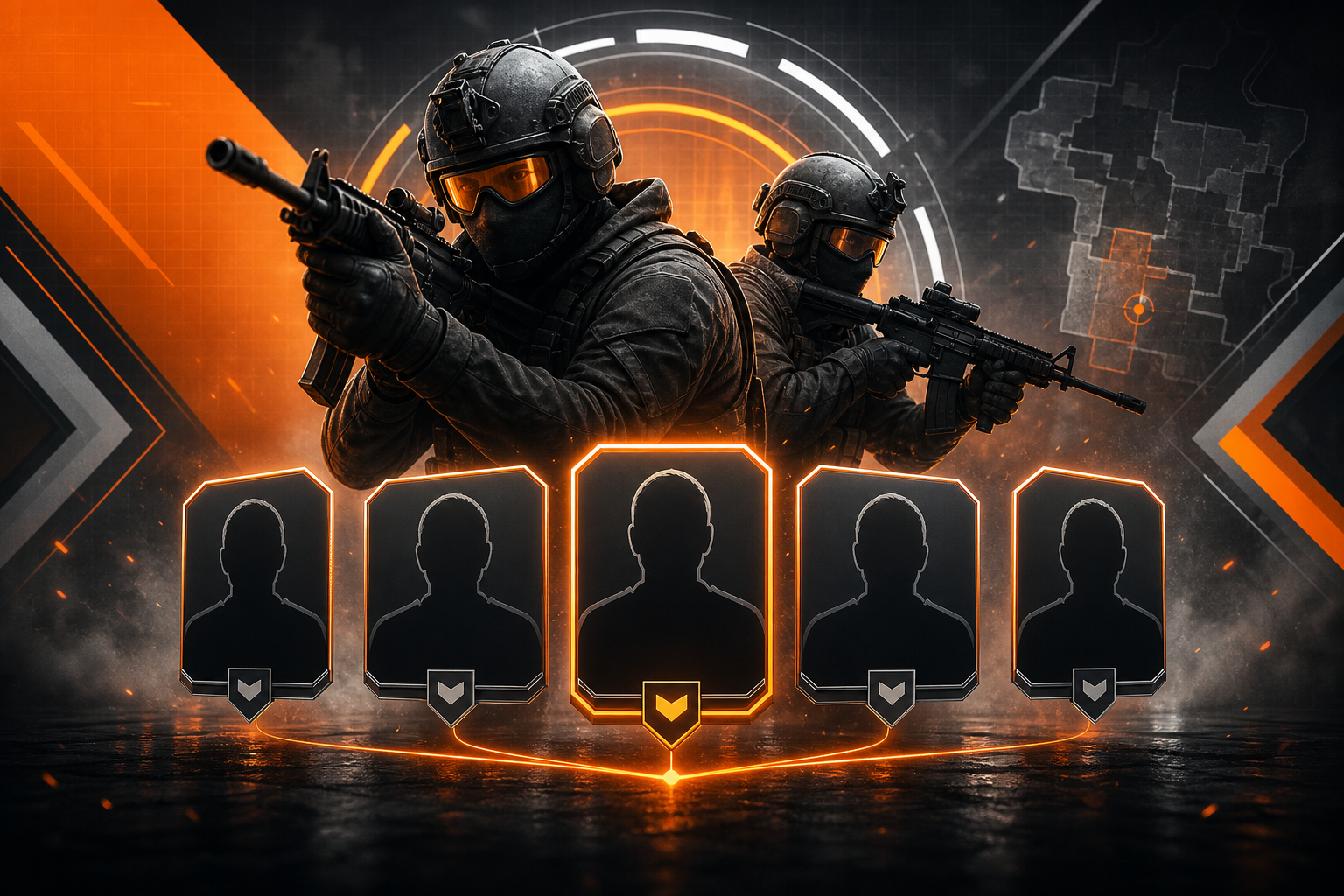
    Building a five-stack quickly is no longer a matter of chasing DMs, waiting on timezone overlap, and hoping everyone shows up. In a competitive environment where practice windows are short and latency matters, the real advantage is operational: can you assemble five compatible players, verify trust signals, and launch a scrim without wasting momentum?

    That is exactly where modern scrim infrastructure is ing. Platforms like PRACC are designed around instant opponent search, profile-hover details, and quick accept/send flows, while broader ecosystems like Discord communities, stat overlays, and verification-driven tournament systems show that teams want less coordination over and more time in-game.

    Why five-stack formation has become a systems problem

    For competitive teams, the challenge is not simply finding five players. It is finding five players who are available now, fit the role map, and are credible enough to avoid a wasted session. When practice time is fixed and scrim windows are short, every minute spent coordinating is a minute lost to warmup, strategy review, or actual gameplay.

    This is why the modern five-stack workflow looks less like social networking and more like queue orchestration. A team needs a way to expose availability, compare skill indicators, and confirm that the match is worth taking before the first invite is sent. PRACC’s “list your practice times or search for an instant opponent” flow aligns directly with that need.

    In practice, this changes the unit of work from “find a team” to “resolve a match state.” The faster a platform can reduce uncertainty around availability, skill, and trust, the faster a stack can move from planning to scrimming. That shift is important for both high-level teams and the staff supporting them.

    Verified profiles reduce friction before the scrim starts

    Verification is not just a badge; it is a trust mechanism. In competitive gaming, profile verification helps teams filter out low-signal accounts, casual users, and unreliable opponents before they consume scheduling bandwidth. PRACC’s profile-hover design exposes team information and reliability signals at the moment of evaluation, which makes the decision process immediate rather than speculative.

    That matters because scrim quality depends on more than raw MMR or a public rank. Teams need to know whether the opponent is consistent, whether they show up on time, and whether their historical behavior supports a usable practice session. PRACC’s use of multiple platforms and ratings to indicate skill level and behavior is a practical model for that kind of filtering.

    The broader ecosystem reinforces the same principle. Discord discovery surfaces communities labeled “Verified & Partnered,” and FACEIT’s 2026 Esports Nations Cup rulebook requires all five active players plus listed substitutes to be fully citizenship-verified before the first scheduled match. In other words, verification is already part of the competitive stack, both for trust and for eligibility.

    Instant 5v5 scrims depend on low-friction matching

    Instant scrims only work when the matchmaker minimizes decision latency. PRACC’s search flow is built around immediate action: teams can search for an opponent, accept an offer, or send their own once a suitable match is found. That removes the long back-and-forth usually associated with arranging a practice game.

    From an operational standpoint, this is the difference between asynchronous coordination and real-time logistics. Traditional scrim scheduling often involves multiple messages, manual confirmations, and repeated availability checks. A flow that allows teams to list practice times or search for an instant opponent collapses that over into a single workflow.

    There is also a tactical benefit. When a team can enter scrims faster, it can iterate on maps, side selections, execute timing, and adaptation loops more frequently. That is especially useful for organizations running short practice blocks or bootcamp schedules, where the cost of dead time is high and the value of each map is measurable.

    Reliable opponent selection starts with measurable signals

    Teams rarely want a random five-stack; they want a suitable one. That is why measurable indicators matter. PRACC’s leaderboard publicly surfaces player points, playtime, K/D, and shot percentage, which are exactly the kinds of signals that help teams estimate whether a scrim partner will provide the right level of resistance.

    Stat-based matching is already part of the scrim ecosystem. A Chrome extension like Scrims Helper pulls official stats from VLR.GG into PRACC.com to help teams evaluate scrim partners, showing that communities are actively combining external data with platform-native search. That pattern suggests a maturing workflow: identify, enrich, compare, and then commit.

    For platform engineers and organizers, this creates a clear design goal. The matching layer should not merely find available teams; it should rank them by fit, reliability, and expected practice value. When those signals are visible up front, the probability of a productive scrim increases significantly.

    Community demand proves the model is already working

    Discord discovery pages make the demand side obvious. Communities built around “LoL Team Finder” and “NA Practice Scrims” show that players are already organizing around fast team formation and immediate practice matchmaking. The need is not theoretical; it is visible in the way users self-select into dedicated scrim and team-finding spaces.

    LeagueHub is another useful example. Its “Daily 5v5 customs” queue automatically detects and ends games, while the community description emphasizes “Teams and scrims to practice like pros.” That combination shows how modern communities increasingly automate the repetitive parts of practice logistics so players can focus on game quality.

    Even utility bots are reflecting the same trend. A Discord application listing describes itself for “Any competitive 5v5 or 6v6 team that needs to know who can play each week” and includes commands to “/scrim” for scheduling and management. The market is clearly moving toward lightweight orchestration tools that make team formation and practice coordination feel like infrastructure, not administration.

    What a strong five-stack workflow should look like

    A good five-stack workflow starts with availability, then adds trust, then resolves into action. First, a team declares practice windows or searches for an immediate opponent. Next, the platform exposes the opponent’s reliability and skill signals without forcing users to open multiple profiles or external tabs. Finally, both sides accept and move into the scrim with minimal delay.

    That sequence is important because it mirrors how competitive operations teams think. The objective is not just to fill slots; it is to maintain training velocity. A high-quality system should reduce coordination over, prevent mismatched sessions, and make the best available practice opportunity obvious within seconds.

    In technical terms, this means the platform must treat matchmaking as a low-latency state machine. Availability, eligibility, confidence, and acceptance are all states that can be surfaced and resolved quickly. PRACC’s instant search and accept/send model is a strong example of how that state machine can be made usable for teams.

    Why this matters for teams, engineers, and organizers

    For teams, the value is simple: less waiting, better scrims, and more time practicing the game itself. Verified profiles and instant 5v5 matching reduce the risk of wasted sessions and help players enter each practice block with more confidence in the opponent they are about to face.

    For engineers and platform owners, the takeaway is equally clear. Competitive gaming infrastructure needs to support discovery, verification, reputation signals, and rapid match acceptance as core primitives. The ecosystem around Discord communities, FACEIT verification, and stat-enriched tools suggests that users are already expecting this stack.

    For organizers, the practical win is scheduling efficiency. When teams can assemble a five-stack in minutes and launch a scrim immediately, event planning becomes more predictable and practice quality becomes easier to standardize. That is the real advantage of building around verified profiles and instant 5v5 workflows.

    Build the stack faster, and the training loop gets tighter. That is the key insight behind instant scrim platforms: they do not just find opponents, they remove the hidden costs that slow competitive improvement.

    As more communities adopt verification signals, stat-based filtering, and automated match orchestration, the five-stack becomes less of a coordination challenge and more of a dependable operational pattern. In a game where timing matters, that is a meaningful edge.

  • Master team timing and utility as smoke and explosions interact

    Master team timing and utility as smoke and explosions interact

    In CS2, smoke is no longer just a flat layer of vision denial. It is a volumetric system that interacts consistently across players, explosions, and fire, which means timing, spacing, and team coordination now matter more than ever. For competitive teams, the tactical value of smoke is tied directly to when it blooms, how it overlaps with utility, and how opponents can read or counter that sequence.

    That shift has practical implications for players, analysts, and infrastructure teams supporting competitive environments. When smoke and explosions interact predictably, teams can build more reliable execs, retakes, and late-round conversions around exact utility windows. In a game where milliseconds decide whether a rotate lands or a site falls, understanding those windows is part of competitive infrastructure, not just game sense.

    Why CS2 smoke timing is fundamentally different

    CS2’s smoke grenades are volumetric 3D objects rather than the older static model, and Valve stated that the upgrade extended to explosions, fire, smoke, muzzle flashes, and other effects. That matters because utility now behaves as a shared space effect rather than a simple on-off visual blocker. Teams can no longer treat a smoke as if it were a guaranteed binary wall; they have to account for how it occupies space and how other utility alters that space.

    Liquipedia notes that smoke grenades detonate only after completing their movement, which is why lineups and long-range set pieces rely on exact release and travel timing. If a team throws a smoke too early or too late, the rest of the execute can desync. In professional play, that desync often gives defenders the extra second they need to reposition, re-scope, or re-take a crucial angle.

    This is why CS2 utility is best understood as a timing system. The smoke itself is not the whole play; it is the clock that other actions are measured against. Coordinated teams are now rewarded for precise sequencing, while sloppy spacing between smokes and follow-up damage can be punished more reliably than in previous Counter-Strike versions.

    How HE grenades changed the smoke equation

    Valve has repeatedly tuned HE grenade and smoke interactions in CS2, which shows that this layer of utility remains an active balance area. One documented change reduced HE grenade effect time on smokes, while a later update made HE explosions inside smoke clear the accumulated smoke-screen effect on players within range. Those changes create more consistent outcomes, but they also make timing thresholds more important for both sides.

    A March 30 update added another meaningful constraint: HE grenades no longer affect smokes through walls. That directly impacts utility layering and anti-stack timing. Before that change, teams could rely on indirect splash interactions to pressure a smoke or punish players near it; now they need cleaner geometry and clearer information on when the damage is actually supposed to connect.

    The tactical result is simple: if your execute depends on a grenade landing before or during a smoke state, you must plan around the exact moment of contact. A late HE may fail to create the intended disruption, while an early HE can be absorbed by spacing that the defenders have already anticipated. At the highest level, those small differences determine whether a site entry becomes clean or collapses into a stalled posturing round.

    Using smoke as a timing tool, not just a vision tool

    Liquipedia’s smoke-grenade entry makes an important point: smoke can be used defensively to delay pushes and buy seconds for rotations or site adjustments. That means smoke is not only about denial of sightlines; it is also about controlling the rhythm of the round. A well-placed smoke can force attackers to pause, re-clear, or burn more utility before they commit.

    HLTV’s spectator guidance frames utility as a system for control, information denial, damage, and counter-utility, and teams often use it to force rotations before hitting the other site. In practical terms, a smoke can be used to manufacture uncertainty long enough for defenders to over-rotate. Once those rotations move, the offensive team can pivot into a weaker site or exploit a gap in the defense’s utility cycle.

    That is why smoke timing is so important in modern CS2. A smoke placed too early may give defenders time to adjust, while a smoke placed too late may arrive after the decisive window has already closed. The best teams treat smoke as a scheduler for the round, not a static object in the lane.

    Coordination windows in executes and retakes

    HLTV and Liquipedia both describe professional executes as coordinated attacks that use synchronized utility to take a bombsite with minimal resistance. That definition is much stricter in CS2 because the smoke system is more consistent across players and more sensitive to spacing. If one player throws off-tempo, the entire execute can lose its pressure curve.

    In a clean execute, the smoke should support flash timing, entry timing, and post-plant spacing. If the smoke blooms before the flashes are ready, defenders can prefire the choke. If the explosions and smokes overlap correctly, however, the attacking team can force defenders into unhelpful positions, reduce crossfire value, and convert the entry into a manageable trade sequence.

    Retakes work the same way in reverse. Defenders who understand smoke timing can use HE damage, delayed peeks, and counter-smokes to reclaim space in a structured sequence rather than a rushed gamble. The team that understands the utility window first usually wins the information battle, and in CS2 that often means winning the site.

    Distance, sound, and the information layer

    Valve also added adjustments to smoke grenade sound timing at a distance, which is a useful reminder that smoke is not only a visual mechanic. It is also part of the information game, influencing how teams interpret timing, distance, and possible map control. If players hear smoke cues differently at range, then the value of that cue depends on where they are, what else is happening, and whether the round is already being manipulated by fake pressure.

    That matters for analysts and coaches because sound timing can change how a team reads an execute. A distant smoke cue can create a false sense of urgency or a delayed response depending on the setup. When paired with utility layers and occasional HE interaction, the auditory side of smoke becomes part of the decision-making process rather than background noise.

    In coordinated play, this means teams should review not only the placement of smokes but also the exact sequence in which they are heard and seen. The more precise that sequence, the harder it becomes for defenders to distinguish a real hit from a timing fake. That is especially relevant in pro-level Counter-Strike, where information control is often worth more than raw damage.

    Post-plant pressure and late-round control

    Liquipedia notes that a CT can still defuse while standing in smoke, which changes how teams should think about post-plant utility. A smoke is not always a hard stop; sometimes it is only a temporary concealment layer that buys time for the planter’s team to reposition. If the defenders understand that, they can use timing, sound, and support utility to force the defuse anyway.

    This makes post-plant smoke timing a critical late-round skill. Teams often need to align smoke duration, HE pressure, and crossfire discipline to make the bomb impossible to tap safely. If a smoke fades too soon, the defenders regain a clean line of sight. If it lasts through the critical defuse attempt, it can force a risky guess, but only if the attackers are positioned to punish it.

    Because CS2’s smoke interactions are more consistent, teams can prepare more reliable post-plant sequences. But that consistency also helps defenders calculate their counterplay. The round becomes a contest over when the smoke ends, when the damage lands, and whether the attacking team has enough spacing to protect the bomb after the first contact.

    What teams should train for now

    Teams should train smoke and explosion interactions as a timing module, not just as isolated utility mechanics. That means reviewing lineups, damage windows, and spacing between the first smoke and the follow-up HE or flash. It also means rehearsing what happens when the enemy destroys the pace by delaying, spamming, or re-smokeing the key area.

    Coaches and analysts should pay special attention to executes where the attack succeeds only because the defenders are late to respond. HLTV’s Meta Monday analysis describes a round where a team threw utility, delayed the hit, and then struck once CT utility expired and rotations moved away. That is the model teams should study: not merely a fast hit, but a timed hit that exploits the opponent’s utility exhaustion.

    For technical staff and organizers, the main takeaway is consistency. Competitive infrastructure should support stable server performance, low latency, and reproducible utility behavior so teams can trust their practice. In a system where smoke and explosions are part of the tactical language, even small delays can distort the lesson being learned.

    Teams that master these windows will gain an edge in both attack and defense. They will know when to wait, when to force movement, and when to use smoke as a timing device rather than a simple cover object. In CS2, that distinction is now central to winning rounds.

    The broader lesson is that smoke and explosions are no longer separate ideas in competitive Counter-Strike. They are linked parts of a timing network that defines how executes, retakes, and post-plants unfold. Teams that internalize that network can make better decisions under pressure, while everyone else is left reacting to utility they failed to synchronize.

  • Find reliable five-stack partners after Valve’s ranking shake-up

    Find reliable five-stack partners after Valve’s ranking shake-up

    Valve’s late September 2026 VRS update changed more than invite spreadsheets. It also exposed how unstable the competitive ecosystem has become for teams trying to build dependable five-stacks around the current ranking environment. When tournament access depends on the latest Valve Regional Standings snapshot, player availability, team formation, and even practice partner selection start to matter in a more operational way.

    For eSports teams, platform engineers, and competition organizers, the practical question is no longer just who is strong enough to scrim. It is who can stay eligible, queue cleanly, and remain consistent under a ranking system that is influencing both top-tier invite logic and everyday Premier matchmaking behavior.

    Why the ranking shake-up changed five-stack planning

    HLTV reported that Valve’s belated September 8, 2026 VRS update created chaos among tournament organizers because invite decisions depend on the most recent VRS snapshot at the time of allocation. That matters far beyond the invite table. When the system controlling access to BLAST Rivals, PGL Bucharest 2027, and the PGL Major Singapore 2027 keeps moving, team managers and analysts need a more disciplined approach to selecting partners for consistent five-stack play.

    As of HLTV’s September 22 snapshot, Europe’s top VRS teams included Spirit, Falcons, MOUZ, FUT, and The MongolZ. That top-end volatility signals a broader truth: the pool of reliable partners changes quickly, and teams that looked stable a week ago may no longer be the best long-term queue or practice choice.

    In this environment, five-stack formation should be treated like infrastructure planning. You are not only looking for raw skill, but for teams with predictable availability, stable rank behavior, and a clear relationship to the current VRS-driven competitive cycle.

    Use Prime status as the first filter

    Steam Support is explicit: free CS2 players can access most modes, but Premier requires Prime Status. That alone makes Prime the first hard filter when you are trying to find reliable five-stack partners after the shake-up. If your group is split between Prime and non-Prime, you are already introducing inconsistency into access, queue quality, and matchmaking expectations.

    Valve also states that mixed Prime and non-Prime parties can queue together, but the lobby is treated as non-Prime and matched accordingly. For organizers and team leads, that creates a clear operational risk: a single non-Prime participant can downgrade the lobby’s matchmaking environment and distort the intended practice conditions.

    In practical terms, Prime-only groups are easier to standardize, easier to audit, and less likely to inherit avoidable queue noise. If reliability is the goal, do not treat Prime as a nice-to-have. Treat it as a baseline requirement.

    Match similar rating bands, not just similar ambition

    The community continues to report Premier rank-gap restrictions and rating swings in five-stack queues, especially when players try to queue with wide rating differences. Even when exact thresholds vary by update and situation, the operational lesson is consistent: large skill dispersion inside a stack usually produces unstable matchmaking outcomes and uneven rating movement.

    Recent Steam discussions also show players describing frequent +/− rating swings in five-stack environments. That makes partner selection more than a social choice. It becomes an engineering decision about variance control. If your group’s ratings are scattered too widely, you increase the likelihood of mismatch, tilt, and inconsistent progression.

    The safest approach is to prioritize similarly rated players or teams that sit in the same competitive band. This does not mean identical skill levels, but it does mean predictable parity. Reliable five-stack partners are those whose rank spread does not force the matchmaker to compensate heavily.

    Prefer teams with stable activity and clean matchmaking history

    Valve’s Trust Factor system uses multiple signals, including phone numbers and Counter-Strike 2 rank, and it explicitly rewards legitimate play. That means activity profile matters just as much as raw ability. A five-stack that queues regularly, avoids disruptive behavior, and maintains consistent account integrity will usually offer a better long-term partnership than a stronger but erratic group.

    Teams with active schedules also solve a major coordination problem: they are easier to actually field. Reliability is not only about in-game performance. It is about whether the stack can show up on time, maintain the same roster, and avoid last-minute substitutions that change the queue’s quality.

    If you are building a partner network, look for teams with a defined play cadence, stable roster management, and no obvious matchmaking red flags. In a volatile VRS climate, consistency becomes a competitive advantage because it reduces the number of uncontrolled variables.

    Avoid boosting patterns and mixed-intent lobbies

    Reports of five-stack boosting abuse remain active into 2026, with players describing low-rank accounts being used to elevate higher-rated teammates. That behavior may temporarily improve rating outcomes for some participants, but it damages matchmaking fairness and makes those lobbies poor long-term partners for serious teams.

    From a tactical standpoint, boosting-heavy groups are unreliable because their queue behavior is not built around competitive integrity. They can distort rank movement, create uneven engagement quality, and introduce account-risk concerns that no organized team should want near its scrim or practice pool.

    If a group’s reputation suggests it is using matchmaking as a ranking exploit rather than a training environment, exclude it. Reliable five-stack partners are not the same as convenient five-stack partners. The former preserve the quality of the ladder; the latter usually degrade it.

    Track VRS movement when choosing partners for team prep

    HLTV’s September 2026 news archive shows that ranking-impacting tournament results are still shifting the VRS landscape week to week. That matters because your partner pool is indirectly shaped by the same competitive movement that controls invite access. Teams rising through the standings often have better scheduling discipline and clearer structures, while teams falling out of contention may become less available or less motivated.

    This is especially important for organizations that use outside five-stacks as practice proxies. A partner team that changes core members, grinds different ladders, or pivots toward qualification runs can stop being a stable option with very little warning. After Valve’s ranking shake-up, the half-life of “good partner” status is shorter.

    For this reason, maintain an internal watchlist of active teams by region, rating band, and recent availability. The goal is not to chase the top of the VRS table; it is to identify groups with enough continuity to support repeated, meaningful queues.

    Build a partner shortlist with operational criteria

    The most reliable selection process is a simple scoring model. Start with Prime status, then filter by rating proximity, then check activity frequency, and finally review behavior history. If a potential partner fails any of those stages, it should not be in your default five-stack rotation.

    This approach also helps content editors, analysts, and technical staff explain why one partner is preferred over another. In a VRS-driven ecosystem, decisions should be defensible. You should be able to point to objective criteria such as account status, queue consistency, and expected rating stability.

    A good shortlist is usually small. Three to five dependable partner teams are often better than a broad list of inconsistent options. The smaller the list, the easier it is to maintain standards and the less time your staff spends troubleshooting avoidable matchmaking issues.

    Make the five-stack resilient, not just strong

    The post-shakeup lesson is straightforward: reliability now matters as much as competitive level. Valve’s ranking system is the official gatekeeper for many tournament opportunities, and the same ecosystem influences how players experience Premier at the queue level. That makes partner selection a structural decision, not a casual one.

    Teams that prioritize Prime-only participation, close rating bands, regular activity, and legitimate play will produce the most stable five-stack environment. In practice, that means better queues, cleaner practice data, and fewer surprises when the matchmaker or the VRS table shifts again.

    If you are rebuilding your partner network after Valve’s changes, optimize for predictability first. Strong partners are useful. Reliable strong partners are what actually keep a team competitive.

  • Refine team tactics with timeline markers, demo review and workshop scripting

    Refine team tactics with timeline markers, demo review and workshop scripting

    Competitive teams often talk about “communication issues” or “bad reads” when a matchweek or sprint goes sideways, but that framing is usually too vague to be useful. In practice, the more productive move is to reconstruct the sequence of events, review the demo as a conversation, and turn the workshop into a repeatable operating procedure. That combination gives teams a better way to understand what actually happened before they start arguing about what should have happened.

    For eSports teams, platform engineers, and competition staff, this matters because timing, dependencies, and latency-sensitive decisions rarely fail in isolation. A timeline retro can expose when kickoff slipped, when a server change landed, when a demo surfaced a mismatch, or when staffing changed the shape of the work. Once those moments are visible, demo review and workshop scripting can move the team from blame to specific, testable action.

    Start with chronology, not opinions

    The first step in any useful retrospective is to rebuild the sequence of events in order. A timeline retro does that by plotting milestones left to right so the team can align on kickoff, demo, incidents, staffing changes, and requirement shifts before debating fixes. That sequence is important because memory is rarely neutral under pressure, especially after an outage, a bad build, or a failed tournament day.

    When teams add timeline markers, vague frustration becomes concrete. Instead of saying “the network was flaky,” the group can pin down when packet loss started, which scrim or deployment it affected, and what changed immediately before the issue surfaced. That specificity makes causality discussable and reduces the usual drift into memory-based blame.

    This approach is especially valuable in high-variance work such as incident-heavy releases, major tournament operations, and live infrastructure changes. SprintPulse notes that a timeline-based retro can be a better fit than a simple Plus/Delta session when the team has had a serious incident. In those cases, the chronology itself is the artifact that keeps the discussion honest.

    Use timeline markers to expose dependencies

    Timeline markers do more than label events; they reveal dependencies across teams and systems. Atlassian’s retrospective guidance frames timelines as a way to keep teams in sync with stakeholders by showing releases, work items, and dependencies on one shared view. For competitive gaming operations, that shared view can include code deploys, rule-set updates, observer tooling changes, and content deadlines.

    A strong marker set also helps teams compare intended flow against actual flow. One 2026 retrospective article recommends reviewing the original scope and success criteria alongside what actually shipped. That comparison matters because a project can appear “on track” in meetings while drifting from the conditions that were supposed to define success in the first place.

    There is also a practical benefit for handoffs. When support, infrastructure, and content teams all point to the same sequence, they can locate where the handoff broke down rather than re-litigating every prior conversation. In that sense, the timeline becomes a coordination tool, not just a meeting visual.

    Reconstruct the sprint or event like a replay

    Recent retrospectives increasingly use “timeline replay” to surface patterns that standups miss. The basic idea is simple: reconstruct the sprint or event chronologically and let the data tell the story day by day. That approach works well in eSports operations, where a chain of small decisions can produce a large downstream effect on latency, readiness, or competitive fairness.

    Chronological milestone lists are now a common workshop artifact for exactly this reason. A practical sequence might be kickoff, architecture decisions, first demo, integration, testing, release, and first week in production. For a tournament or live service environment, the same pattern can be adapted to rehearsal, server provisioning, matchday validation, incident response, and post-event stabilization.

    Some newer scripts even add event ratings to each milestone, marking highs, neutrals, and lows on the timeline. That light layer of scoring helps the team identify which moments deserve deeper analysis without turning the exercise into a subjective referendum on the whole project. It is a simple way to separate signal from noise.

    Make demo review an actual feedback conversation

    Demo review should not be treated as a polished presentation where stakeholders passively watch a reveal. PMI’s Disciplined Agile guidance is explicit that a product demo is a conversation with stakeholders about what was done and what to do next. That framing changes the purpose of the meeting: the goal is not performance, but fast alignment.

    For teams trying to reduce rework, early demos are more valuable than late demos. PMI emphasizes that it is better to demo early and receive constructive feedback early than to discover mismatches later that turn into technical debt. In competitive gaming terms, that can mean showing an interface, workflow, or server behavior while there is still time to adjust the design before matchday constraints lock it in.

    Demo cadence also needs to stay flexible. PMI notes that demos can happen whenever a feature or story is ready and stakeholders are available, rather than being chained to iteration boundaries. That flexibility is useful when a feature reaches a meaningful checkpoint, or when a live operations issue needs immediate stakeholder input before the next scheduled review.

    Script the demo so complex work stays visible

    Multi-person demos work best when the flow is scripted. GitLab’s handbook recommends that the demo owner break the intended outcome into smaller procedural steps and capture them as demo steps. That practice makes the demo repeatable, easier to hand off, and less likely to lose the plot when several people are involved.

    Assigning a DRI for each demo track is equally important. GitLab’s process calls for a functional team leader to own each track so the team does not fall into the classic “everyone owns it, no one owns it” problem. In a distributed eSports or platform environment, that role clarity prevents the demo from becoming a chain of assumptions.

    Structured demo scripting also improves how teams present high-risk or infrastructure-heavy work. If the track includes observability, latency, match orchestration, or rollback behavior, a scripted path ensures the audience sees the specific control points that matter. That is much more valuable than a generic tour of screens and dashboards.

    Build the workshop script around accountability

    Modern retrospective guidance increasingly treats accountability as something you design into the workshop, not something you hope appears later. One 2026 retrospective guide says the output should be one to three action items with owners and due dates, and that the previous retro’s actions should be reviewed at the start of the next session. That creates continuity and prevents retros from becoming a cycle of insight with no follow-through.

    Another recent guide frames action tracking as a contract rather than a checklist. That distinction matters because a checklist implies completion is optional, while a contract makes commitment visible to the group. Time-boxing each section of the workshop reinforces that discipline by keeping the team moving from review to analysis to action without lingering too long in any one phase.

    Recent kits increasingly bundle the format, facilitator script, and action tracker together for exactly this reason. The Hunger Engine’s starter kit, for example, combines a retrospective format with a facilitator script and action tracking so commitments are recorded and revisited. The practical effect is a workshop that produces decisions, not just discussion.

    Protect psychological safety while staying direct

    A scripted workshop should not feel rigid or punitive. GoalPath’s facilitator guidance is useful here because it warns that hedging, deflection, or avoidance can signal the room does not feel safe enough for honest feedback. If participants are softening every statement, the script may be technically thorough but socially ineffective.

    That means the facilitator has to make the process direct without making it hostile. Timeline markers help because they move the conversation away from generalized judgment and toward observable moments. Instead of asking who failed, the facilitator can ask what happened at a specific point, what signals were available, and which decision changed the outcome.

    Shared chronology can also strengthen identity, not just analysis. Naboo’s 2026 team timeline activity reconstructs key moments in team history on a visual timeline, reinforcing the value of shared context. That same principle applies to retrospectives: when people agree on the sequence, they are more likely to discuss the work rather than defend their recollection.

    Adapt the method to incidents, releases, and live operations

    Not every workshop needs the same structure. Timeline-based retros are especially effective when the team has experienced a serious incident, a high-stakes release, or a matchday disruption where sequencing matters more than general sentiment. In those cases, the team should prioritize what happened, when it happened, and what changed immediately before the failure or success point.

    That adaptation is particularly relevant in live infrastructure work. A latency spike, a misconfigured service, or a late requirement shift often interacts with staffing and deployment timing in ways that are easy to miss in a standard discussion. A timeline retro helps isolate those interactions before they become repeat patterns.

    The same logic applies to demo review in production-like environments. If a feature demo reveals an integration gap, the team should capture the event as part of the timeline, not treat it as an isolated surprise. That makes the retrospective more useful because it connects the demo outcome to the operational chain that produced it.

    Close the loop with visible follow-up

    The best retrospective or workshop script ends with commitments that can be checked later. That is why the strongest recent guidance recommends ending with committed action items, owners, and due dates instead of leaving the team with only observations. If there is no follow-up mechanism, the timeline becomes a historical record rather than a management tool.

    A clean close also makes the next session easier to run. Reviewing prior actions at the start of the next retro creates continuity and lets the team measure whether the agreed changes actually influenced the next sprint, event, or release. That discipline is especially valuable in eSports operations, where recurring issues can hide behind changing lineups and short event cycles.

    Ultimately, timeline markers, demo review, and workshop scripting solve the same problem from different angles: they make complex work visible, discussable, and accountable. When teams reconstruct events chronologically, treat demos as feedback conversations, and script the workshop around explicit ownership, they replace guesswork with operational clarity. That is the foundation for better tactics, lower rework, and faster adaptation under pressure.

    For teams working in competitive gaming and live infrastructure, that clarity is not administrative over. It is part of the performance stack. The better the team can see what happened, the faster it can refine how it will act next time.

  • How QuickFrag streamlines building a five-stack, from verified profiles to instant scrims

    How QuickFrag streamlines building a five-stack, from verified profiles to instant scrims

    Building a reliable five-stack in CS2 is mostly a systems problem disguised as a social one. The hard part is rarely finding five players; it is coordinating identities, schedules, server access, match settings, and post-game review without turning every scrim night into admin work.

    QuickFrag is positioned around that exact workflow. By combining verified Steam-based profiles, roster management, private scrim hosting, and demo review in one platform, it reduces the number of tools a team needs to keep a five-player unit active and repeatable.

    Verified profiles create a trustworthy five-stack base

    Any serious stack needs a dependable identity layer before it can be treated like a team. QuickFrag requires Steam authentication, which means player identities are verified rather than improvised, and the stats tied to those profiles are less likely to be polluted by throwaway accounts or untracked alternates.

    That matters operationally. When roster decisions depend on performance, attendance, and consistency, the platform needs to preserve a stable record of who played, how they played, and how often they showed up. QuickFrag’s profile system is built for that, with persistent identity, rank, ELO, match history, statistics, achievements, progression, inventory, and activity stored across sessions.

    For team staff, this reduces the amount of manual verification normally required before a scrim or tryout. Instead of cross-checking names in Discord and spreadsheets, organizers can rely on authenticated profiles and a shared historical record that follows the player through repeated matches.

    Roster management and recruitment happen in one place

    QuickFrag does not treat recruitment as a separate admin workflow. Its teams page says teams can run their roster, recruit players, and launch private scrims from the same environment, which is important for stacks that are still stabilizing or cycling through substitutes.

    That integration changes how a five-stack is formed. A captain can track who is already in the roster, identify gaps in role coverage, and bring new players into the process without moving between recruiting channels, shared docs, and separate scrim tools. The result is less friction between scouting and practice.

    This is especially useful for training teams and Discord communities that rotate participants. QuickFrag’s German product messaging explicitly positions the platform around coordinated match creation and structured player profiles for friend stacks, training teams, and scrim organizers, which makes it easier to treat the five-stack as a persistent unit instead of an ad hoc queue.

    Instant scrim provisioning removes the scheduling bottleneck

    The fastest way to lose a scrim night is to spend the first 20 minutes finding a server. QuickFrag’s core promise is that it can provision dedicated CS2 servers for private 5v5 scrims in under 60 seconds, which significantly changes the pacing of team practice.

    That speed matters because five-stack sessions are usually time-boxed. If a team only has a few hours, every minute spent configuring IPs, connecting to rented infrastructure, or waiting for a host to finish setup reduces actual practice time. QuickFrag’s model is built to eliminate that dead time.

    It also helps organize closed 10-player matches and stack nights without requiring a VPS rental or shared network exposure. By keeping provisioning internal and on-demand, the platform removes a layer of infrastructure management that usually belongs to platform engineers or the most technically fluent player on the roster.

    Private scrims give stacks a controlled practice environment

    Private lobbies are where a five-stack stops behaving like a casual queue and starts behaving like a unit. QuickFrag’s features page says private CS2 lobbies are designed for scrims, stack nights, and closed matches, which makes the platform suitable for controlled practice rather than public matchmaking only.

    The value here is operational consistency. Teams can reuse the same settings, the same ruleset, and the same match structure while keeping outsiders out of the session. QuickFrag explicitly frames this as a way to host matches without renting a VPS or sharing IP addresses, both of which are recurring pain points for smaller teams.

    Private scrims also give organizers a cleaner way to manage attendance and readiness. When the session is already a closed 10-player environment, it is easier to confirm who is in the room, who is substituting, and which side each player should start on before the first round begins.

    Structured match settings turn casual groups into repeatable practice

    A five-stack improves faster when every session follows a predictable format. QuickFrag emphasizes structured competition settings such as MR15 rules, map vote, and result tracking, which are the kind of controls that make scrims useful for development instead of just warm-up games.

    Public matchmaking is also described as a fast path to a competitive 5v5 server, with ELO updates saved to the player profile after each game. That gives the platform a progression layer even when the group is not running a private scrim, and it helps players track whether the stack is improving over time.

    For team staff and analysts, the important detail is that the match is not just played; it is recorded in a way that can be revisited. Result tracking and profile-linked outcomes support post-session review, lineup decisions, and basic competitive reporting without building a separate data pipeline.

    Demo review closes the loop after the scrim

    Five-stack building is not only about getting into a server quickly. It is also about extracting value from each session, and QuickFrag addresses that through Clip Studio, which lets teams upload scrim demo files and export per-player highlights.

    That workflow is practical for both coaching and content operations. A team can review mistakes, identify repeat patterns, and pull clips for internal analysis without exporting data into a third-party editing chain. PeerPush’s review of the platform also notes that demo processing can support clips in 16:9 and 9:16 formats for YouTube, TikTok, Instagram Reels, Shorts, Discord, and similar destinations.

    For a competitive stack, this is more than media convenience. When the same platform supports scrims and post-scrim review, the feedback loop gets shorter, and the team can move from one session to the next with fewer tools and fewer points of failure.

    Why the platform architecture matters for team continuity

    QuickFrag’s broader positioning is that it replaces fragmented tooling. Its team-facing language directly calls out the problem of juggling Discord, VPS rentals, and spreadsheets, and asks whether a stack can coordinate without five different apps.

    That framing is important because five-stack continuity depends on more than player skill. A team needs a stable identity system, a reliable way to launch matches, a method to track results, and a review path after the game ends. QuickFrag centralizes those steps so the stack does not dissolve into administrative over.

    The platform’s current messaging also suggests it is actively maintaining this product direction. Recent listings and crawl timestamps indicate that verified profiles and instant scrim provisioning are not legacy features buried in old documentation; they are part of the current public positioning for teams that want repeatable 5v5 operations.

    For eSports teams, platform engineers, and competition organizers, the takeaway is straightforward: QuickFrag is designed to make the five-stack operational, not just social. By connecting verified profiles, roster management, instant dedicated servers, private scrims, and demo review, it turns a group of five players into a more durable practice unit.

    That durability is the real efficiency gain. When the stack can be assembled, verified, launched, tracked, and reviewed in one workflow, the team spends less time coordinating infrastructure and more time improving play.

  • QuickFrag’s recruitment hub simplifies joining ranked stacks and running private scrims

    QuickFrag’s recruitment hub simplifies joining ranked stacks and running private scrims

    QuickFrag’s team workflow is built around a simple operational idea: stop treating roster management, scrim setup, and player evaluation as separate systems. For CS2 teams, that matters because the highest-friction moments are usually the ones between “we need five” and “we are playing a real match.” QuickFrag positions its workspace as a recruitment hub that helps teams run their roster, recruit players, and launch private scrims on dedicated servers without the usual coordination over.

    That design choice is particularly relevant for academies, semi-pro stacks, and technical staff supporting competitive play. Instead of moving between Discord threads, spreadsheets, VPS rentals, and manual server setup, captains can keep recruitment and match operations in one place. In practice, that means a team can post tryouts, review applicants, chat before adding someone to roster, and then move the same group into a private 5v5 environment for evaluation under match conditions.

    Recruitment and scrims in one workflow

    QuickFrag’s team page is explicit about the intended use case: captains can “post open tryouts, review applications, and chat before adding to roster.” That language matters because it connects recruitment to execution. A recruit is not just a profile to review; on QuickFrag, they can move through the same system that later hosts the team’s private games, which reduces the operational gap between trial and verification.

    The platform also frames this as a combined “scrim + recruitment hub” for teams that need to operate quickly. The recommended pattern is straightforward: identify candidates, discuss fit, then run a week of private matches if needed. For teams trying to assess role discipline, communication, or game sense, that continuity is more valuable than a static application form or a standalone tryout server.

    From a team-ops perspective, the main benefit is visibility. Recruitment data does not sit in one tool while match outcomes sit in another. QuickFrag’s model keeps the selection process and the competitive validation process in the same workflow, making it easier for captains and coaches to make decisions based on both human feedback and in-match results.

    Private CS2 lobbies without the setup tax

    QuickFrag’s private scrim flow is designed to remove the usual setup tax associated with custom lobbies. The platform says private CS2 lobbies use a six-character invite code, so teams do not need to share IPs or manually coordinate connection details. Once ten players are ready, QuickFrag provisions a dedicated server automatically.

    That operational simplicity is important because scrims are often scheduled under time pressure. A stack may only have a narrow window between work, practice blocks, or tournament prep, and any friction in server setup consumes that window. QuickFrag claims private 5v5 scrims can launch on dedicated CS2 servers in about 60 seconds, with no RCON required, which makes the entire process more predictable for organizers and coaches.

    The practical result is that the server layer becomes infrastructure rather than a task. Teams can focus on vetoing maps, testing protocols, or evaluating new players instead of troubleshooting connectivity or permissions. For technical staff, this is the difference between maintaining an environment and babysitting one.

    Why stacks need invite-code-only lobbies

    QuickFrag describes private matches as ideal for “stacks,” “stack nights,” and “Friday-night stacks,” and the access model reflects that use case. Only players with the invite code can join, which gives teams a closed environment for practice, testing, and repeatable run-throughs. In competitive play, that level of control is not a convenience feature; it is a core requirement for consistency.

    Invite-code-only access also reduces accidental joins and the administrative problems that come with open lobbies. For a stack trying to get a clean session in under a strict timeline, controlled entry matters as much as low latency or stable server performance. It keeps the session aligned with the exact roster that the captain wants to evaluate or refine.

    QuickFrag’s messaging around free private scrims reinforces that accessibility. The platform says teams can create a lobby, share the invite code, and play MR15 tonight. For stacks looking for a practical way to rehearse defaults, test utility timing, or review map discipline, that is a low-friction path to real match reps.

    Dedicated servers with consistent match conditions

    QuickFrag emphasizes that both private and public 5v5 formats run on the same dedicated server infrastructure. That is significant from a competitive integrity standpoint because it limits variation in environment between queue modes. Teams evaluating players in private scrims are working on the same underlying infrastructure that powers broader matchmaking experiences.

    For organizers and platform engineers, the value of shared infrastructure is consistency. If match history, outcomes, and performance data all come from the same server backbone, it becomes easier to reason about stability, timing behavior, and result recording. QuickFrag’s private matches are invite-code only, while public matches use open queue, but both sit on the same dedicated server layer.

    This kind of architecture is especially useful when a team wants to transition from recruitment into active competition without changing systems. A player can be trialed in a private lobby, retained if they fit, and then continue into future sessions under the same operational assumptions. That continuity matters when teams care about both tactical adaptation and infrastructure reliability.

    Tracking performance from tryout to roster slot

    QuickFrag says match history, player stats, and results are recorded, including ELO progression after scrims. That turns each private match into more than a practice block; it becomes a data point in a recruit’s evaluation. For coaches and captains, the ability to inspect performance over time is more useful than a single standout game or a subjective post-match impression.

    The player-profile connection also helps when a team is testing multiple candidates across a short period. Because the results are tied to profiles, decision-makers can compare consistency, role performance, and trend lines rather than relying on memory or external notes. In an environment where roster changes can be costly, having a structured performance trail is a pragmatic advantage.

    For teams with technical staff, there is an additional benefit: measurement becomes part of the workflow instead of a separate analytics project. That makes it easier to support disciplined review cycles, identify whether a recruit’s impact is improving, and document why a player was added to roster. In short, the platform closes the loop between recruitment and competitive outcomes.

    Replacing ad hoc ops with a single team system

    QuickFrag openly markets the team workspace as a way to manage rosters, recruit, and host tournaments “without juggling Discord, VPS rentals, and spreadsheets.” That is a strong signal about the product’s target audience. It is not aiming to replace coaching judgment; it is trying to remove the fragmented tooling that slows competitive operations.

    For many teams, the hidden cost of those fragmented tools is coordination over. A roster note lives in one channel, a tryout schedule in another, server access in a third, and performance tracking in a spreadsheet that may or may not be current. QuickFrag’s recruitment hub simplifies that stack by keeping the most common team functions in one place, aligned around one operational model.

    The result is a more auditable process. Captains can see who applied, who was discussed, who was invited, and what happened in the scrims that followed. That clarity is valuable whether the team is an academy, a semi-pro roster, or an organizer managing multiple competitive sessions under time constraints.

    What this means for coaches, organizers, and solo players

    For coaches and competition organizers, QuickFrag’s model is attractive because it compresses the path from discovery to evaluation to match execution. The platform’s “For Teams” positioning is clear: it is the CS2 platform built for teams and coaches. That makes it easier to run repeatable recruitment cycles while keeping private scrims tied to actual team needs.

    For solo players, the workflow is not closed off. QuickFrag notes that solo players can still use recruitment or the team finder to locate a roster. That matters because a good recruitment system should support both sides of the market: teams looking for roles and players looking for structure, practice, and a chance to earn a slot.

    In practical terms, the platform is recommending a very specific operating model: use recruitment to find fit, use invite-code private scrims to validate it, and use the same infrastructure to keep the process moving. For teams that care about latency, consistency, and tactical preparation, that is a clean and defensible way to run competitive operations.

    QuickFrag’s recruitment hub is not just a convenience feature; it is an operational layer for modern CS2 team management. By unifying tryouts, private scrims, roster decisions, and match records, it reduces the number of tools and manual handoffs needed to field a serious stack.

    For ranked stacks, academies, and semi-pro teams, that means faster access to dedicated servers, cleaner player evaluation, and a more reliable path from tryout to rostered player. In a competitive environment where small delays and inconsistent setup can undermine preparation, a single workflow for recruitment and scrims is a practical advantage.

  • Gain the upper hand as a team: rotations, signals, and utility inspired by the pro meta

    Gain the upper hand as a team: rotations, signals, and utility inspired by the pro meta

    In the 2026 pro meta, gaining an advantage is no longer achieved solely through better aim or cleaner execution timing. It is also earned through the quality of rotations, the readability of utility signals, and a team’s ability to turn information into useful movement. For coaching staffs, analysts, and organizers, this has a direct impact: the way a squad reads the map determines its decision-making speed, mid-round stability, and resistance to pressure.

    Recent changes confirm this direction. Riot has clarified how controllable utility is read on the minimap, strengthened the connection between gunplay and abilities, and pushed several maps toward cleaner, less ambiguous rotations. In other words, the meta rewards teams capable of orchestrating short signals, clear responsibilities, and rapid transitions between taking space, falling back, and gathering information again.

    1. What the 2026 meta changed in team reading

    The starting point is simple: Riot has made utility easier to read and exploit during matches. Since Season 2026, the icons for certain controllable utilities and drones have displayed direction, allied/enemy colors, and even pursuit status for certain behaviors more clearly. In practice, this reduces the team’s cognitive load and improves the quality of real-time calls, especially when several players gather information simultaneously.

    This clarification is not merely cosmetic. It is part of the stated aim of creating a “healthy dialogue” between weapons and abilities, with clear ways to respond and adapt from round to round. Riot has also acknowledged that poorly coordinated utility could sometimes matter as much as a good strategic execution. For a team, this means that a good plan is not enough: a shared reading protocol is required.

    In practice, the most effective teams are those that use the minimap as a decision-making interface, not as a simple passive indicator. Utility signals must trigger a hierarchy of actions: who rotates, who holds space, who gathers information, and who prepares the trade. The more roles are assigned in advance, the more automatic the rotation becomes, and the less it depends on costly improvisation.

    2. Rotations: reducing the delay between information and movement

    Modern rotation is no longer just a race from one site to another. It is a validation sequence: information is received, cross-checked, and then converted into movement. The 2026 map changes follow this direction, reducing angle complexity, making open spaces more manageable, and improving defender rotation times on certain maps. This favors teams that know how to read the round’s tempo without overreacting.

    Changes to the map pool also show that this dynamic remains fluid. Breeze was completely reworked for Season 2026 and later removed from the competitive pool, reminding us that rotation priorities can change quickly. A team that simply memorizes routes becomes less effective as soon as a structural change alters sightlines or contact points.

    For coaches, the right objective is not to make the team “run” faster, but to reduce the delay between the first signal and the defensive or offensive commitment. This requires simple rules: one primary call, one confirmation call, and then one execution call. The shorter the chain, the more reliable the rotation becomes, even under pressure or with incomplete timings.

    3. Utility signals: standardizing the language before the round

    The strongest utilities are not necessarily those that deal the most damage. They are often the ones that impose a shared language on the entire team. Riot demonstrated this with Tejo, whose adjustments were explicitly intended to clarify when to deploy certain guided salvos and how to play around his drone and reconnaissance interactions. The message is clear: an ability’s effectiveness also depends on the quality of the call chain surrounding it.

    This has direct implications for the structure of scrims and official matches. If a drone, smoke, or projectile requires a different interpretation depending on which player deploys it, the team loses speed and consistency. By contrast, if every signal is codified,“scan,” “force,” “delay,” “retake,” “reset”,the reading becomes automatic. The team no longer debates intent during the round; it executes an already-known response.

    The 2026 patching philosophy also follows this logic of transparency. Riot has clarified the states of certain controls on the minimap specifically so that collective decision-making can be more precise. From an esports perspective, this means that a staff can build playbooks around observable, reproducible, and auditable cues, which is essential for coaching, video analysis, and opponent preparation.

    4. Space, timing, and the value of aggressive utility

    Aggressive utility is not meant to be merely “loud.” Its purpose is to create a window of advantage, not simply to force a reaction. Riot stated this very clearly with Harbor: his 2026 buffs were intended to increase advantage windows when an enemy is hit by his offensive utility. This confirms a strong direction for the meta: utility must produce a measurable shift in the balance of power.

    With this logic in mind, the proper use of aggressive utility should be judged by its ability to trigger a predictable enemy movement. If the opposing team falls back, splits up, or loses its trade timing, then the space gained is real. If it remains compact and maintains its structure, the utility has been wasted. The criterion is therefore not solely the kill, but the change in the opponent’s behavior.

    This approach is particularly important for teams playing online, in international scrims, or on infrastructure with variable latency. The less a decision relies on pure instantaneous reactions, the more the quality of the execution plan matters. Utility must therefore be designed as a tempo lever, capable of opening a movement corridor and securing a transition before the opponent can reorganize.

    5. Pro case study: Yoru, information, and global rotation

    Riot explicitly identified Yoru as a map-wide rotation problem, highlighting his ability to project an advantage across the entire map through extremely strong space-taking and a highly versatile flash. This observation is essential, because it shows that in pro play, an agent’s value is not limited to local impact. A tool that threatens multiple areas at once disrupts defensive reading, even without direct contact.

    For teams, this changes the way defense must be played. It is no longer enough to cover an entrance or hold an angle; teams must assess what the opponent can threaten from a distance and when a fake rotation becomes credible. A well-used Yoru forces defenders to preserve response options: delaying utility, minimal repositioning, and discipline against over-rotating.

    Counterplay therefore relies on structuring information. Once a team understands that an agent can shift the threat without fully exposing himself, it must avoid panicking. A good protocol is to require two independent signals before breaking the defensive structure: an indication of presence, followed by confirmation of commitment. This is exactly the type of discipline that the current meta rewards.

    6. Maps, competitive pool, and continuous adaptation

    Competitive play cannot be understood solely through agents; it must also be viewed through the map cycle. In 2026, Riot made major changes to one map to reduce angle complexity, tighten open spaces, and improve defender rotation times. Breeze was completely reworked in 12.00, reminding us that macro play can never be fixed if the map structure evolves.

    Later, Breeze’s removal from the competitive pool and Abyss’s addition confirmed that map pool rotation is an integral part of preparation. The teams that perform best are those that maintain a tactical foundation that can be transferred from one map to another: communication standards, coverage principles, retake procedures, and utility economy management. The details change, but the execution model must remain stable.

    Summit illustrates this trend even more clearly. Its structure, with droppable walls that alter the map during the round, forces teams to recalibrate timings, while its Retake mode reinforces the importance of coordinated returns under time pressure. This approach shows that Riot is pushing the game toward sequences that are more readable for teams capable of anticipating changes, not just those that “react quickly.”

    7. Rules, integrity, and the limits of utility advantage

    When utility becomes central, the rules must evolve as well. The 2026 Challengers regulations prohibit texture or geometry abuses that create unfair information or positioning advantages, and require utility to remain destructible and visible as intended. For organizers and technical teams, this is a critical point: the pro meta rewards creativity, but not the exploitation of a design loophole.

    There are, however, tightly controlled exceptions, such as the one involving KAY/O, whose certain out-of-bounds placements are explicitly preserved as long as they do not exploit a geometry bug. This type of rule clearly demonstrates the level of detail required in competitive regulation. Staffs must know the exact limits to avoid drafting, setup, or regulatory review errors.

    Beyond compliance, this rigor also protects the clarity of the competitive spectacle. If utility becomes opaque, impossible to contest, or ambiguous in its effects, decision quality declines and the meta loses its tactical appeal. By maintaining a clear boundary between legitimate innovation and abuse, Riot promotes an environment in which advantage is earned through coordination, not ambiguity.

    In practice, gaining a team advantage in 2026 means mastering the information-rotation-utility trio. Map adjustments, clarified minimap signals, and buffs designed around advantage windows all point in the same direction: the winning team is the one that turns every ability into a fast, shared, and verifiable decision.

    For esports teams, platform engineers, and competition staffs, the message is direct: standardize calls, reduce validation time, and design your protocols as a distributed system in which every player receives, interprets, and executes information at the right moment. In the current pro meta, advantage is not merely mechanical; it is organizational.

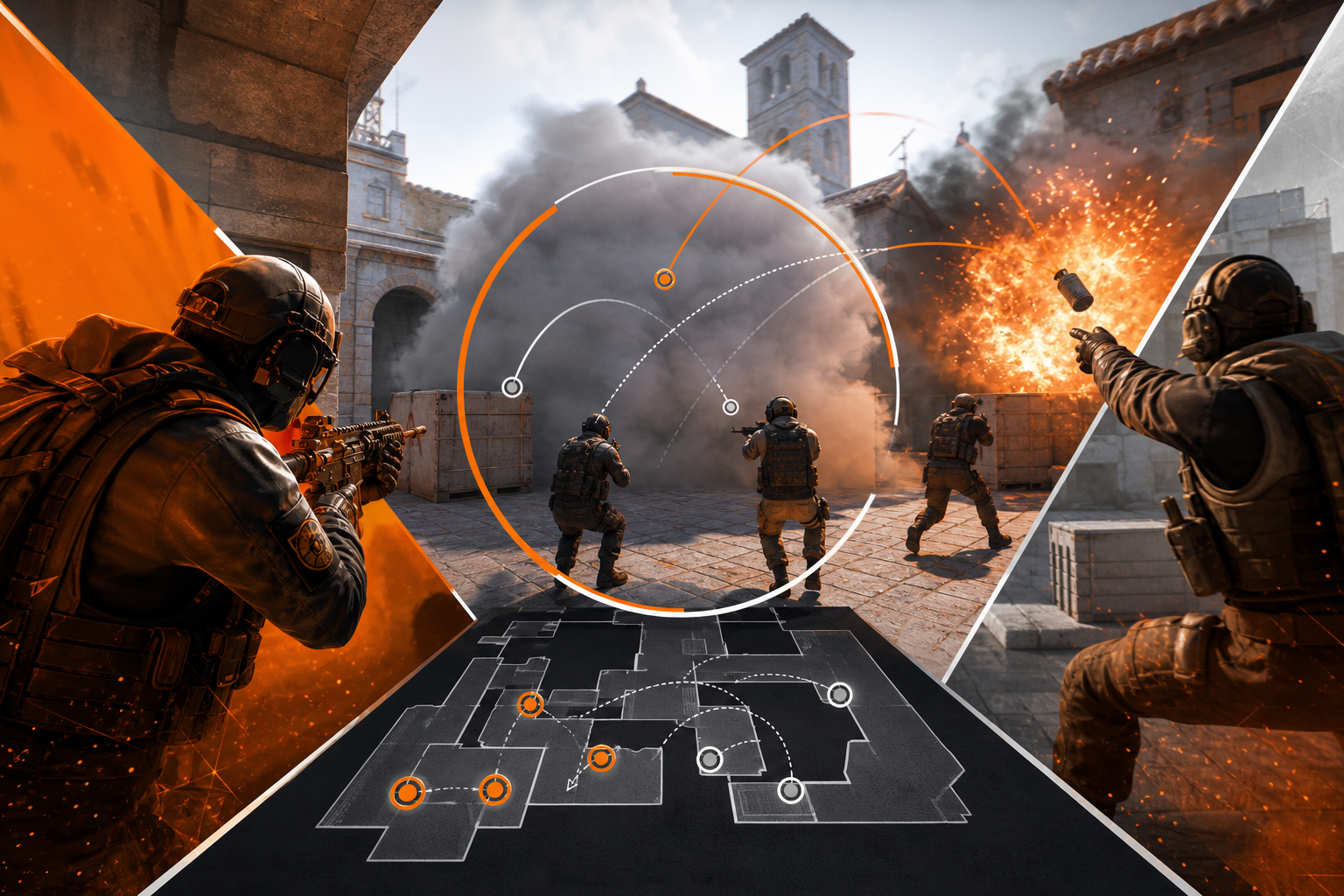
  • Optimize rotations and positioning after the overhaul of the explosion and Cache’s return

    Optimize rotations and positioning after the overhaul of the explosion and Cache’s return

    The return of Cache to the Active Duty map pool immediately reshuffled the competitive landscape. When Valve confirmed, in the July 8, 2026 update, that Cache would join the Active Duty group in place of Overpass, the way teams read rotations, timings, and survival zones had to be recalibrated almost overnight.

    This shift coincides with the launch of Premier Season 5 and the rework of the C4 explosion, two factors that have made several habits built up on previous maps obsolete. For coaching staffs, analysts, and players, the challenge is no longer simply to “know the map,” but to rebuild reliable reference points around mid control, post-plant positioning, and the risks associated with the new blast zones.

    Understanding the New Competitive Starting Point

    The most important point is not Cache itself, but the context in which it is returning. Premier Season 5 begins at the same time as this integration, which implies an indirect reset of established habits: rotation routes, information timings, and site retake patterns are being observed in an environment where few teams yet have a stable track record.

    Cache remains a very “skill-forward” map, making it particularly sensitive to clean execution. As soon as a map of this type changes status, the teams that gain an advantage quickly are those that standardize their protocols fast: who holds Mid, when the second player repositions, and what the decision threshold is for switching between site support and a more aggressive rotation.

    In this context, overly rigid interpretations should be avoided. Reference points from Overpass or earlier versions of Cache do not translate mechanically, because the Source 2 rework, the successive patches of July 9, 2026, and August 3, 2026, as well as geometry adjustments, concretely alter paths, angles, and lines of sight.

    Mid Control as the Backbone of CT Rotations

    Recent analyses of Cache converge on one simple principle: control of the center of the map dictates the speed of rotations toward A or B. Defensively, this means that a CT setup should not rely on long rotations from one extreme of the map, but on a coherent network built around Mid and Connector.

    An effective setup generally consists of one anchor per bombsite, a player dedicated to the middle, and a third player ready to provide support based on the information received. This structure reduces the downtime between gathering information and the arrival of reinforcements, which is essential on a map where losing a single duel in the center can open the way for a fast execution onto either site.

    Connector is particularly critical, as it serves as the link between static defense and responsiveness. In practice, the teams that win the most rounds on Cache are not those that rotate earliest, but those that rotate from the right position, with enough coverage to avoid abandoning both sites too quickly.

    Rethinking Positioning After the Explosion Rework

    The C4 rework changes how “safe” positions are evaluated. Valve specified that damage is now applied through precomputed simulation values integrated into the compiled map, with propagation originating from the center of the explosion. In practical terms, danger assessment becomes more structured, less immediate, and more dependent on the actual geometry.

    The tactical result is immediate: positions on the edge of the blast zone are more precise than before, but also more demanding to learn. The shockwave dissipates in corners and does not pass through walls, creating clear differences between a position that is theoretically close to danger and one that is actually exposed.

    For teams, this requires a new mapping of post-plants and defensive anchors. Some spots once considered “just safe enough” must be revalidated frame by frame, especially in areas where geometric cover creates a false sense of security.

    Adapting Post-Plants and Anchors on Cache

    On Cache, the new explosion directly affects the quality of post-plant survivors. Since damage spreads from the center and loses intensity in corners, the composition of a post-plant duo should no longer focus solely on the ideal line of sight, but also on the position’s resilience against the blast zone and adjacent walls.

    This particularly affects scenarios in which a player hides behind partial cover or in a niche intended to “absorb” part of the explosion. The new calculations make some shelters more reliable, while turning others into false havens of safety. On Cache, where retake timings are already fast, this difference can decide an entire round.

    Defensive anchors must follow the same logic. A player holding a stopping angle must know not only their line of sight, but also the cost of repositioning when the bomb is planted. If the bomb has been planted and a retake is likely, the starting position must allow for a coherent exit without relying on a “lucky” timing against the blast radius.

    Using the Updated Geometry Without Overplaying Angles

    The July patches followed by the August 2026 updates mainly confirmed that Cache was not simply “back,” but still undergoing stabilization. Changes to geometry, collision, and visibility directly affect crosshairs, pre-aims, and defensive lines, particularly around A, Checkers, and B Main.

    The practical consequence is simple: angles must be relearned from the current terrain, not from historical memory. A modified wall edge, a moved object, or a slightly adjusted line of sight can turn a 60/40 duel into unnecessary exposure. On this type of map, the most successful teams are often those that treat geometry as production data rather than scenery.

    For coaching staffs, this means documenting holding spots with up-to-date screenshots, stable aiming references, and precise annotations on overpeek risks. The longer the map remains under reconstruction, the more calibration discipline becomes a competitive advantage.

    Optimizing T-Side Rotations Around Information Windows

    On the attacking side, Cache rewards fast but clean rotations. The goal is not to cross the map without a plan, but to exploit information windows in order to force the CTs to reveal their setup. A well-coordinated mid take often forces the defense to expose its weak point, which then opens an attacking rotation toward the less densely covered site.

    Priority should therefore be given to sequences in which the team can confirm the presence or absence of CT control before triggering the rest of the round. On Cache, sending players too early without reading the situation leads to strong retake setups, whereas an attacking rotation based on a clear timing allows the team to punish late defensive repositioning.

    The ideal pace combines pressure, information, and utility preservation. A team that can maintain a threat in the center while keeping its options open forces the CTs to choose between two bad options: staying compact and giving up space, or moving too early and weakening the defensive structure.

    Managing Dropped Weapons and End-of-Round Situations

    One detail often overlooked in strategic analysis concerns dropped weapons. The July 8, 2026 update specifies that the new C4 explosion exerts more force on weapons lying on the ground, which can change how a team secures a late-round duel or recovers equipment after a contested plant.

    In a competitive environment, this parameter is not insignificant. A weapon moved by the explosion may leave a planned recovery area, disrupt a retake plan, or force a player to expose themselves further to retrieve it. On Cache, where end-of-round situations often depend heavily on micro-positioning, this should be incorporated into end-of-round protocols.

    Teams should formalize simple rules: which weapons must be secured as a priority, who covers the recovery, and to what extent the risk of being displaced by the explosion changes behavior around the C4. This kind of detail, invisible on the scoreboard, can nevertheless swing several rounds in a series.

    Building a Sustainable Cache Meta

    Since August 2026, meta guides have emphasized that Cache remains under strategic reconstruction. Communities still describe it as a map undergoing optimization, with rotation, timing, and post-plant reference points becoming more refined as teams replay the map at a high level. This means that no playbook should be considered final.

    The right approach is to industrialize adaptation. The teams that improve quickly on Cache are those that record their scrims, compare timings, document new retake windows, and test positioning under different explosion conditions. In other words, the map must be treated as a versioned system, not as a fixed routine.

    For organizers and content creators, this period is also an opportunity: the return of Cache has created an immediate need for clear guides, visual reference points, and up-to-date analysis. The more Valve’s official sources on Counter-Strike.net are cross-referenced with precise field feedback, the more reliable the tactical understanding becomes.

    Ultimately, optimizing rotations and positioning on Cache after the explosion rework means accepting a new discipline of analysis. The teams that progress fastest will be those that control Mid cleanly, reassess their spots in light of the new blast zone, and structure their rotations around verified information rather than inherited habits.

    Cache is once again a map of execution, timing, and detail. During this transition phase, the competitive advantage belongs to those who know how to turn every patch into a working method, and then every working method into more consistent rounds.